


White willow is a pretty beautiful tree that arouses great interest and genuine delight. It is often used to create original landscaping in large garden plots or park areas. Few people know that the bark, leaves and earrings of this tree have medicinal properties. Due to this, they are used not only in traditional medicine, but also added to pharmacological preparations for the treatment of various diseases.
Description
This tree belongs to the genus Willows of the Willow family. Among the people, it is often called the silvery willow, willow, willow. The main feature of the plant is its ability to withstand the harsh climate. It can grow both in the city and outside it. In culture, the tree is quite durable. Its age can reach 100 years.
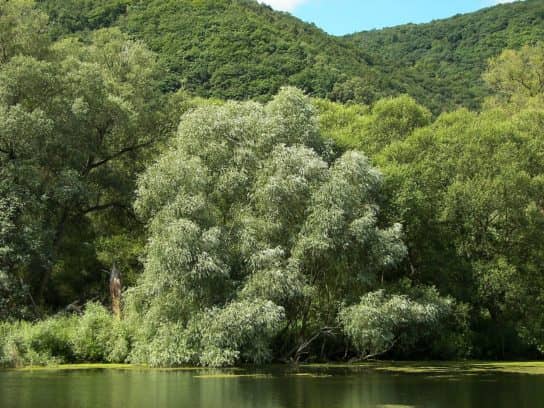
White willow is rightfully recognized as one of the most beautiful trees. Thin, spreading branches make the crown of the plant look like a movable lace. Due to this, willow is often planted in parks and near village houses. Also, the tree is often used to beautify yards, squares and garden plots.
It is worth noting that this culture reproduces by seeds rather poorly. This is because they quickly lose their germination. Based on this, a vegetative method is used to breed white willow.
Appearance

White willow is a fairly large, spreading tree. Its height reaches 30 cm. The crown has a tent-like shape. The trunk diameter is 1 m. It is covered with gray deeply fractured bark. White willow has long and flexible branches. Young stems are shiny. They can be either yellow or green or red. An adult plant has brownish-red or yellow shoots.
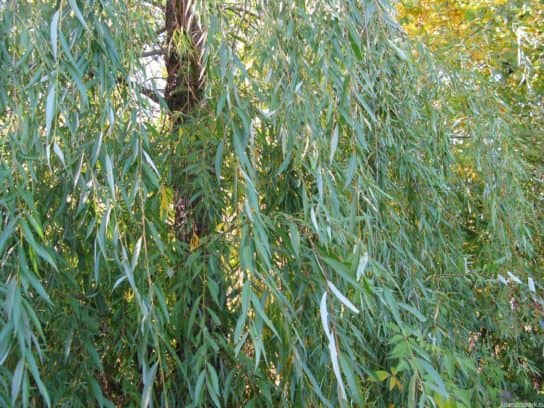
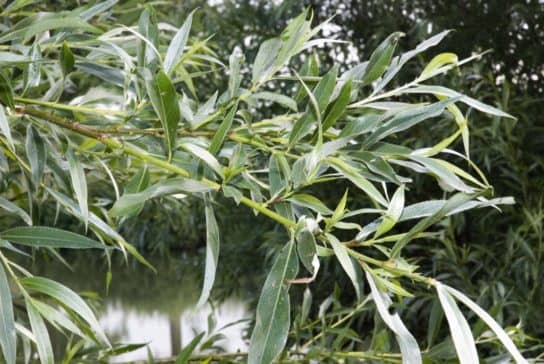
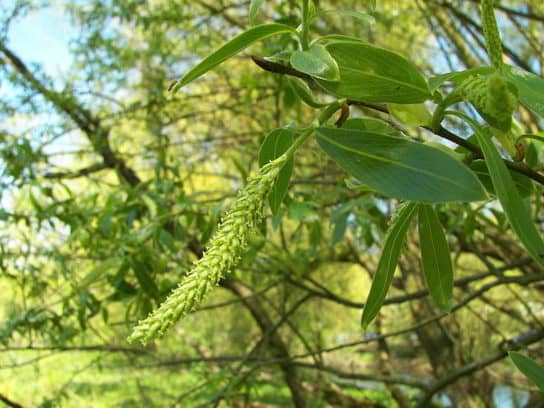
Lanceolate buds are characterized by a flattened, sharp shape. They have a deep reddish yellow hue. The length of the kidneys is 6 mm. Leaves with pointed tops are formed from them. Their length ranges from 5-15 cm. Leaves can be petiolate, lanceolate or oblong-lanceolate, tapering towards the base, and pointed towards the end.
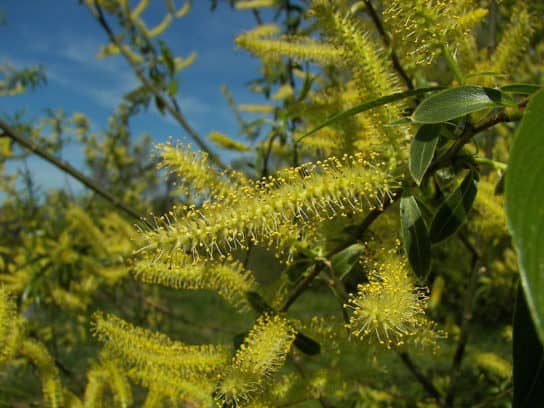
It should be noted that young leaves are covered with silky silky hairs on both sides. Adult foliage only has hair on the underside. In the autumn, the leaves change their color to a yellow-bronze tint.
White willow is a dioecious plant. On the male tree, fluffy inflorescences-earrings of a yellowish tint are formed, and on the female tree – long green ones. The flowers do not have a perianth. The fruit is a box with a leg with a lot of small seeds. It should be noted that white willow blooms in April-May.
Where grows
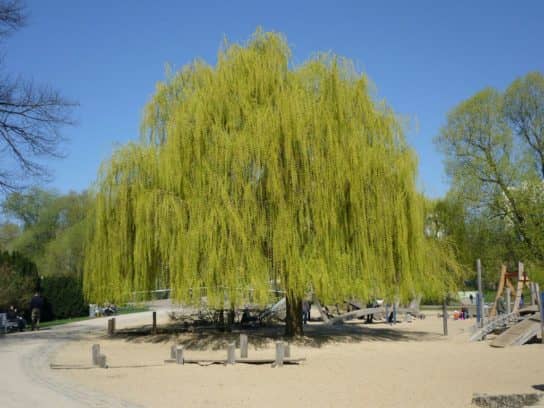
The species range is Europe (with the exception of the Far North), Western Siberia, Asia Minor, Iran, Kazakhstan. This culture also grows in North America and Central Asia. Quite common in Central Russia.
In natural conditions, it is quite often seen on floodplains, along the banks of rivers, ditches, ponds and reservoirs, on dams, embankments, slopes, along roads and near private houses. It is interesting to note that the white willow forms rather large groves, stretching for many kilometers. It is often bred as a cultivated plant. However, it often runs wild at the landing site.
Beneficial features
The leaves and bark of white willow contain tannins, flavonoids, ascorbic acid, organic acids. Due to this, the tree has the following properties:
- astringent;
- antiseptic;
- pain relievers;
- antibacterial;
- antipyretic;
- hemostatic.
In addition to leaves and bark, the earrings of the male tree also have useful properties. They have a choleretic, diuretic, and anthelmintic effect.
It is worth noting that the infusion and decoction of the bark helps to remove uric acid from the body. It is recommended to drink such funds for gout and arthritis. Also, the broth is used to rinse the mouth in case of inflammatory processes. In addition, many scientists believe that white willow has a calming effect on people and also promotes relaxation. Due to the high content of tannins, the plant is used to treat sunburn.
Application and contraindications
White willow has been actively used in pharmacology, folk medicine and cosmetology for many years. This is due to its healing properties and a wide range of effects on the body. However, products based on bark, leaves and earrings have a number of contraindications that you should be aware of.
Application in pharmacology
Quite often, white willow is added to preparations intended for the treatment of:
- fever;
- diarrhea;
- neurosis;
- gout;
- hemorrhoids;
- ORV.
Often, white willow extract can be found in medicines for the treatment of the digestive system.
Use in traditional medicine

There are many recipes based on this tree, passed down from generation to generation. Decoctions and tinctures are prepared from the bark, leaves and earrings of willow, relieving diarrhea, fever, fever, and a number of other ailments.
Application in cosmetology
White willow bark is included in the composition of creams and lotions for the care of problem skin of the face and body. It contains salicin, which helps to improve metabolic processes in the upper layer of the epidermis, and also normalizes the function of the sebaceous glands.
In addition, shampoos, masks and hair balms are created on the basis of willow bark. They improve the structure of the curls, enhancing their growth.
Contraindications
Like any plant with medicinal properties, white willow has a number of contraindications. You should refuse it in the following cases:
- chronic constipation or bradycardia;
- allergies;
- during pregnancy (a large amount of salicylic acid can cause fetal pathology);
- the presence of diabetes mellitus;
- with liver diseases;
- exacerbation of gastritis.
Also, preparations, decoctions and tinctures are not recommended for children under 16 years of age, as well as for people with high sensitivity to aspirin.
