


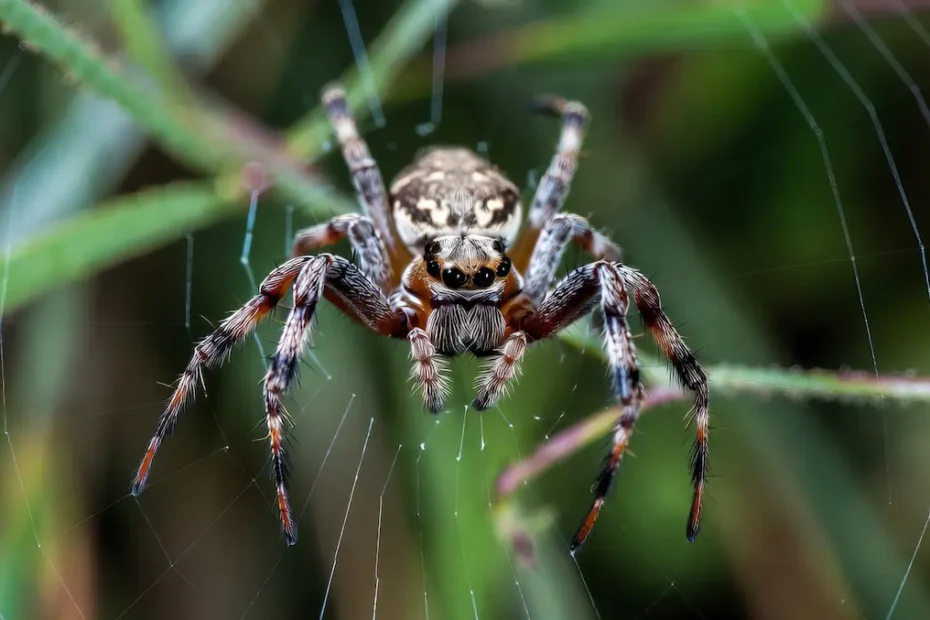
The Regal Jumping Spider (Phidippus regius) is one of nature’s most charismatic arachnids — bold, curious, and beautifully marked with iridescent colors. Its inquisitive behavior and big, expressive eyes make it a favorite among spider enthusiasts and photographers.
Meet the Regal Jumping Spider
The Regal Jumping Spider belongs to the Salticidae family, a group known for exceptional vision and agile hunting skills. Its scientific name, Phidippus regius, reflects its “royal” appearance — females often display striking black-and-white patterns, while males show metallic blue or green iridescence on their chelicerae (mouthparts). Adults typically measure between 12 and 22 millimeters, making them one of the largest jumping spider species in North America.
Native to the southeastern United States, particularly Florida, these spiders thrive in warm, sunny environments. They can often be found on walls, fences, window ledges, and garden plants where insects are abundant. Rather than spinning webs to catch prey, they rely on stealth and their remarkable jumping ability — leaping several times their body length to ambush insects with precision. Their excellent eyesight, aided by four large front-facing eyes, allows them to judge distances accurately and navigate their environment with confidence.
Is the Regal Jumping Spider Venomous?
So, is the Regal Jumping Spider venomous? The answer is yes — but not in a way that should concern humans. Like all jumping spiders, Phidippus regius possesses venom glands that produce a mild toxin. This venom is used to immobilize prey, such as flies, mosquitoes, and small insects. When the spider strikes, it injects the venom through its fangs, allowing it to quickly subdue its target before feeding.
Importantly, this venom is not dangerous to people. The spider’s fangs are small and rarely penetrate human skin. In the rare cases when a bite occurs — often when the spider is accidentally trapped or handled roughly — the effects are minimal, usually limited to slight redness, itching, or swelling similar to a mild mosquito bite. No medical treatment is normally needed.
Unlike dangerous spiders such as black widows or recluses, jumping spiders like the Regal Jumping Spider are harmless and non-aggressive. They prefer to avoid confrontation and will usually retreat rather than bite. Understanding this helps dispel the myth that all venomous spiders pose a threat to humans.
Role in the Ecosystem
Beyond their harmlessness, the Regal Jumping Spider plays a vital role in the ecosystem. As skilled hunters, these spiders act as natural pest controllers, preying on insects that can damage crops, spread disease, or become household nuisances. Their diet includes flies, mosquitoes, moths, and other small arthropods — making them valuable allies in maintaining ecological balance.
In the food web, the Regal Jumping Spider occupies a middle tier — both predator and prey. While they control insect populations, they also serve as food for birds, lizards, and larger spiders. This dynamic role contributes to a balanced exchange of energy and nutrients within ecosystems, helping sustain biodiversity.
Moreover, their presence is often an indicator of environmental health. Because jumping spiders depend on abundant insect populations and clean, plant-rich habitats, finding them in a garden or field suggests that the area supports a thriving ecosystem. In agricultural and urban settings, their pest-control behavior reduces the need for chemical pesticides, benefiting both crops and pollinators.
Through their predation and interactions, Regal Jumping Spiders demonstrate how even small creatures can have an outsized impact on the stability and productivity of ecosystems — a reminder that every species, no matter how tiny, plays a part in nature’s intricate web of life.
Behavior and Human Interaction
One of the most endearing traits of the Regal Jumping Spider is its curiosity toward humans. Unlike many other arachnids that flee when approached, these spiders often seem to watch us closely, turning their heads to follow movement with their large, glossy eyes. This behavior makes them especially appealing to photographers and nature lovers.
Despite their boldness, they are non-aggressive and gentle. They do not spin sticky webs but instead use silk for safety lines and egg sacs. Around homes and gardens, they pose no danger — in fact, they help keep pest populations under control. Their presence should be welcomed, not feared, as they quietly perform an essential ecological service.
This friendly interaction between humans and Regal Jumping Spiders highlights the importance of coexistence. By understanding and appreciating these creatures, we can foster a more balanced relationship with the natural world around us.
