


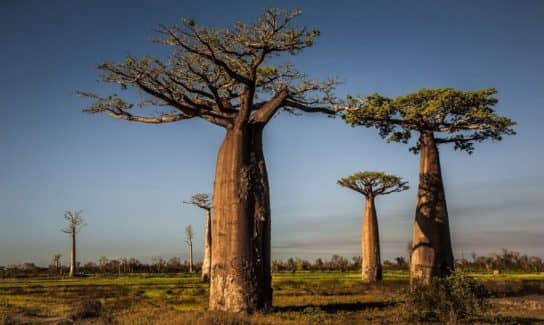
Lush vegetation adorns the landscape in northern Namibia. One tree, however, stands out due to its unusual shape – the baobab tree.
Locals say that the tree was planted with its roots up. According to legend, the Creator in anger threw a tree over the wall of Paradise onto Mother Earth. It landed in Africa, the top of its head is in the soil, so only the shiny brown trunk and roots are visible.
Where does baobab grow
The baobab tree is an African tree, but some species can be found on the island of Madagascar, the Arabian Peninsula and Australia.
Figurative names for an unusual tree
The baobab tree is called the tree of the dead rat (in the distance, the fruits look like dead rats), monkeys (monkeys love fruit) or cream tree (the pods, dissolved in water or milk, replace the cream in baked goods).
The baobab is a tree with an unusual shape that grows to a height of 20 m or more. Older trees have an extremely wide trunk, which is sometimes hollow on the inside. Baobabs reach the age of 2,000 years.
Even elephants appear small when they stand under an ancient baobab tree. There are many myths and legends about these majestic trees, which seem to be relics from another era on our planet. These amazing giants have witnessed many events on the African continent for more than a thousand years. Countless generations of people have passed under their leafy canopies. Baobabs provide shelter to humans and wild animals.

Types of baobabs
Baobabs are endemic to sub-Saharan Africa in the savannah regions. They are deciduous trees, which means they lose their leaves during the dry winter season. The trunks are metallic brown and look like multiple roots are attached to each other. Some species have smooth trunks. The bark is similar to skin to the touch. Baobabs are not your typical trees. Their soft and spongy stems store a lot of water during drought. There are nine types of baobabs, two of which are native to Africa. Other species grow in Madagascar, the Arabian Peninsula and Australia.
Adansonia madagascariensis
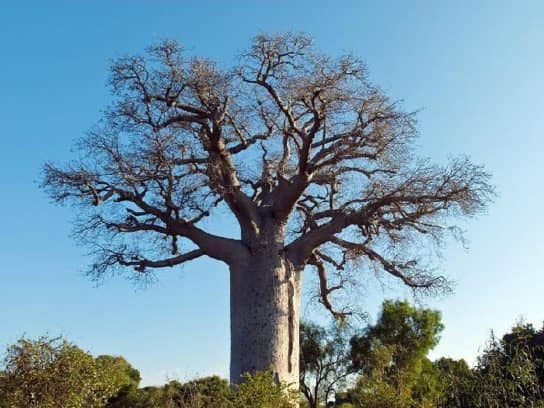
Adansonia digitata
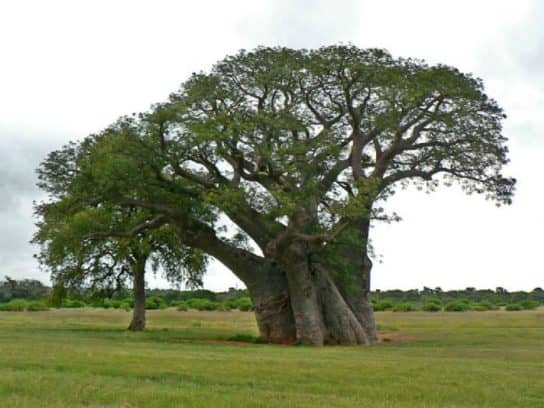
Adansonia perrieri
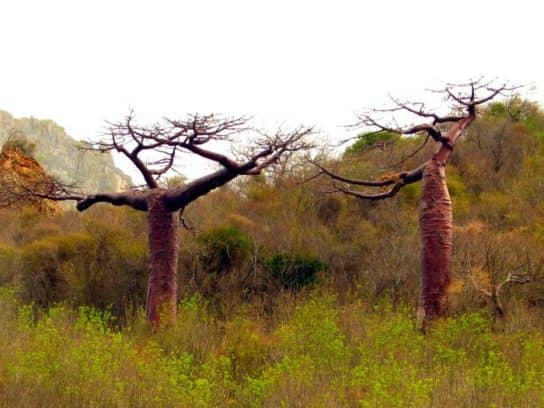
Adansonia rubrostipa

Adansonia kilima
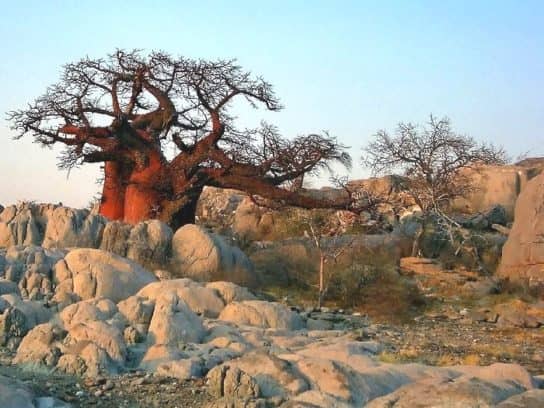
Adansonia gregorii

Adansonia suarezensis

Adansonia za
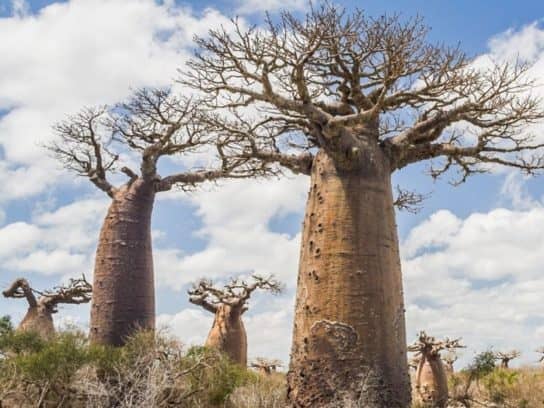
Adansonia grandidieri
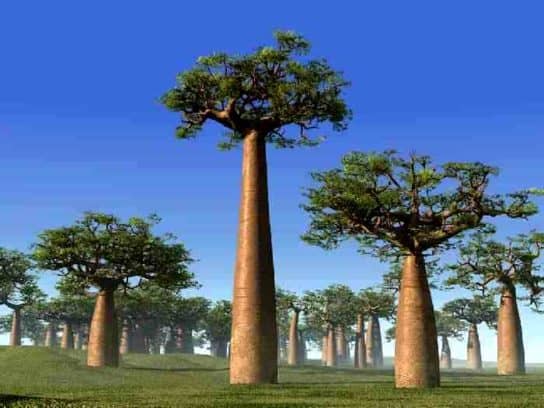
Baobabs are also found in other parts of the world, such as the Caribbean and Cape Verde islands.
Famous baobabs in Namibia
A well-known and revered landmark in northern central Namibia is the baobab tree near Outapi, which is 28 m high and has a trunk volume of about 26 m.
25 adults, holding outstretched arms, embrace the baobab. It was used as a hideout in the 1800s when tribes were at war. The headman carved a hollow in a tree at ground level; 45 people were hiding in it. In subsequent years, from 1940, the tree was used as a post office, a bar, and later as a chapel. The baobab is still growing and bearing fruit every year. He is about 800 years old.
Another huge baobab grows in Katima Mulilo in the Zambezi region and has a somewhat unflattering reputation: when you open the door in the trunk, the visitor sees a toilet with a cistern! This toilet is one of the most photographed objects in Katima.

The thickest baobab in the world
When baobabs bloom and bear fruit
The baobab tree begins to bear fruit only after it is 200 years old. The flowers are beautiful, large, sweet-smelling, creamy-white bowls. But their beauty is short-lived; they fade within 24 hours.
Pollination is rather unusual: fruit bats, insects and small fluffy nocturnal arboreal animals with large eyes – shrub lemurs – carry pollen.
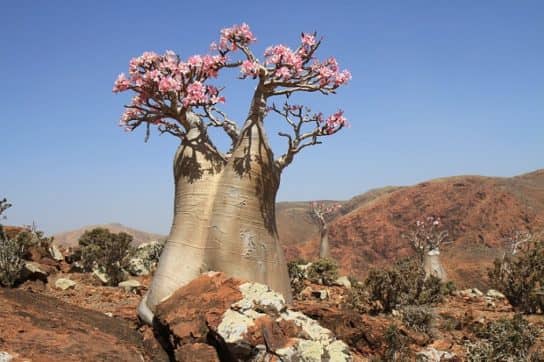
Flowering baobab
Various parts of the leaves, fruits and bark have been used by the local people for food and medicinal purposes for centuries. The fruit is firm, oval in shape, weighing more than one kilogram. The pulp inside is tasty and rich in vitamin C and other nutrients, and the fruit powder contains antioxidants.
Baobab oil is produced by crushing seeds and is gaining popularity in the cosmetic industry.
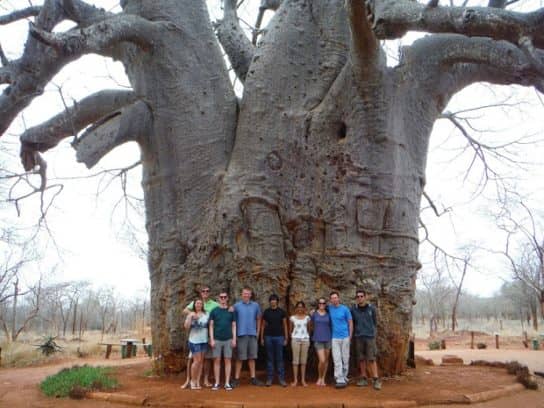
Photo of a baobab with a man
