


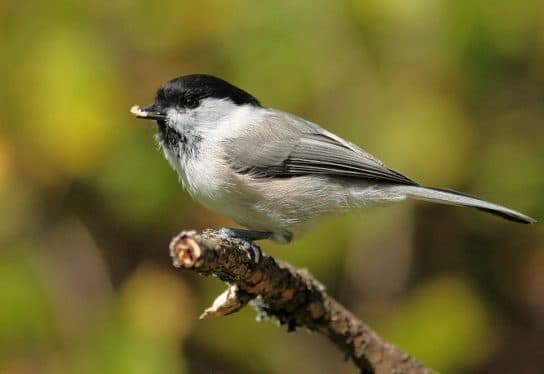
The brown-headed chick has got another name “puff”, due to its ability to strongly pubescent feathers in cold weather. For a long time this species of birds was attributed to the family of titmouses, just a couple of years ago zoologists decided to classify it in a separate genus called the tit.
What does a brown-headed tit looks like
The brown-headed tit is a rather miniature bird with a maximum body size, barely reaching 14 centimeters in length. Given its long tail, the bird’s body length can reach 20 centimeters in length with a weight of only 15 grams. Most of the puffs have a dark brown plumage. The upper part of the head is colored black, and the neck area on both sides is white feathery. The color of the feathers in the lower part of the body has a pale beige tint. The eyes are black and the paws are gray with a bluish tint. The powder can be distinguished from other representatives of the nut family by the characteristic light edges of the flight feathers, which form a bright light speck on the dark wing. The vocal abilities of the brown-headed tit are notable. The bird’s voice is quiet and thin. The most frequently encountered song is a combination of small short whistles reminiscent of the sounds “zhzhe”, “tsi-si”. As a rule, males are more vociferous than females.

Habitat
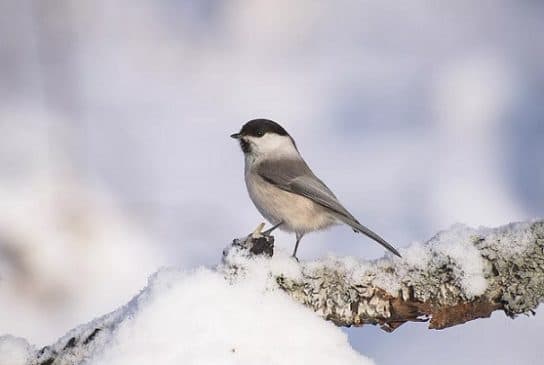
You can meet the brown-headed tit in coniferous forests and mountainous areas. It prefers to inhabit the wilderness, where it is quite problematic to find them. The area stretches from Western Europe to Kamchatka. On the territory of European Russia, it settled up to the steppe zone. As a rule, most of the puffs are sedentary birds, but they can make minor flights. A large number of the population is located in the northern forests; closer to the south, the population of these birds decreases.
Nutrition
Most brown tit prefer to eat various insects. Powders are very important for maintaining the ecosystem of the forest, because, by feeding on insects, they regulate their numbers and help to decontaminate trees from parasites. Brown-headed chicks can consume some of the seeds and fruits of plants.
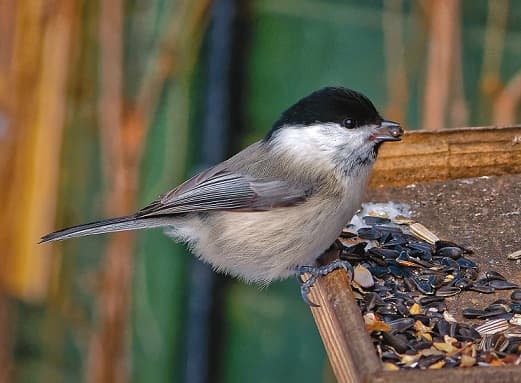
In summer, more than 50% of the diet of these birds consists of plants, and in winter they feed mainly on conifers. Young puffs get all the nutrients they need from caterpillars, small spiders, larvae and other small insects. Cereals and cereals are chosen from plants: flax, wheat, corn, oats and barley. Not against poultry and berries such as raspberries, currants and strawberries. During the hunt, they prefer to look for food for themselves in the middle and lower tiers of the forest or in dense bushes. But on earth these birds are practically not found.
Reproduction
The egg-laying period is in May. They prefer nests at the bottom of a tree hollow, which are lined with litter in the form of dry plants. Pregnancy lasts up to 6 days, after which the female lays 6 to 12 eggs. Incubation takes place for two weeks. At this time, the male is looking for food for both. After two weeks of incubation, small chicks are born. For 12 days, the mother is engaged in guarding cubs, without leaving her nest. Within a month, little brown-headed chicks can say goodbye to their parents’ territory and live independently. However, a caring female feeds her offspring for another week.
