


A large passerine bird of the starling family endemic to India, east-west Pakistan and Burma. Mine was brought to other countries and continents to combat invertebrate pests.
Description of the lane
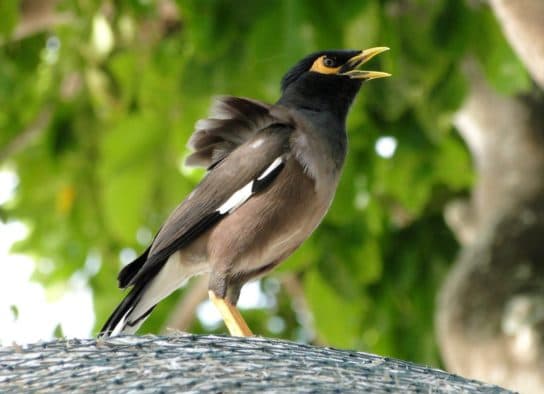
These are birds with well-knit bodies, shiny black heads and shoulder blades. Mains are found in pairs or in small family groups. In adults, the primary color of new feathers after molting is black, but gradually it turns brown, only the head remains black.
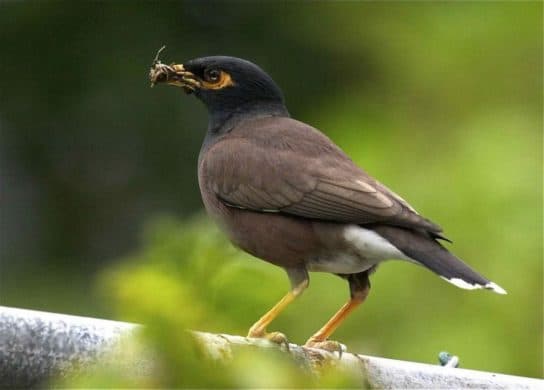
The bird has yellow skin around the eyes and beak, yellow-brown legs, horny claws. In flight, it shows large white spots on the wings. Young individuals with lighter plumage, light yellow beak with a dark gray tint. The skin around the eyes during the first two weeks of life in chicks is white.
Myna bird habitat
Mine area covers the entire region of South Asia. Currently, they are found on all continents, with the exception of islands in the Pacific, Indian and Atlantic oceans, South America, and Antarctica.

Number of birds
Lane is adapted to live in the tropics. The ambient temperature south of 40 ° S latitude is insufficient to support long-term colonization. Some groups of birds survive for many years around pig farms, but when they are closed, the birds cannot balance the energy balance and die out. North of 40 ° S latitude, the population spreads and increases.
Breeding
Mynae nest in roof cavities, mailboxes and cardboard boxes (even on the ground) and in birdhouses. Nests are made from dry grass, straw, cellophane, plastic and are lined with leaves just before the eggs are laid. Nesting is prepared from late August to early September.
The nest is built in a week, but usually in a few weeks. The female lays two clutches in the mating season: in November and January. If the birds do not lay eggs at this time, then this is a replacement for the failed clutch or the eggs were produced by inexperienced couples. Clutch size is on average 4 (1-6 eggs), incubation period is 14 days, only female incubates brood. In 25 (20-32) days after hatching, the chicks fledge. Male and female chicks feed for 2-3 weeks and approximately 20% of them die before leaving the nest.
Behavior of mine
Birds form a pair for life, but quickly find a new mate after the death of the previous one. Both members of the pair claim the nest and territory with a loud cry, and vigorously defend the nest and territory from other mynas. They destroy eggs and chicks of other species (especially starlings) on their territory.
How do the lainas feed
Myna is omnivorous. They consume grazing and agricultural invertebrates, including those that are pests. Birds also eat nightshades, fruits and berries. The lanes along the roads collect insects killed by vehicles. In winter, they visit garbage dumps, look for food waste and flock to arable land when plowing. Mains also love nectar and are sometimes seen with orange flax pollen on their foreheads.
Mine and Human Interaction
Myna congregate near human habitation, mainly in the non-breeding season, sit on roofs, bridges and large trees, and the number of individuals in a flock reaches several thousand birds.
Mine was brought from India to other countries to control insects, especially locusts and reed beetles. In southern Asia, mynae are not considered pests, flocks follow the plow, eat insects and their larvae, which rise from the soil. In other countries, however, the consumption of fruits by birds makes the mine plant pests, especially figs. Birds also steal seeds and spoil fruit in markets.
