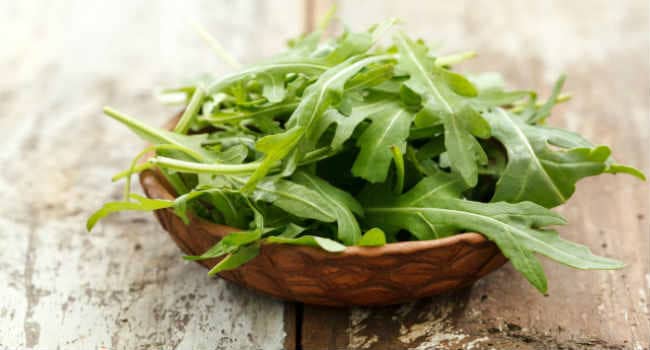


A little still popular with us, arugula salad with a delicate spicy-piquant taste, containing many nutrients, brings many benefits to the human body. This salad, with delicate small leaves, has many beneficial properties, is filled with a number of valuable vitamins and minerals and is able to improve metabolism, normalize blood pressure and much more.
Arugula descriptions
Arugula belongs to the cruciferous family, like cabbage, radish, mustard and others. This annual herb with the scientific name Eruca Sativa is a species of the Indau genus. In the wild, it is widely distributed in the northern part of the African continent, in Asia from a small part to its middle part, including in India. On the European continent, the main growing area is the Mediterranean at an altitude of 800 meters above sea level. On the territory of our country, arugula can be found in the Caucasus.
Today, arugula or, as we call it, caterpillar, is grown as a cultivated plant all over the world. The life cycle of arugula is very short, it is sown in spring with the onset of warm days. You can cut healthy greens several times over the season for several weeks. This salad is grown in greenhouses, indoor pots and containers. She is very unpretentious and does not require a lot of sunlight, for which she fell in love with many gardeners.
Useful properties of arugula and composition
Leafy green vegetables are a very delicate food item. Therefore, with the exception of rare cases, they are eaten fresh. This means that all nutrients contained in them enter the body in full. All of these statements apply to arugula as well.
The leaves of this salad are 91 percent water. They contain protein, carbohydrates, fiber and other beneficial nutrients.
The vitamin composition is represented by vitamin C, A, E, B vitamins, vitamin K.
Among the minerals, iron, zinc, sodium, manganese, phosphorus should be distinguished. For the detailed composition of arugula, see the table below.
There are tannins, glycosides, flavonoids in arugula. Of particular value are arugula seeds from which arugula oil is obtained.
They contain a number of fatty oils: erucic, linoleic, oleic, linolenic and others. Essential oils, steroids, flavonoids and alkaloids are present.
One small bunch of lettuce, weighing about 40 grams, can give the human body 20 percent of vitamin A, 8 percent of vitamin C, more than 50 percent of vitamin K. calories.
Since lettuce contains a large amount of flavonoids, this has a positive effect on the walls of blood vessels. Minerals improve blood composition and may increase blood hemoglobin levels.
Due to the presence of potassium, arugula is able to influence the regulation of water in the cells of the body, which is useful in high blood pressure, helps to eliminate cholesterol.
It should be noted its beneficial properties for digestion. The fiber contained in the salad significantly improves the digestion process, metabolic processes in the body. Vitamins have a beneficial effect on the immune system.
Rich in vitamins and minerals, arugula with a minimum calorie content, an indispensable product for those who want to lose weight.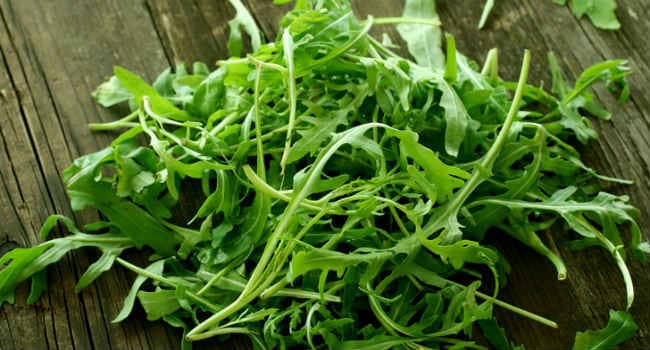
The benefits of arugula for the body
Eating fresh vegetables and fruits has long been associated with a healthy diet and reduced risk of many diseases. Including more non-cooked foods in your diet can significantly reduce the risk of diseases such as obesity, cardiovascular disease, cancer, and diabetes. Arugula is no exception in this regard. Indeed, apart from rare cases, it is eaten fresh, adding to salads, sandwiches.
The main benefit that can be obtained from the use of arugula is to improve the functioning of the digestive system. It improves the secretion of gastric juice, which in turn contributes to better absorption of nutrients and metabolic processes. Arugula can prevent the appearance of gastric ulcer, promotes the healing of the gastric mucosa, which makes it possible to accelerate the healing process of ulcers.
Arugula is a good diuretic and has mild diuretic properties. A decoction of the leaves of the plant can be drunk as a diuretic.
Arugula is also useful for diabetes. Due to its low calorie content and high amount of nutrients, it can significantly reduce the risk of obesity, which is often the case for diabetics. Doctors recommend including at least a few lettuce leaves every day.
Arugula can be used to prevent cancer. It contains a number of antioxidant compounds that suppress free radicals.
Including arugula in your menu will allow you to:
Improve the condition of the blood vessels;
Increase the level of hemoglobin in the blood;
Improve liver function;
Strengthen the immune system and the nervous system;
Increase resistance to the manifestation of seasonal allergies;
Improve lactation in breastfeeding women.
Arugula is beneficial not only as a food. It is good for skin and hair. The sap of the plant is able to reduce skin pigmentation, get rid of corns. A decoction of seeds in the form of lotions is used to resorb hematomas and accelerate wound healing.
Arugula oil has good antiseptic properties and helps to strengthen hair follicles.
Even the ancient Romans and Greeks considered arugula an aphrodisiac. This is mentioned in the manuscripts of Ovid and Discorides. A recipe has come down to this day that can increase potency. To do this, chop 100 grams of arugula and mix with pepper and honey, taking 10 grams each. Drink one teaspoon of this mixture in the morning.
Eating arugula salad can be considered a true source of health, which will help solve a number of health problems and tone the body in general.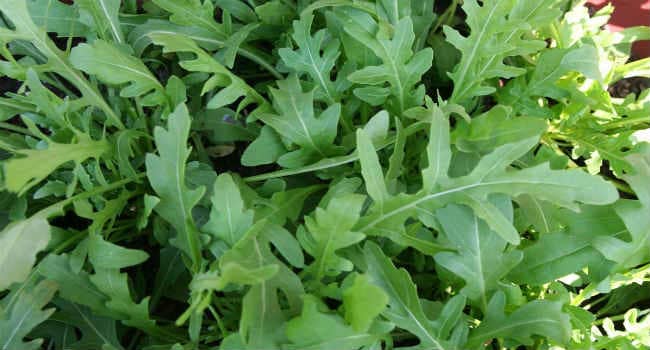
Potential harm to arugula
Arugula, as a useful food product, has practically no contraindications. The harm from the use of this salad plant is also minimal.
It can cause individual intolerance in some people. But such cases are very rare.
You do not need to get carried away with arugula for those who have increased stomach acidity, as it increases the production of gastric juice.
Since arugula contains a large percentage of vitamin K, so you need to be careful with those who have increased blood clotting and exclude it from their diet when taking blood thinners.
Another possible harm can be from the accumulation of plant nitrates in the plant. Use caution if you are taking certain heart medications such as nitroglycerin, medicines for angina pectoris.
In general, food should be varied, and, no matter how useful a certain product is, you do not need to focus only on it.
Where to add and how to cook arugula
As with any vegetable salad, it is not recommended to cut arugula with a knife. Due to oxidation, some of the nutrients can be lost. it is better to add it to dishes as a whole or to tear the leaves with your hands just before use.
Arugula can be added to many dishes. It is good as an addition to any side dish of meat and fish dishes. They prepare sandwiches and salads with her. It goes well with cottage cheese and soft cheese.
They add it to omelets, pizza, soups, and various cold snacks.
In Italy, young lettuce leaves are added when making pesto, replacing part of the basil with them.
You can decorate any dish with beautiful carved arugula leaves, and its spicy couscous will give a special flavor.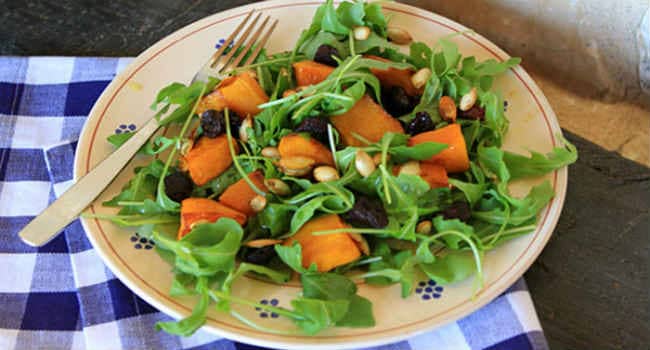
How to choose and store
When buying arugula salad, first of all, you need to pay attention to its quality. There should be no spoiled, rotten. This kind of arugula has been on the shelf for a long time.
It is best to buy arugula in pots, in which it was grown in a greenhouse.
Store it in the refrigerator in the vegetable compartment. Before storing, it is better to sort out the purchased salad, remove withered leaves, rough stems and rinse with cold water.
Dry with a paper towel and place in a container with a lid.
The shelf life of arugula is no more than 2-3 days.
You can freeze the leaves by rinsing them and drying them well. Store in freezer bags or container with a lid.
Before freezing, the leaves can be torn by hand or quickly chopped in a blender. It is better to freeze the crushed leaves in small portions by pouring the puree into an ice tray. With such arugula, you can cook an omelette or add it to sauce, soup.
Arugula nutritional table per 100 grams of product

About the beneficial properties of arugula and how it is useful, see this video