


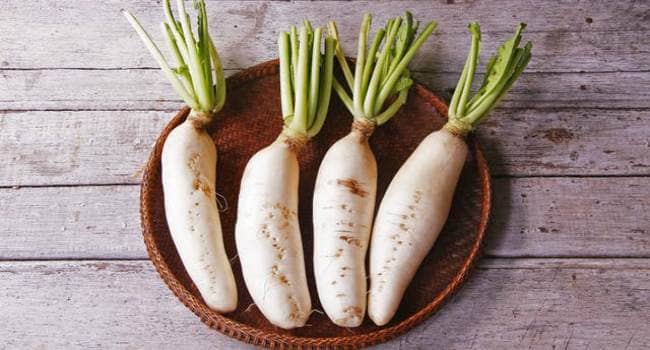
Not so long ago, the daikon was known only to a small circle of people. Now he has won the love of many not only gardeners, but also people who are far from growing vegetables. You can freely buy it in the store. What kind of vegetable it is, what useful properties it has and what benefits it can bring to our body, read in detail in this article.
Daikon is a Japanese radish or radish. Translated from Japanese, it means “big root”. In India it is called “Muli”, in other countries – sweet radish, white radish, Chinese or Japanese radish. Its size in comparison with the usual radish is amazing.
The daikon’s homeland is Japan. It was bred from a wild plant called forehead, native to Asia. Today, there are about 100 varieties of this plant, which is grown not only in its historical homeland, but throughout the world, including here, in Russia.
Daikon belongs to the cruciferous family, like radish with radish. In contrast, it has a more delicate taste. In Japan and China, it is called sweet radish.
Daikon is a rather large plant, the length of which can reach up to 60 centimeters. The root vegetable resembles a large large carrot only of white color, and the weight of one root vegetable can be up to 500 grams.
Daikon chemical composition and calorie content
Daikon is a root vegetable that combines all the best qualities of radish and radish, devoid of the bitter taste that is inherent in our native root crops, juicy and tender. Many people fell in love with it precisely for its taste and rich chemical composition, which contains substances useful for our body:
Vitamins: group B (B1, B2, B7, B9), vitamin C, beta-carotene;
Minerals: potassium, calcium, iron, copper, phosphorus, magnesium, sulfur, sodium, iodine, selenium, chromium;
Pectin;
Volatile compounds;
Enzymes;
Carbohydrates;
Cellulose;
Proteins;
Phytoncides.
In addition, its leaves, which are used as food for preparing salads, are no less useful. They contain a lot of vitamin C and calcium, more than in the root vegetable itself. True, there is more bitterness in them, which gives the familiar spicy taste to our radish.
Daikon is a low-calorie product. 100 grams contains only 21 calories, which is good news for those who want to lose weight. It can be included in your diet for those who are obese during fasting and fasting days.
Daikon beneficial properties
The main beneficial properties of daikon radish are provided by its chemical composition, which contains many vitamins, minerals and other nutrients necessary for a person and a low calorie content of the root crop.
Just 100 grams of sweet radish can provide the body with almost 34 percent of the daily requirement of vitamin C. Dietary fiber and the enzyme myrosinase improve digestion, which helps cleanse the body of toxins and toxins. Due to the high content of fiber, the body is saturated faster and the feeling of hunger is less manifested.
Other enzyme substances, amylase and exterase, improve the metabolic process, help better assimilate fats, proteins and carbohydrates. In addition, it contains enzymes that help break down starch.
A distinctive feature of daikon is the high content of vegetable protein and the complete absence of fat. Lysozyme is one of the protein compounds that has a strong antibacterial effect.
Volatile compounds protect the body from viruses and bacteria. Potassium promotes the elimination of excess fluid from the body. And the high calcium content makes bones and teeth strong and good for hair.
Vitamin C in combination with B vitamins has a beneficial effect on the nervous system, helps to restore emotional balance, and increase concentration.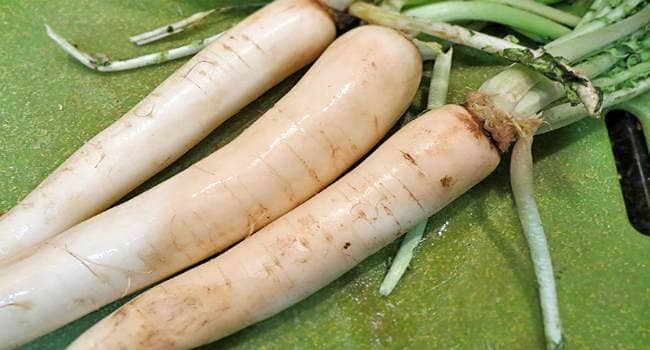
Daikon benefit
The use of daikon can bring invaluable benefits to our body. Its beneficial properties are used not only as a food product, but also for the treatment and prevention of many diseases, and health promotion.
Dietary fiber improves intestinal motility, preventing constipation. It also stimulates the production of bile and is a good choleretic agent, which helps to reduce the risk of gallstones, eliminates bile congestion.
Daikon is traditionally used to cleanse the entire body. The root vegetable contains a large amount of antioxidants, which gives it anti-cancer properties, cleanses the body of carcinogenic compounds, serves as the prevention of cardiovascular diseases, atherosclerosis, and slows down the aging process.
Chinese sweet radish has a beneficial effect literally on the functioning of almost all organs: stomach, intestines, kidneys, liver. By consuming it, many chronic metabolic diseases can be successfully treated.
The main advantage of daikon radish is as a good liver and kidney cleanser, which can remove sand and stones.
Speaking about the benefits of daikon for the human body and its health, he:
Improves appetite;
Normalizes and improves the digestion process;
Improves liver function;
Improves kidney function;
Reduces swelling by removing excess water from the body;
Promotes wound healing;
Serves as the prevention of viral and bacterial infections;
Strengthens the immune system;
Prevents the development of tumors.
Daikon juice
All the beneficial properties of daikon are preserved in its juice. One cup of juice a day is enough to feel a surge of strength and energy, replenish your body with vitamins and minerals.
In folk medicine, juice is used as a diuretic and laxative. Unlike synthetic diuretics, it saturates the body with many useful nutrients and does not have a detrimental effect on the heart and kidneys, or metabolic processes in the body. It is found in many cleansing diets.
Daikon juice mixed with carrot or apple juice is recommended to be drunk half an hour before meals to cleanse the liver and intestines. This has a positive effect on the work of the gallbladder, the entire digestive system.
They also drink juice for diseases of the upper respiratory tract, colds, coughs, asthma. At the first signs of the disease, it is enough to drink a glass of juice or eat a daikon salad. And if you get sick, half a glass of juice several times a day, to which honey is added, will help you cope with the disease faster.
Juice at night is useful, as it has a sedative effect. In addition, the juice helps to quickly get rid of the effects of a hangover.
There is no need to throw away the pulp that remains after juicing. Masks with it are useful for oily skin prone to acne and acne.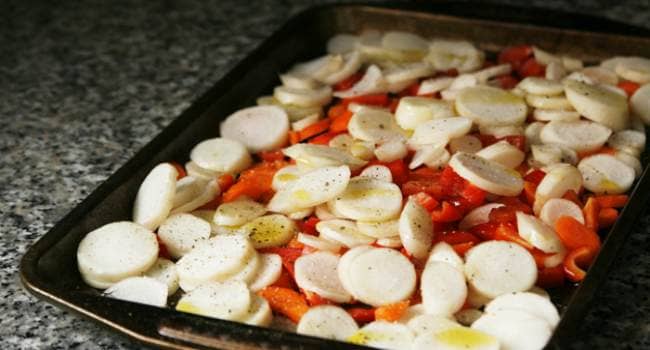
Daikon application
Of course, daikon, as a food product, is primarily used in cooking. But it is recommended in dietary meals. It can be used for:
Obesity and overweight;
Diabetes;
Rheumatism;
Kidney failure;
Gallstones;
Liver disease;
Atherosclerosis;
Colds;
Digestive and intestinal disorders;
Cardiovascular disease.
Sweet radishes are often included in fasting diets. Its regular inclusion in your menu can help lower cholesterol levels and get rid of the deposition of cholesterol plaques on the walls of blood vessels, improve their elasticity.
It is recommended for use by people who have been exposed to radiation, as it is able to remove radionuclides and carcinogens from the body.
In the autumn-winter period, this root crop can be an excellent prevention of colds and viral diseases. Unlike radish, it tastes softer and does not contain bitterness.
Daikon cooking applications
The best thing is to eat daikon fresh. During heat treatment, some of the nutrients are simply destroyed. You can drink daikon juice without diluting it with other juices, although some people prefer to mix it with other juices from vegetables and fruits.
Not only the root vegetable of the plant is eaten, but also young leaves. Salads and sushi are made from them. Unfortunately, the leaves are not stored for a long time and quickly turn yellow and are available only to those who grow this vegetable and can immediately cook them.
Daikon is a popular vegetable in Chinese and Japanese cuisine. Where many dishes are prepared from it:
Salads;
Served as a side dish for fish;
Used when preparing sushi;
Add when stewing meat.
Daikon is salted and pickled, stewed in soy sauce. In our country, it is most often prepared in the form of a salad seasoned with vegetable oil, sour cream or cream.
Daikon contraindications and harm
Despite the many useful properties and the benefits that daikon can bring to the human body, there are certain contraindications that limit its use. So, it is not recommended to use it when:
Ulcers of the stomach and duodenum;
Gastritis;
Gout.
The consumption of this vegetable in large quantities can provoke the appearance of flatulence and bloating, irritate the mucous membranes of the gastrointestinal tract.
It can be harmful in chronic liver and kidney diseases, diseases associated with metabolic disorders. Therefore, it is better to consult a doctor before including this root vegetable in your diet.
