


- 1 How Does a Fuel Pump Problem Affect the Engine?
- 2 Can a Weak Fuel Pump Directly Damage the Engine?
- 3 1. Repeated Engine Misfires
- 4 2. Poor Combustion Can Affect the Catalytic Converter
- 5 3. Engine Stalling Creates a Safety Risk
- 6 4. The Vehicle May Eventually Stop Starting
- 7 5. Driving Under Heavy Load Can Make Problems Worse
- 8 Can Driving With a Low Fuel Level Make the Problem Worse?
- 9 Could a Clogged Fuel Filter Be the Real Problem?
- 10 Can Electrical Problems Look Like Fuel Pump Failure?
- 11 When Should You Stop Driving?
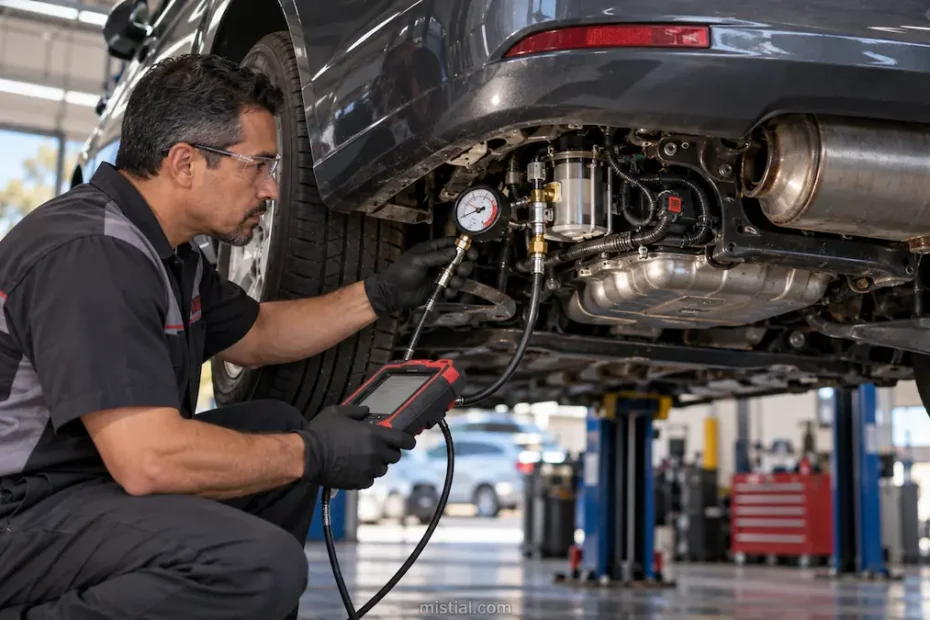
- 12 How Are Fuel Pump Problems Diagnosed?
- 13 Fuel Pump Diagnosis at One Nation Auto
A failing fuel pump does not always cause immediate engine damage. In many cases, the first symptoms are difficult starting, hesitation, poor acceleration, loss of power, or engine stalling. However, continuing to drive with an unresolved fuel delivery problem can create additional risks and may allow other problems to develop.
When investigating fuel pump problems in Santa Clara, it is important to understand not only whether the vehicle can still be driven, but also what can happen if the underlying fuel delivery problem is ignored.
How Does a Fuel Pump Problem Affect the Engine?
The engine requires the correct amount of fuel and air for proper combustion.
A weak fuel pump may not provide sufficient fuel pressure or volume, particularly when the engine is under load. The result can be an engine that does not receive the fuel it needs to operate normally.
Depending on the severity of the problem, the vehicle may experience:
- Hard starting
- Hesitation
- Poor acceleration
- Sputtering
- Loss of power
- Misfires
- Engine stalling
- Complete no-start conditions
The longer the problem continues, the more important it becomes to determine the actual cause.
Can a Weak Fuel Pump Directly Damage the Engine?
A failing fuel pump does not normally damage internal engine components simply because the pump is weak.
The greater concern is how the engine operates when fuel delivery becomes inadequate.
If the engine repeatedly experiences poor combustion, misfires, severe hesitation, or other abnormal operating conditions, additional problems can occur depending on the vehicle and the severity of the situation.
Therefore, the fuel pump itself may not directly destroy the engine, but continuing to operate a vehicle with serious fuel delivery problems is not a good idea.
1. Repeated Engine Misfires
Insufficient fuel delivery can contribute to an improper air-fuel mixture.
If the engine does not receive enough fuel, combustion may become unstable and misfires can occur.

Repeated misfires can cause poor performance and may also create additional stress on the emissions system.
If the engine is shaking, running poorly, or repeatedly displaying a check-engine warning, the vehicle should be diagnosed rather than driven indefinitely.
2. Poor Combustion Can Affect the Catalytic Converter
A fuel delivery problem can sometimes be accompanied by misfires.
Misfires can allow unburned fuel to enter the exhaust system. Depending on the underlying cause and severity, this can increase heat in the catalytic converter and potentially damage emissions components.
This is one reason a flashing check-engine light should not be ignored.
A flashing warning generally indicates a condition requiring prompt attention because continued operation may result in damage to the emissions system.
3. Engine Stalling Creates a Safety Risk
One of the most immediate dangers of driving with a failing fuel pump is unexpected engine stalling.
The vehicle may lose engine power while:
- Merging onto a highway
- Passing another vehicle
- Driving uphill
- Traveling through heavy traffic
- Accelerating from an intersection
A stalled engine can make it difficult to maintain normal traffic speed and can create a dangerous situation.
Even if the engine restarts afterward, repeated stalling should be treated as a serious warning sign.
4. The Vehicle May Eventually Stop Starting
A fuel pump that is gradually losing performance may eventually fail completely.
The progression can look like this:
Occasional hard starting → hesitation → loss of power → stalling → no-start condition
The exact progression varies between vehicles, but a pump that is already showing clear symptoms should not be assumed to remain operational indefinitely.
A complete failure can leave the vehicle stranded and require towing.
5. Driving Under Heavy Load Can Make Problems Worse
A weak pump may appear to work reasonably well during gentle driving but fail when fuel demand increases.
Heavy acceleration, steep hills, highway speeds, or carrying additional weight can increase engine demand.
This may expose a fuel delivery problem that is less noticeable during normal city driving.
If the vehicle loses power whenever the engine is under load, continuing to push it hard can increase the likelihood of stalling.
Can Driving With a Low Fuel Level Make the Problem Worse?
Repeatedly driving with very little fuel can place additional stress on some in-tank fuel pumps.
Fuel surrounding the pump can help dissipate heat during operation. A very low fuel level reduces the amount of fuel available around the pump.
This is particularly relevant when a pump is already worn or operating in high-temperature conditions.
Keeping the tank from repeatedly reaching an extremely low level is a sensible precaution, but it will not repair a pump that is already failing.
Could a Clogged Fuel Filter Be the Real Problem?
Yes.
A restricted fuel filter can produce symptoms similar to a weak fuel pump.
Both problems can cause:
- Difficult starting
- Hesitation
- Poor acceleration
- Loss of power
- Sputtering
- Stalling
If the actual problem is a clogged filter, replacing the fuel pump will not necessarily solve it.
This is why diagnosis should include the complete fuel delivery system rather than focusing on one component immediately.
Can Electrical Problems Look Like Fuel Pump Failure?
They can.
The fuel pump depends on a proper electrical supply.
A faulty relay, damaged wiring, poor ground, corroded connector, or voltage problem can interfere with pump operation.
If the electrical supply is incorrect, a new fuel pump may not resolve the underlying problem.
Professional diagnosis should therefore include electrical testing before a pump is replaced.
When Should You Stop Driving?
Some minor symptoms may allow a vehicle to reach a repair facility safely, but severe symptoms should not be ignored.
Avoid continuing to drive if the vehicle:
- Repeatedly stalls
- Suddenly loses significant power
- Has severe hesitation
- Struggles to maintain highway speed
- Has a flashing check-engine light
- Will not restart reliably
- Produces severe engine misfires
In these situations, arranging professional assistance can be safer than attempting to continue driving.
How Are Fuel Pump Problems Diagnosed?
When investigating fuel pump problems in Santa Clara, the goal is to determine whether the pump is actually responsible for the symptoms.
A technician may perform:
Fuel Pressure Testing
Fuel pressure is measured and compared with the manufacturer’s specifications.
Fuel Volume Testing
The system’s ability to deliver an adequate amount of fuel is evaluated.
Electrical Testing
Voltage, grounds, wiring, fuses, relays, and connectors can be inspected.
Diagnostic Scanning
Stored and pending fault codes can provide additional information about engine operation.
Fuel Filter Inspection
A restricted filter can be responsible for symptoms that resemble fuel pump failure.
Testing Under Load
If the problem occurs during acceleration or highway driving, testing under similar conditions can help identify fuel delivery limitations.

Fuel Pump Diagnosis at One Nation Auto
If you are experiencing fuel pump problems in Santa Clara, delaying diagnosis can increase the chance of being stranded and may allow related engine or emissions problems to continue.
At One Nation Auto, fuel delivery concerns can be evaluated using fuel pressure and fuel flow testing, electrical diagnostics, diagnostic scanning, and inspection of related components.
The objective is to identify the actual cause of the problem and determine whether the vehicle can be safely driven or requires repair before further use.
Driving with a weak fuel pump does not automatically mean the engine will suffer permanent internal damage. However, continued operation with serious fuel delivery problems can lead to poor combustion, misfires, repeated stalling, emissions-system problems, and eventually a complete no-start condition. Fuel pump problems in Santa Clara should therefore be diagnosed promptly, especially when the vehicle is losing power, stalling, or becoming increasingly difficult to start. Early diagnosis can help prevent a relatively manageable fuel system problem from becoming a more expensive or unsafe situation.
