


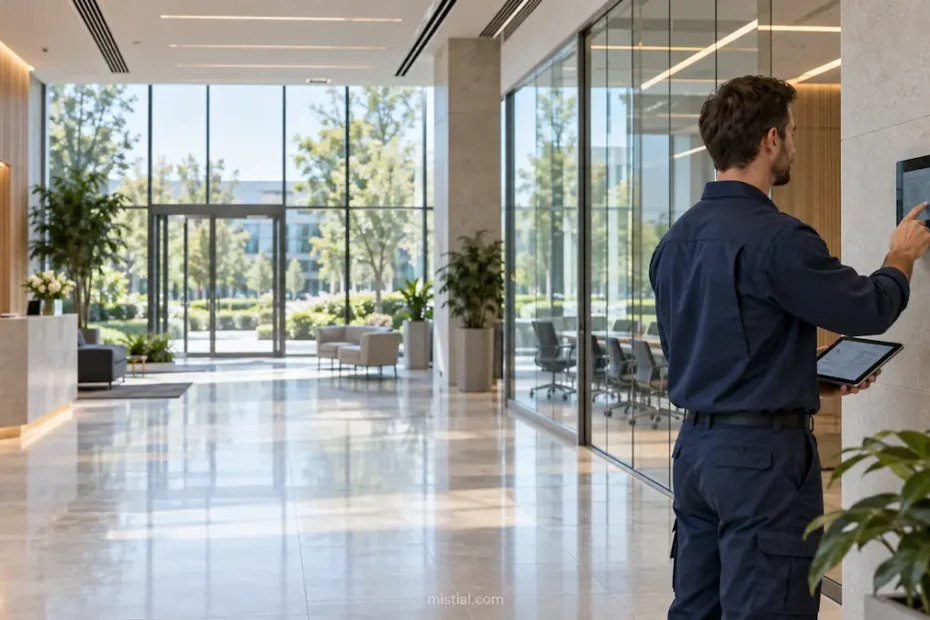
A building rarely becomes difficult to manage overnight. More often, small faults accumulate: a meeting room stays too warm, a door sticks, or the same leak returns. Coordinated Property Services help businesses address these issues within a practical plan for the whole premises. Maintenance, cleaning and building systems all contribute to a workplace that people can use comfortably.
Effective FM connects those activities with how the business operates. The aim is to understand what needs attention, assign responsibility and reduce avoidable disruption. For an office manager or property owner, that means fewer unresolved questions and a clearer view of where the maintenance budget goes.
Start with the building and its users
A useful maintenance plan begins with an accurate picture of the premises. Equipment age, service history, operating hours and access arrangements influence what can be done and when. A rarely used meeting room and a busy reception area will not necessarily need the same cleaning frequency or temperature schedule.
Walk-through inspections should be paired with feedback from occupants. Staff may notice recurring noise, poor lighting or uncomfortable temperatures that do not appear during a brief contractor visit. Recording the location, time and circumstances turns a general complaint into information the team can investigate.
Plan maintenance around business activity
Preventative maintenance creates opportunities to inspect and service equipment before faults develop into major interruptions. It cannot eliminate every breakdown, but it allows routine work to be organised around meetings, deliveries and opening hours. It also gives managers time to arrange access and discuss any temporary restrictions.
- Keep an asset register with equipment locations and service records.
- Agree maintenance requirements with appropriately qualified specialists.
- Identify which failures would have the greatest operational impact.
- Set clear arrangements for urgent faults and outstanding follow-up work.
Priorities should reflect the consequences of failure. An unreliable entrance door may affect everyone entering the building, while a minor decorative defect can be addressed during planned refurbishment. This distinction helps managers explain decisions when several departments are competing for attention.
Connect comfort with energy management
Heating, ventilation and air conditioning deserve particular attention because their performance affects both occupants and running costs. Servicing, suitable controls and operating schedules should work together. Equipment that runs long after everyone has left may need a scheduling review rather than immediate replacement.
Comfort complaints should also inform that review. If one area is consistently too warm while another is cold, qualified assessment can establish the cause. Simply changing the temperature setting for the entire building may leave the original problem unresolved.
Energy monitoring is most useful when figures are considered alongside occupancy, weather and opening hours. A lower bill alone does not prove that a maintenance change worked. Comparing relevant consumption data helps a business decide whether adjustments are delivering the intended improvement.
Make reporting easy and follow-up visible
People need a straightforward way to report a fault and understand what happens next. Whether the organisation uses a helpdesk or a shared reporting system, each request should have a location, description, priority and owner. Photos can help explain visible defects without requiring several visits to understand the issue.
- Acknowledge the request and explain the next action.
- Record the diagnosis and work completed.
- Flag any parts, approvals or further visits still required.
- Confirm the outcome before closing the request.
Repeated reports deserve a closer look. If the same fault keeps returning, the service history can support a decision about further investigation or replacement. It also prevents the next contractor from having to reconstruct the problem from memory.
Choose a service partner with clear responsibilities
A proposal should explain which services are included, how additional work is approved and what reporting the client receives. Cleaning, landscaping, mechanical maintenance and electrical work involve different skills, but their coordination should be understandable to the person managing the site.
Review performance through practical measures: outstanding tasks, recurring faults, planned work completed and feedback from building users. A useful review ends with agreed actions and named owners. Over time, this creates a more manageable building, a better-informed budget and fewer maintenance problems left to become business problems.
