


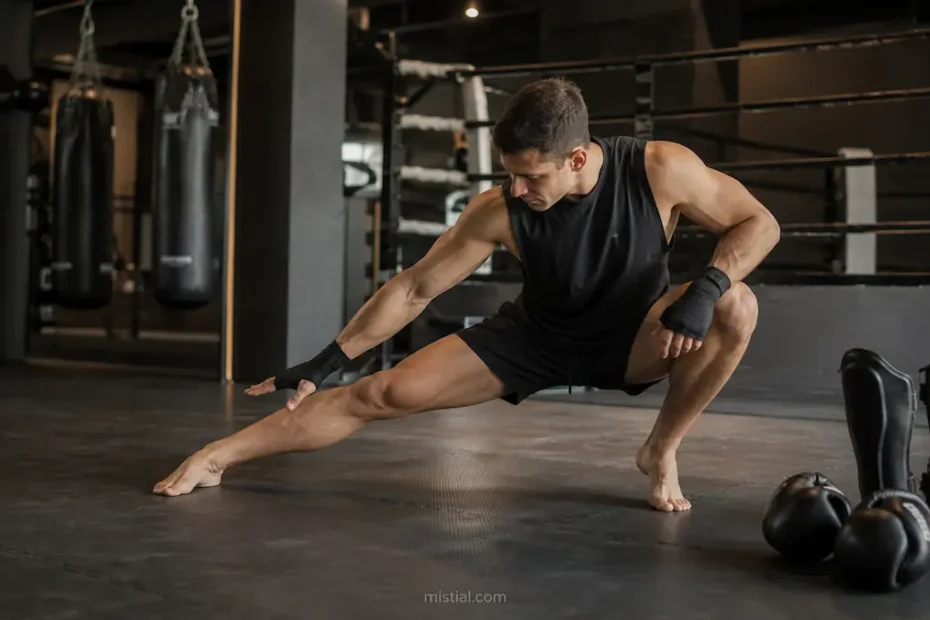
Walk into any combat sports gym, and you’ll notice something consistent across disciplines: dedicated stretching routines built into every training session. Whether you’re throwing punches in boxing, unleashing devastating kicks in Muay Thai, or combining both in kickboxing, flexibility training isn’t optional—it’s foundational.
Yet many beginners underestimate its importance, viewing stretching as a minor warm-up formality rather than a critical training component.
The Direct Performance Connection
Increased Range of Motion
Flexibility directly determines how effectively you can execute techniques. In Muay Thai and kickboxing, high kicks require significant hip flexibility. Limited range of motion doesn’t just reduce kick height—it fundamentally limits your technical options, forcing you into a smaller arsenal of viable strikes.
Even in boxing, where kicks aren’t a factor, shoulder and hip flexibility affects punch extension, rotation, and power generation. Tight muscles restrict your natural range of motion, potentially limiting your reach and the fluidity of your combinations.
Power Generation
Contrary to what many believe, flexible muscles can generate more power, not less. Muscles that move through a fuller range of motion before contracting can produce greater force. This is particularly relevant for rotational power in punches and kicks, where hip and torso flexibility directly correlates with striking power.
Speed and Fluidity
Stiff, inflexible muscles create resistance during movement, slowing down your technique execution. Fighters with better flexibility often display smoother, faster combinations because their muscles aren’t fighting against their own tightness during rapid direction changes or technique transitions.
Injury Prevention: The Critical Factor
Reducing Muscle Strains
Combat sports demand explosive, sometimes extreme ranges of motion—a head-height kick, a deep slip to avoid a punch, or rapid pivoting during footwork. Tight, inflexible muscles are significantly more susceptible to strains and tears when suddenly forced into these positions.
Regular stretching gradually increases your muscles’ capacity to handle these demanding movements safely, essentially expanding your body’s operational range before you need it in a live training or competition scenario.
Joint Health
Flexibility training doesn’t just affect muscles—it supports joint health by maintaining proper range of motion in hips, shoulders, and other crucial joints. This is particularly important in Muay Thai and kickboxing, where hip joints undergo tremendous stress during kicking techniques.
Balancing Muscle Development
Combat sports training often creates muscle imbalances through repetitive movements. Boxers develop particularly strong chest and shoulder muscles from punching, while kickers build powerful hip flexors and quadriceps. Without counterbalancing flexibility work, these imbalances can lead to postural issues and increased injury risk over time.
Types of Stretching for Fighters
Dynamic Stretching (Pre-Training)
Before training sessions, dynamic stretching—controlled, active movements through your range of motion—prepares your body for the explosive demands ahead. Examples include leg swings, arm circles, and walking lunges with rotation. This type of stretching increases blood flow, activates muscles, and gradually increases range of motion without the muscle-lengthening effects that might temporarily reduce power output.
Static Stretching (Post-Training)
After training, when muscles are warm and pliable, static stretching—holding a position for 20-30 seconds—becomes valuable. This is when you’ll make the most significant gains in overall flexibility, as your muscles are already warmed up and more receptive to lengthening.
PNF Stretching
Proprioceptive Neuromuscular Facilitation combines stretching with contraction, often performed with a training partner. This advanced technique can produce significant flexibility gains and is popular among serious Muay Thai practitioners working toward higher kicks.
Discipline-Specific Focus Areas
Boxing
Focus on shoulder mobility, hip rotation, and thoracic spine flexibility to support punch rotation and extension.
Muay Thai
Prioritise hip flexibility, hamstring length, and groin flexibility to support high kicks, knee strikes, and clinch work.
Kickboxing
Combine both focuses, with particular attention to hip flexors and hamstrings for kicking techniques alongside shoulder mobility for punching combinations.
Building a Consistent Practice
Flexibility improves with consistency, not occasional intense sessions. Dedicating 10-15 minutes to dynamic stretching before training and 10-15 minutes to static stretching afterwards, performed consistently across weeks and months, produces far better results than sporadic, lengthy stretching sessions.
Many fighters also benefit from dedicated flexibility sessions outside regular training—yoga classes or standalone stretching sessions specifically targeting problem areas identified during training.
A Good Stretch
Flexibility training isn’t a supplementary nice-to-have for fighters—it’s a fundamental component that directly impacts performance, technique execution, and long-term injury prevention. Whether you’re perfecting a head kick in Muay Thai, working on hip rotation for boxing power, or combining techniques in kickboxing, consistent stretching practice will pay dividends throughout your training journey and competitive career.
