


- 1 What milk thistle actually is
- 2 Why milk thistle is linked with liver support
- 3 What milk thistle may help with, and where the evidence is cautious
- 4 The “detox” misunderstanding
- 5 Different forms of milk thistle
- 6 Milk thistle and fatty liver: why context matters
- 7 Milk thistle, alcohol and false reassurance
- 8 Side effects and tolerability
- 9 Medication interactions and who should be careful
- 10 Pregnancy, breastfeeding and children
- 11 What people often do wrong with milk thistle
- 12 A practical way to think about milk thistle
- 13 When milk thistle is not enough
- 14 FAQ
- 15 What to remember
Milk thistle is one of the most recognized herbs connected with liver support. It appears in capsules, teas, powders, tinctures and “detox” formulas, often with bold promises around cleansing, protection and recovery. The plant has a long history of traditional use, but the modern conversation around it is often too simplified: milk thistle is not a magic shield for the liver, and it is not a substitute for medical care when something is wrong.
The more useful way to understand milk thistle is to see it as a medicinal plant with interesting compounds, especially a group often called silymarin. These compounds may have supportive properties in some contexts, but their real-life effect depends on the product, the person’s health, the condition being discussed and the broader lifestyle or treatment plan.
This guide explains what milk thistle is, why it is associated with the liver, what its limits are, how different forms compare, what safety issues are easy to overlook and when it is better to speak with a healthcare professional instead of relying on supplements alone.
What milk thistle actually is
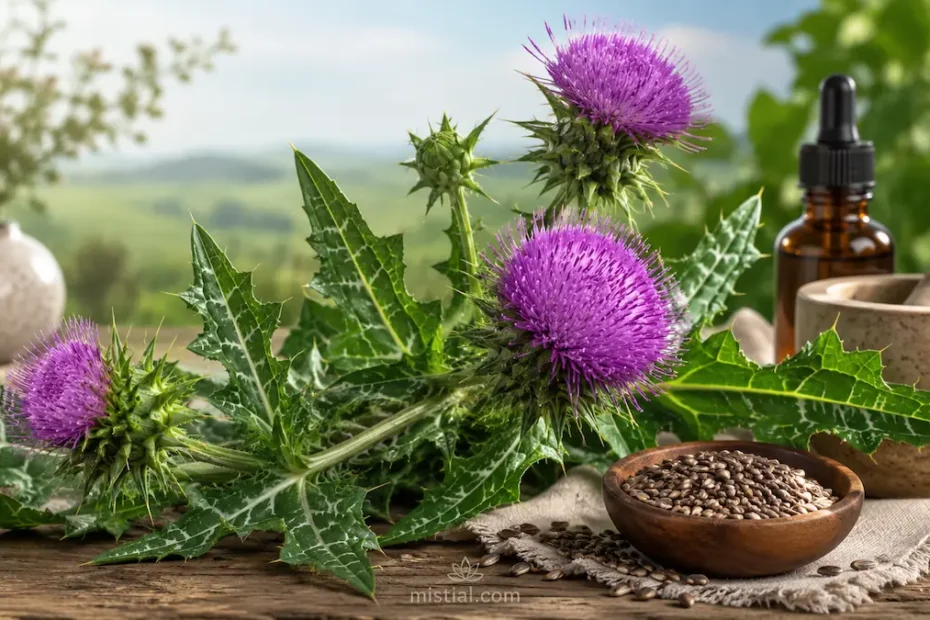
Milk thistle is the common name for Silybum marianum, a flowering plant with purple blossoms and distinctive leaves marked with pale veins. The medicinal part most often used is the seed. These seeds contain a mixture of plant compounds known as silymarin, which includes several related flavonolignans.
In everyday language, people often use “milk thistle” and “silymarin” as if they mean exactly the same thing. They are related, but not identical. Milk thistle is the plant. Silymarin is a group of compounds extracted mainly from the seeds. A tea made from the plant, a ground seed powder and a standardized extract may therefore be very different in strength and expected effect.
This distinction matters because many claims about milk thistle are actually about concentrated extracts rather than casual herbal tea. When someone says “milk thistle supports the liver,” the practical question is: which form, what quality, for whom, and in what context?
Important: milk thistle tea, seed powder and standardized silymarin extracts are not equivalent. A person may tolerate one form but respond differently to another.
Why milk thistle is linked with liver support
The liver performs many tasks: processing nutrients, helping metabolize medicines and alcohol, producing bile, storing certain nutrients and supporting the body’s natural waste-processing systems. Because the liver is so central to metabolism, it is also surrounded by myths about “detoxing” and quick restoration.
Milk thistle became closely linked with liver support because silymarin has been studied for possible antioxidant, anti-inflammatory and cell-protective effects. These ideas are biologically interesting, but they should not be stretched into unrealistic promises. Supporting liver health is not the same as reversing serious liver disease.
In practice, the liver is not “cleansed” by a single herb. Liver health is shaped by alcohol intake, metabolic health, viral infections, medications, body weight, diet quality, sleep, environmental exposures and existing disease. Milk thistle may be discussed as one supportive factor, but it cannot replace the basics or medical treatment when treatment is needed.
What milk thistle may help with, and where the evidence is cautious
People most often consider milk thistle when they are worried about liver enzymes, fatty liver, alcohol-related stress, medication burden or general liver support. Some also use it for digestive comfort because of its traditional connection with bile flow and the liver-gallbladder system.
The difficulty is that liver-related concerns are not all the same. Mild lifestyle-related liver strain, diagnosed fatty liver disease, hepatitis, cirrhosis, gallbladder problems and medication-related liver injury are very different situations. A supplement that seems reasonable for general support may be inappropriate if the real issue is serious or undiagnosed.
Milk thistle may be part of a conversation about supportive care, but it should not be framed as a cure for hepatitis, cirrhosis, fatty liver disease, alcohol-related liver damage or poisoning. Those conditions require proper evaluation and management.
| Situation | How milk thistle is often considered | What to remember |
|---|---|---|
| General liver support | Used as a supplement by people seeking gentle herbal support | Healthy habits usually matter more than any single supplement. |
| Fatty liver concerns | Sometimes used alongside lifestyle changes | Weight, diet, activity, blood sugar and medical follow-up are central. |
| High liver enzymes | People may try it after blood test results | The cause of abnormal results should be investigated first. |
| Alcohol-related concern | Sometimes used after heavy drinking | It does not make alcohol safe or undo repeated liver stress. |
| Medication burden | Used by some people hoping to “protect” the liver | Do not add supplements without checking interactions and liver risks. |
The “detox” misunderstanding
Milk thistle is often placed in detox products, and this can create a misleading impression. The liver already performs detoxification-related work continuously. It does not need to be “started” by a tea or a capsule. What it needs is less unnecessary burden and proper care when disease is present.
The detox language can also make people feel protected while they continue habits that strain the liver. Taking milk thistle after alcohol, overeating, unsafe supplement use or ignoring abnormal blood tests is not a reliable strategy. A plant cannot cancel out repeated harm.
A more accurate way to think about milk thistle is not “detox,” but “possible support.” Support means limited, contextual and secondary. It may fit into a broader approach, but it does not replace reducing alcohol, reviewing medications, treating viral hepatitis, managing blood sugar or addressing metabolic risk.
Important: milk thistle should not be used as permission to drink more alcohol, ignore liver symptoms or delay medical evaluation after abnormal liver tests.
Different forms of milk thistle
The form of milk thistle changes how people use it and what they can reasonably expect. The same plant can appear as tea, powder, capsule, tincture or standardized extract, but these forms are not interchangeable.
| Form | Typical use | Key limitation |
|---|---|---|
| Tea | Traditional herbal drink | Silymarin is not very water-soluble, so tea may be milder than extracts. |
| Ground seed or powder | Added to food or taken as a simple plant product | Strength and absorption may vary widely. |
| Capsules | Common supplement form | Quality and concentration differ by product. |
| Standardized extract | Used when a more defined silymarin content is desired | Still not a substitute for medical treatment. |
| Tincture | Liquid herbal preparation | May contain alcohol and variable amounts of active compounds. |
| Combination liver formulas | Blends with other herbs, vitamins or nutrients | Harder to identify benefits, side effects or interactions. |
Combination products deserve particular caution. A formula marketed for liver support may contain many ingredients, and some may be unnecessary, poorly tolerated or problematic with medications. More ingredients do not automatically mean better support.
Milk thistle and fatty liver: why context matters
Many people look up milk thistle after hearing about fatty liver. This is understandable because non-alcohol-related fatty liver is often connected with metabolic health, and people naturally search for something that can help. Still, the most important steps usually involve the foundations: nutrition, physical activity, weight management when relevant, blood sugar control, lipid management and medical follow-up.
Milk thistle cannot replace these changes. If a person continues the same patterns that contributed to fatty liver, a supplement is unlikely to change the bigger picture. The liver responds to long-term metabolic conditions, not only to isolated herbal products.
That does not mean milk thistle is useless. It means it should be kept in the right place: possibly supportive, not primary. A person with fatty liver concerns should know what stage of the condition they have, whether there is inflammation or scarring, and what their clinician recommends.
Milk thistle, alcohol and false reassurance
One of the riskiest misunderstandings is the belief that milk thistle can protect the liver from alcohol. This idea can encourage false reassurance. While milk thistle is often discussed in relation to liver protection, it does not make alcohol harmless.
Alcohol-related liver stress depends on amount, frequency, individual vulnerability, nutrition, genetics, medications and existing health conditions. A supplement cannot reliably neutralize these factors. If alcohol is causing concern, the safer question is not “What can I take after drinking?” but “How can I reduce the harm and understand whether damage has already occurred?”
People who have difficulty reducing alcohol, experience withdrawal symptoms or use alcohol to cope with stress or mood symptoms should not try to solve the problem with liver supplements. This is a situation where professional help can be much more useful and safer.
Side effects and tolerability
Milk thistle is often described as well tolerated, but side effects can occur. The most common issues are digestive: nausea, bloating, gas, loose stool, stomach discomfort or a change in bowel habits. Some people may also experience headache, itching or skin reactions.
Allergic reactions are possible, especially in people sensitive to plants in the Asteraceae family, such as ragweed, daisies, chrysanthemums or related plants. A reaction may include rash, itching, swelling or breathing difficulty. Any severe allergic symptom needs urgent medical attention.
Another practical issue is that supplements can vary in purity and labeling accuracy. A reaction may come from milk thistle itself, but it may also come from fillers, other herbs, contaminants or a combination formula.
Medication interactions and who should be careful
Milk thistle may affect how some medicines are processed or tolerated, although the significance can vary. The safest approach is to check with a healthcare professional if you take regular medication, especially for chronic conditions.
People taking diabetes medicines should be cautious because milk thistle may influence blood sugar control in some contexts. People taking anticoagulants, antiplatelet medicines, hormone-related treatments, seizure medicines, immune-related medicines or multiple prescriptions should also ask before starting it.
People with active liver disease should be especially careful. It may sound logical to take a liver herb when the liver is unwell, but liver disease can change how the body handles medicines and supplements. Adding a supplement without supervision may complicate the situation.
Important: if you take prescription medication or have diagnosed liver disease, do not start milk thistle as a casual supplement without asking a doctor or pharmacist.
Pregnancy, breastfeeding and children
Milk thistle has traditional associations with different uses, but pregnancy and breastfeeding require a higher standard of caution. A long history of use does not automatically prove safety in every situation, especially with concentrated extracts.
Pregnant people, breastfeeding people and children should not use milk thistle supplements without professional guidance. A tea or food-like exposure is different from a concentrated capsule, but even mild products should be considered carefully in these groups.
For children, liver symptoms, digestive complaints or unusual fatigue should not be handled with herbal supplements at home. Pediatric evaluation is more appropriate, especially if symptoms are persistent or unclear.
What people often do wrong with milk thistle
Most mistakes with milk thistle come from treating it as a simple “liver cleaner.” This can lead to overuse, delayed care or misplaced confidence.
- Using it after abnormal blood tests without follow-up. High liver enzymes need an explanation, not only a supplement.
- Taking it to offset alcohol. Milk thistle does not make repeated drinking safe for the liver.
- Choosing complex detox blends. Multi-ingredient formulas can increase the chance of side effects and confusion.
- Ignoring medication interactions. People on long-term medicines should check first.
- Assuming tea and extract are the same. Different forms can vary greatly in strength.
- Using it instead of lifestyle changes. For many liver concerns, metabolic habits and alcohol reduction matter more.
- Waiting too long with warning symptoms. Jaundice, severe pain or dark urine should not be managed with herbs.
A better approach is to use milk thistle only when the goal is clear, the product is simple, the safety context is understood and serious symptoms have been ruled out.
A practical way to think about milk thistle
Milk thistle can fit into a calm, realistic self-care plan, but it should not be the center of the plan. The first step is understanding why you want to use it. “For the liver” is too vague. The reason may be a blood test result, fatty liver concern, medication worry, alcohol history or general wellness interest. Each situation requires a different response.
- Clarify the reason: general support, blood test concern, fatty liver, alcohol concern or medication-related worry.
- Do not use milk thistle to avoid medical evaluation after abnormal liver tests or symptoms.
- Choose a simple product rather than a large detox blend with many ingredients.
- Check with a doctor or pharmacist if you take regular medicines or have a diagnosed condition.
- Watch for digestive upset, rash, itching, blood sugar changes or unusual symptoms.
- Focus on liver basics: alcohol reduction, balanced nutrition, activity, weight management when relevant and medical follow-up.
This keeps milk thistle in a realistic role: a possible supportive herb, not a cure, shield or shortcut.
When milk thistle is not enough
Some liver-related symptoms should not be handled with supplements. Seek medical advice promptly if you notice yellowing of the skin or eyes, dark urine, pale stools, severe or persistent pain in the right upper abdomen, unexplained swelling, confusion, vomiting blood, black stools, fever with abdominal pain, or sudden severe fatigue.
Medical review is also important if blood tests show abnormal liver enzymes, bilirubin changes or other concerning markers. Even mild abnormalities can have different causes, including fatty liver, alcohol, viral infections, medication effects, gallbladder disease, autoimmune conditions or other issues.
If you already have hepatitis, cirrhosis, significant fatty liver disease, gallbladder disease or a history of liver injury, milk thistle should be discussed with a clinician rather than added independently.
FAQ
What is milk thistle used for?
Milk thistle is most commonly used as a herbal supplement for liver support. It is also discussed in relation to digestion and antioxidant support. However, it should not be treated as a cure for liver disease or a replacement for medical care.
Is milk thistle the same as silymarin?
No. Milk thistle is the plant, while silymarin is a group of compounds found mainly in its seeds. Many supplement claims refer specifically to silymarin extracts rather than tea or whole seed powder.
Can milk thistle detox the liver?
The liver already performs detoxification-related work. Milk thistle may be discussed as supportive, but it does not “cleanse” the liver in a dramatic or guaranteed way. Reducing liver stress and treating real medical problems matter more.
Can milk thistle help fatty liver?
Milk thistle may be considered by some people with fatty liver concerns, but it is not the main strategy. Nutrition, physical activity, weight management when relevant, blood sugar control and medical follow-up are usually more important.
Is milk thistle safe with medications?
Not always. Milk thistle may interact with some medicines or affect how they are tolerated. People taking regular prescriptions, diabetes medicines, blood thinners or multiple medications should ask a doctor or pharmacist before using it.
Can milk thistle protect the liver from alcohol?
No supplement should be relied on to protect the liver from alcohol. Milk thistle does not make repeated drinking safe. If alcohol is a concern, reducing intake and seeking proper support is more important than adding a liver supplement.
What to remember
Milk thistle is a well-known medicinal plant with a strong association with liver support, mainly because of compounds grouped under the name silymarin. It may have a place in supportive herbal care, but its role should stay realistic and limited.
The biggest mistake is using milk thistle as a shortcut: to avoid investigating abnormal liver tests, to compensate for alcohol, to replace lifestyle changes or to self-treat liver disease. That approach can delay useful care and create false confidence.
A sensible approach is simple: understand why you want to use it, choose products carefully, check medication safety, avoid exaggerated detox claims and seek medical advice when symptoms or test results suggest that the liver needs more than general support.
