


- 1 How Can Furniture Add Warmth to White-Walled Spaces?
- 2 Why Does Contrast Matter More Than Colour Choice?
- 3 How Do Undertones Affect Furniture and White Walls?
- 4 Which Furniture Colours Create a Clean Modern Look?
- 5 How Does Natural Light Change Furniture Colour Choices?
- 6 What Are Reliable Furniture Colour Pairings for White Walls?
- 7 How Do You Avoid a Flat or Washed-Out Look?
- 8 Can Bold Furniture Colours Work with White Walls?
- 9 Final Thoughts on Styling Furniture with White Walls
White walls provide a neutral backdrop that allows furniture colour to define the mood, depth, and character of a room, with the most successful spaces using contrast, undertone alignment, and lighting awareness to guide colour selection.
Most people assume white walls make decorating easier.
In reality, they remove constraints, which makes poor choices more obvious.
How Can Furniture Add Warmth to White-Walled Spaces?
Furniture introduces warmth into white-walled rooms by incorporating natural tones, textured materials, and colours with yellow, red, or brown undertones that counterbalance the neutrality of white surfaces.
Warmth is less about brightness and more about tone.
Materials like oak, walnut, and linen instantly soften white walls because they carry subtle colour variation. Even within a neutral palette, these materials prevent the space from feeling flat or sterile.
In rooms with limited sunlight, especially north-facing ones, warm-toned furniture becomes essential. Without it, white walls tend to reflect cooler light, making the space feel slightly harsh.
A simple shift from grey upholstery to oatmeal or tan can completely change how the room feels without altering the layout.
Why Does Contrast Matter More Than Colour Choice?
Contrast determines whether a room feels structured or visually unclear, with furniture that differs enough in tone from white walls helping the eye understand depth and spatial boundaries.
Rooms without contrast often feel unfinished.
If furniture sits too close to the wall colour, shapes blend together. This reduces visual definition and makes the space feel both larger and oddly uncomfortable.
A minimum tonal separation creates clarity. Darker sofas, mid-tone wood tables, or even a deep-coloured rug can anchor the room and give it structure.
For a deeper breakdown of how contrast works in interiors, see https://petalwoodinteriors.co.uk/ and supporting principles in Contrast (vision) and Color theory
How Do Undertones Affect Furniture and White Walls?
Undertones influence whether furniture colours feel harmonious or slightly off, with mismatched undertones creating subtle clashes even when colours appear neutral at first glance.
Every white paint has an undertone.
Some lean blue or grey, others lean cream or yellow. Furniture needs to either align with that undertone or intentionally contrast it in a controlled way.
Problems arise when undertones fight each other.
For example, a warm beige sofa against a cool white wall can appear pinkish or dull. The issue is not the beige itself, but how the wall amplifies its underlying tone.
Testing materials against your actual wall colour in different lighting conditions helps reveal these interactions before committing.
Which Furniture Colours Create a Clean Modern Look?
Clean, modern interiors with white walls rely on controlled palettes, typically combining neutral tones with one or two deeper colours to maintain clarity without overwhelming the space.
Common combinations include:
- White walls with charcoal, black, and steel tones for a sharp, contemporary feel
- Soft greys paired with glass and chrome for a lighter modern aesthetic
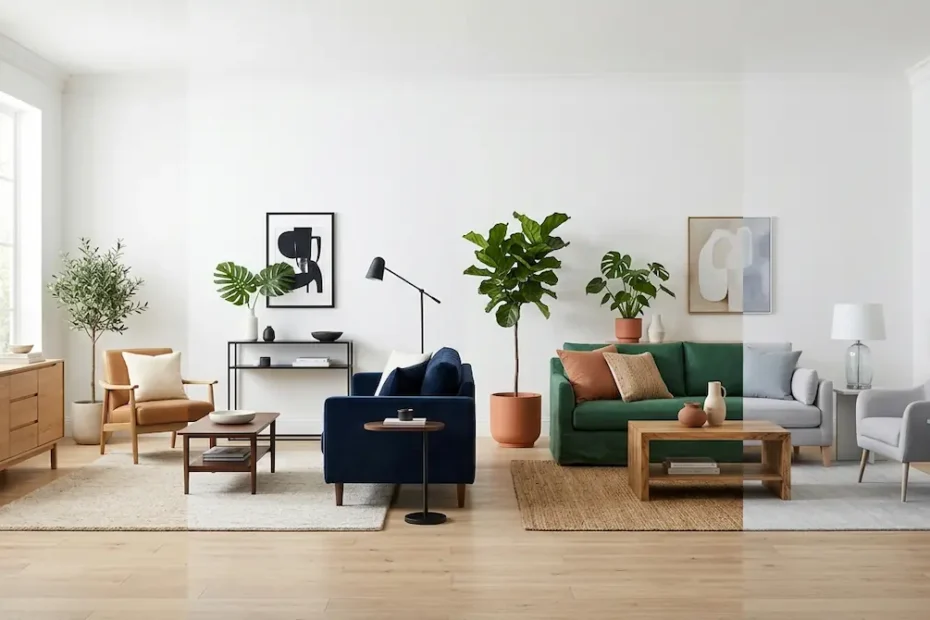
- Deep navy or forest green used sparingly to add depth without clutter
The key is restraint.
Too many competing colours break the simplicity that white walls naturally provide. Limiting the palette keeps the space cohesive and intentional.
How Does Natural Light Change Furniture Colour Choices?
Natural light alters how furniture colours are perceived throughout the day, meaning the same piece can appear warmer, cooler, brighter, or duller depending on room orientation and time of day.
South-facing rooms receive consistent, warm light, allowing cooler furniture tones like grey or blue to feel balanced.
North-facing rooms receive cooler light, which can make neutral furniture appear flat. In these spaces, warmer tones such as tan, rust, or honey wood perform better.
East and west-facing rooms shift throughout the day. This makes mid-tone furniture colours more reliable, as they adapt well to changing light conditions.
Understanding light direction helps prevent choosing colours that only look good at one time of day.
What Are Reliable Furniture Colour Pairings for White Walls?
Certain combinations consistently perform well because they balance contrast, undertone, and visual weight without relying on trends.
Some of the most dependable pairings include:
- White walls with mid-tone oak and soft beige upholstery
- White walls with charcoal seating and brass accents
- White walls with sage green and natural linen textures
- White walls with deep blue furniture and light wood flooring
These combinations work across different home styles because they maintain a clear relationship between colour temperature and contrast.
How Do You Avoid a Flat or Washed-Out Look?
A flat interior results from insufficient variation in tone and texture, with rooms lacking enough contrast or material diversity to create visual interest.
Avoiding this comes down to layering.
Even within a neutral palette, combining different finishes adds depth. For example, pairing matte fabrics with polished metals or smooth wood with woven textiles creates subtle contrast.
Introducing one darker or richer element, such as a statement chair or coffee table, also helps anchor the room without overwhelming it.
White walls need variation around them to feel complete.
Can Bold Furniture Colours Work with White Walls?
Bold colours can work exceptionally well against white walls when used selectively, as the neutral background allows strong hues to stand out without competing elements.
The key is control.
Large furniture pieces in bold colours should be balanced with neutral surroundings. Smaller accents can carry more intensity without dominating the room.
Deep emerald, navy, or burgundy tend to work better than highly saturated bright tones, as they provide richness without visual strain.
Used correctly, bold furniture becomes a focal point rather than a distraction.
Final Thoughts on Styling Furniture with White Walls
White walls simplify the palette but increase the importance of every other design decision. The most effective interiors rely on contrast, undertone alignment, and thoughtful use of light to guide furniture selection.
When these factors are considered together, furniture does more than fill a room.
It defines how the space feels, functions, and evolves over time.
