


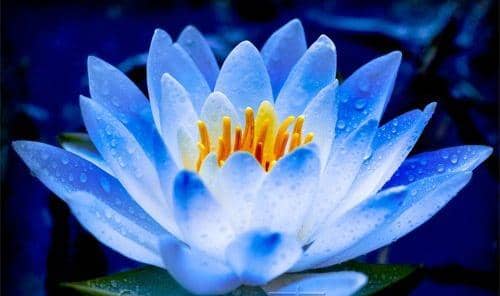
The blue lotus is a plant that belongs to the Waterlily family. This flower was sacred in the culture of the Vedas, but in India this plant is closely related to Buddha: it is believed that the Blue Lotus appears where the foot of the creator of Buddhism once set foot.
Appearance
The blue lotus is a fairly large lily. The blue flowers of the plant rise above the water column on long stalks, they have a sweet smell. The petals of the plant are shorter than the four-membered sepals.
Where it grows
It grows on the water surface. The blue lotus prefers temperate and tropical climates. This plant grows in Russia, in the Far Eastern Federal District and in the Transcaucasus. It can be found in India and Palestine, near the banks of the Nile.

Structure
Its leaves and petals never get wet due to the fact that they are covered with a coating with a high wax content. This plant has large rhizomes. Blue lotus leaves are either standing, underwater or floating. The flowers of this plant are large – their diameter is 30 cm. During flowering, the flower of the plant always looks in the same direction as the sun. At this time, the flowers come out of the water, bloom. A yellowish corolla and scaly plates on the stems of the plant become visible. During the flowering period, you can better see the emergent leaves, which are thyroid and funnel-shaped.
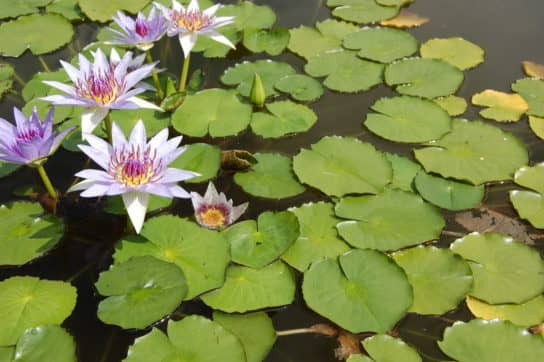
The fruit of the plant is located inside the carpel, has a conical shape and is a nut with a hole for breathing. There are usually many such nuts in the lotus. Lotus seeds are very tenacious, they can turn into a Blue Lotus, even if they have been lying for a hundred years before.
Blue lotus in ancient Egypt
In ancient Egypt, the seeds of the Blue Lotus were turned into flour, from which they baked bread. The image of this flower was often found in architecture. The people of Ancient Egypt noticed that the flower always blooms when the sun sets, and they believed that the Blue Lotus has a magical connection with the movement of objects in the sky. This flower was a symbol of Osiris, this god has always been depicted with a lotus. This plant was often offered to other gods, crowns of rulers and gold coins were decorated with its image. The blue lotus was also often placed in the graves of pharaohs and other honorable citizens so that they would wake up when they were in the next world.

Psychoactive substances in the blue lotus
Blue lotus flowers contain a large amount of alkaloids, nuciferin, which is an antispasmodic, and flavonoids with opioids. Because of this, dried blue lotus flowers can affect a person in the same way as drugs. They induce hallucinations, relieve pain and relax muscles. After the relaxation phase, the Blue Lotus begins to work as an aphrodesiac, but this effect does not last long. This plant is actively used by Tibetan monks, with its help healers treat diseases of the lymphatic system. Despite the fact that in Tibet and in many other cultures the flower is not considered dangerous, it is impossible to buy the plant in Russia – it was classified as a drug in 2009.
Blue lotus as food
Today, the Blue Lotus is often used to create various dishes: the root of the plant is fried, the stamens with petals are brewed to make tea.
