


The oceans are a special ecosystem that develops according to their own laws. Particular attention should be paid to the flora and fauna of the oceans. The area of the World Ocean occupies 71% of the surface of our planet. The entire territory is divided into special natural zones, where its own type of climate, flora and fauna have been formed. Each of the four oceans of the planet has its own characteristics.
Plants of the Pacific
The main part of the flora of the Pacific Ocean is phytoplankton. It consists mainly of unicellular algae, and this is more than 1.3 thousand species (peridinea, diatoms). In this area, there are about 400 species of algae, while there are only 29 sea grasses and flowers. In the tropics and subtropics, you can find coral reefs and mangrove plants, as well as red and green algae. Where the climate is colder, in the temperate climatic zone, kelp brown algae grow. Sometimes at considerable depths there are giant algae about two hundred meters long. A significant part of the plants is located in the shallow ocean zone.
The following plants live in the Pacific Ocean:
Unicellular algae – these are the simplest plants that live in the salty waters of the ocean in dark places. Due to the presence of chlorophyll, they acquire a green tint.
Diatomswhich have a silica shell. They are part of phytoplankton.
Laminaria – grow in places of constant currents, form a “kelp belt”. Usually they are found at a depth of 4-10 meters, but sometimes they are at the bottom of 35 meters. The most common are green and brown kelp.
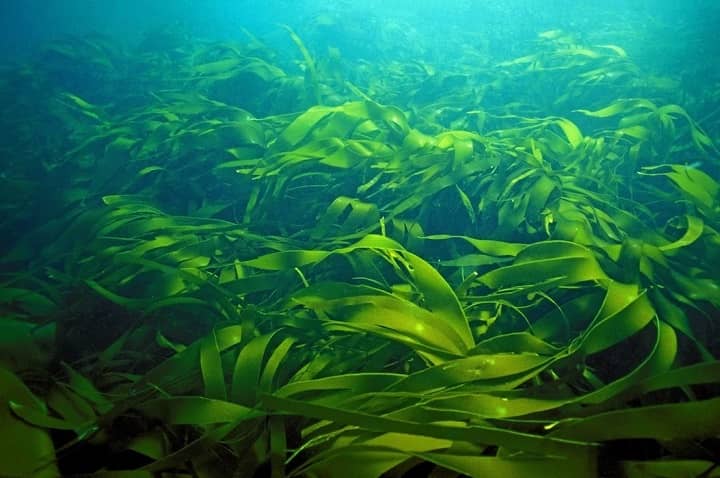
Cladofora Stimpson… Tree-like, dense plants, formed by bushes, the length of bunches and branches reaches 25 cm. Grows on a muddy and sandy-muddy bottom at a depth of 3-6 meters.

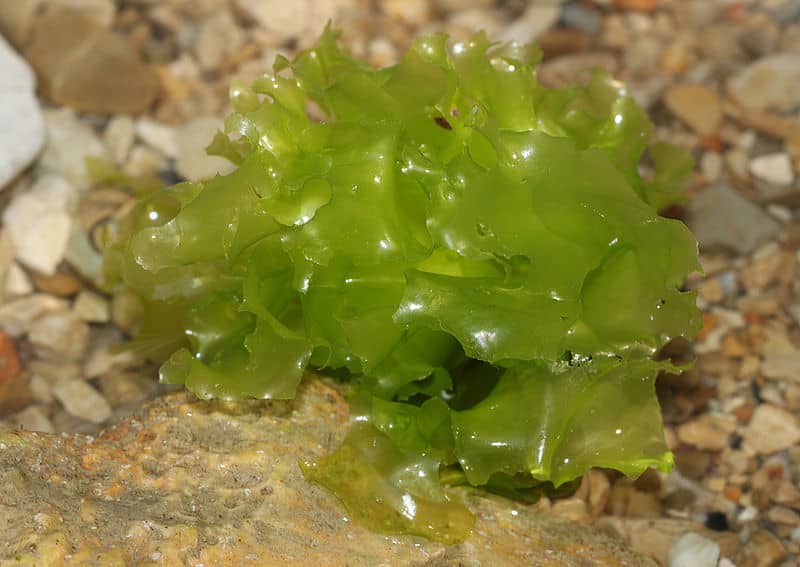
Ulva perforated… Two-layer plants, the length of which varies from a few centimeters to one meter. They live at a depth of 2.5-10 meters.
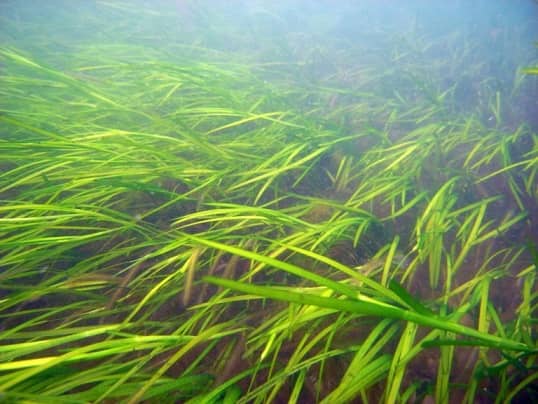
Zostera sea… This is a seagrass that is found in shallow waters up to 4 meters.
Plants of the Arctic Ocean
The Arctic Ocean lies in the polar belt and has a harsh climate. This was reflected in the formation of the flora world, which is characterized by poverty and little diversity. The basis of the flora of this ocean is algae. Researchers have counted about 200 species of phytoplankton. These are mainly unicellular algae. They are the backbone of the food chain in this area. However, phytoalgae are actively developing here. This is facilitated by cold water, creating optimal conditions for their growth.
Major Ocean Plants:
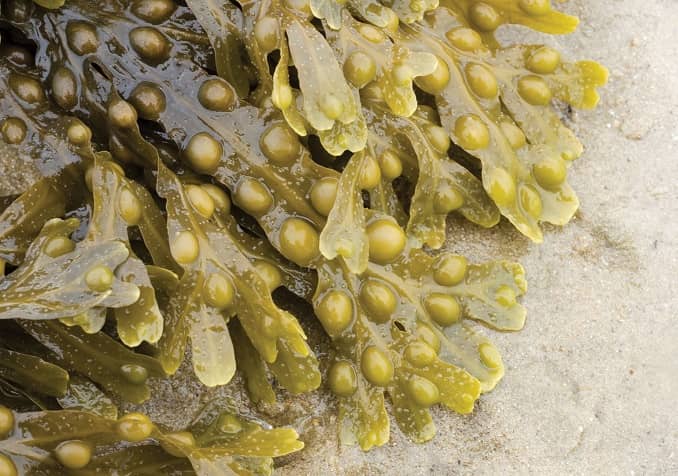
Fucus. These algae grow in bushes, reaching sizes from 10 cm to 2 m.
 Anfelcia. This type of dark red algae has a filamentous body, grows 20 cm.
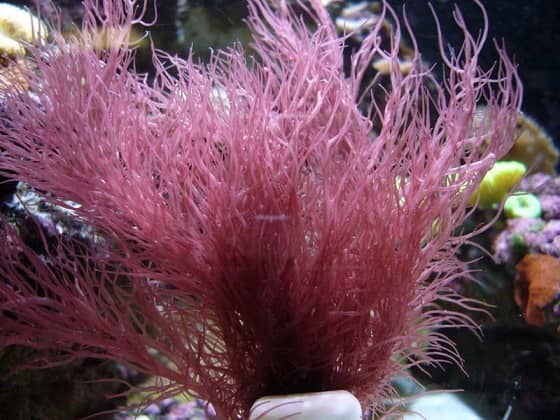 Vzmornik… This flowering plant, which is up to 4 meters long, is common in shallow waters.
Plants of the Atlantic Ocean
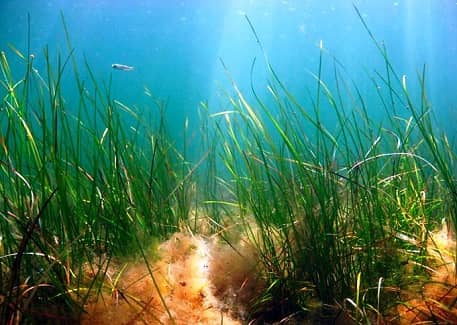
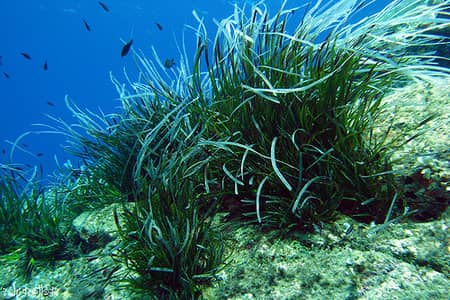
The flora of the Atlantic Ocean consists of various types of algae and flowering plants. The most common flowering species are Oceanic Posidonia and Zostera. These plants are found on the seabed of ocean basins. As for Posadonia, this is a very ancient type of flora, and scientists have established its age – 100,000 years.
As in other oceans, algae dominate the plant world. Their variety and quantity depends on the water temperature and depth. So in cold waters, kelp is most common. Fuchs and red algae grow in temperate climates. Warm tropical areas are very warm, and this environment is not at all suitable for the growth of algae.
Warm waters have the best conditions for phytoplankton. It lives on average at a depth of one hundred meters and has a complex composition. Plants in phytoplankton change depending on latitude and season. The largest plants in the Atlantic Ocean grow on the bottom. This is how the Sargasso Sea stands out, in which a high density of algae is observed. Among the most common types are the following plants:
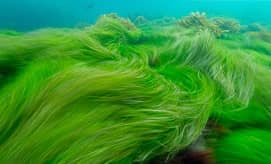
Philospadix. This is sea flax, grass, reaches a length of 2-3 meters, have a bright green color.
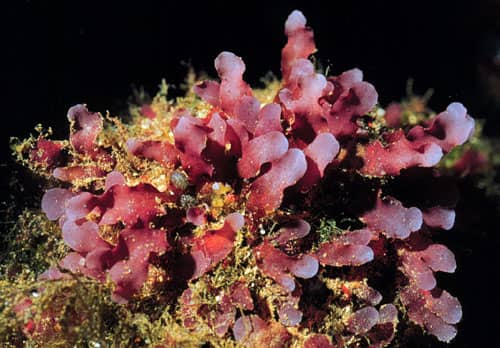
Birth names. Occurs in bushes with flat leaves, they contain phycoerythrin pigment.
Brown algae. There are various types of them in the ocean, but they are united by the presence of the pigment fucoxanthin. They grow at different levels: 6-15 m and 40-100 m.
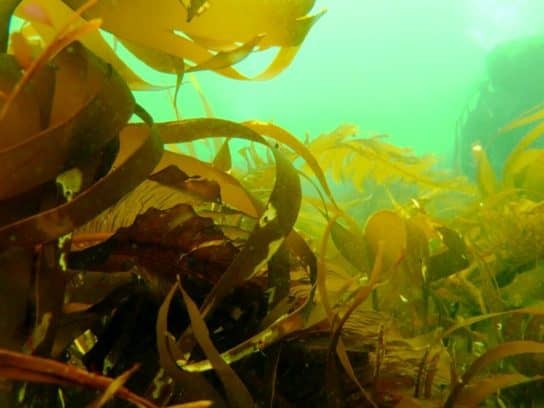
Sea moss
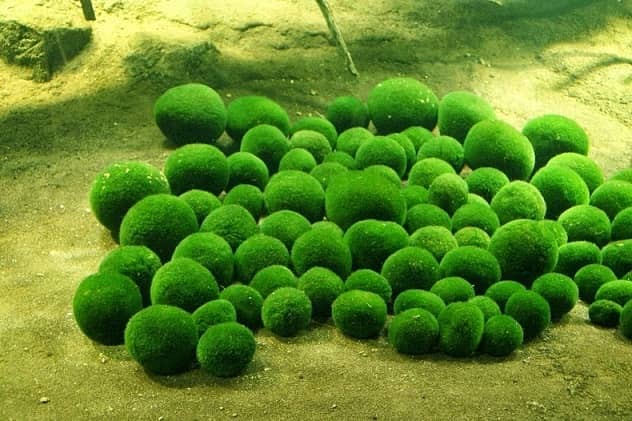 Macrospistis
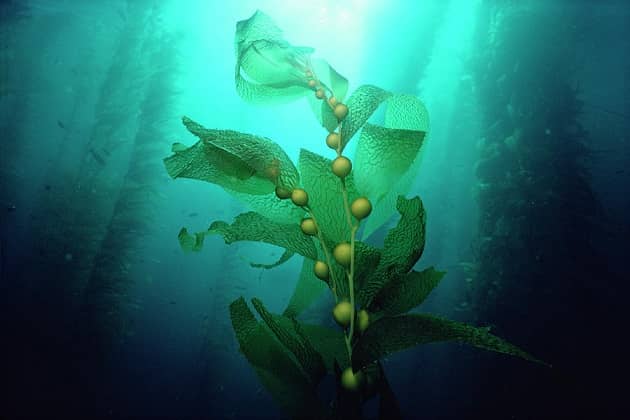 Hondrus
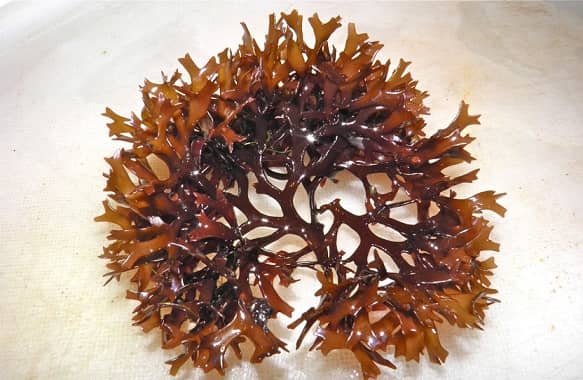 Red algae
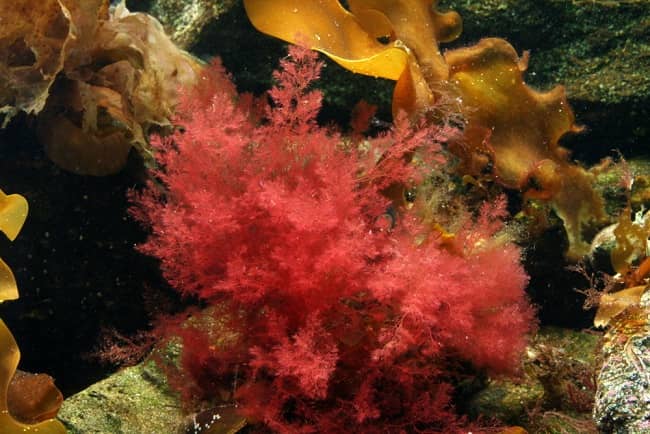 Porphyry
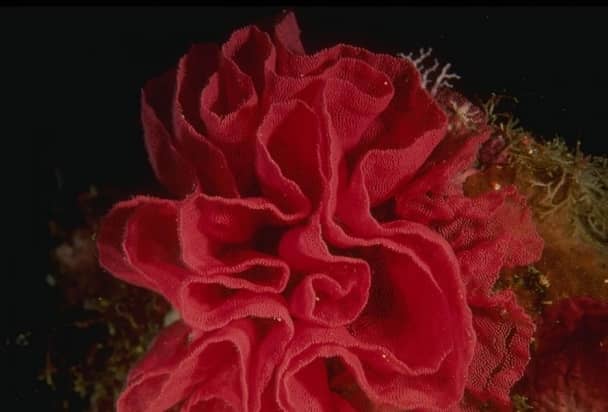
Indian Ocean Plants
The Indian Ocean is rich in red and brown algae. These are kelp, macrocystis and fucus. Quite a lot of green algae grows in the water area. There are also calcareous types of algae. There is also a lot of sea grass – Poseidonia in the waters.
Macrocystis… Perennial brown algae, the length of which reaches 45 m in waters at a depth of 20-30 m.

Fucus… They live at the bottom of the ocean.
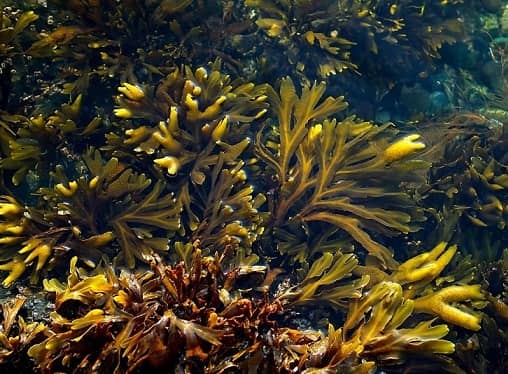
Blue-green algae… They grow at depth in bushes of varying density.
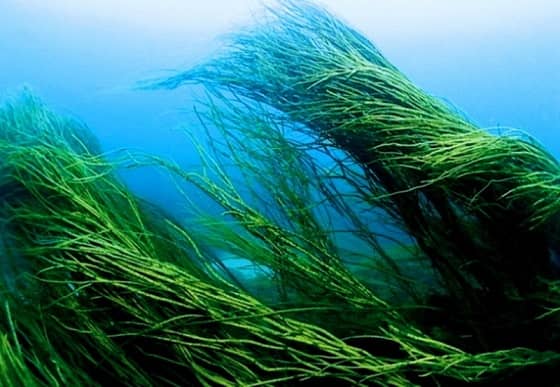
Posidonia seagrass… Distributed at a depth of 30-50 m, leaves up to 50 cm long.
Thus, the vegetation in the oceans is not as diverse as on land. However, phytoplankton and algae form the basis. Some species are found in all oceans, and some only in certain latitudes, depending on solar radiation and water temperature.
In general, the underwater world of the World Ocean has been little studied, so every year scientists discover new species of flora that need to be studied.
