


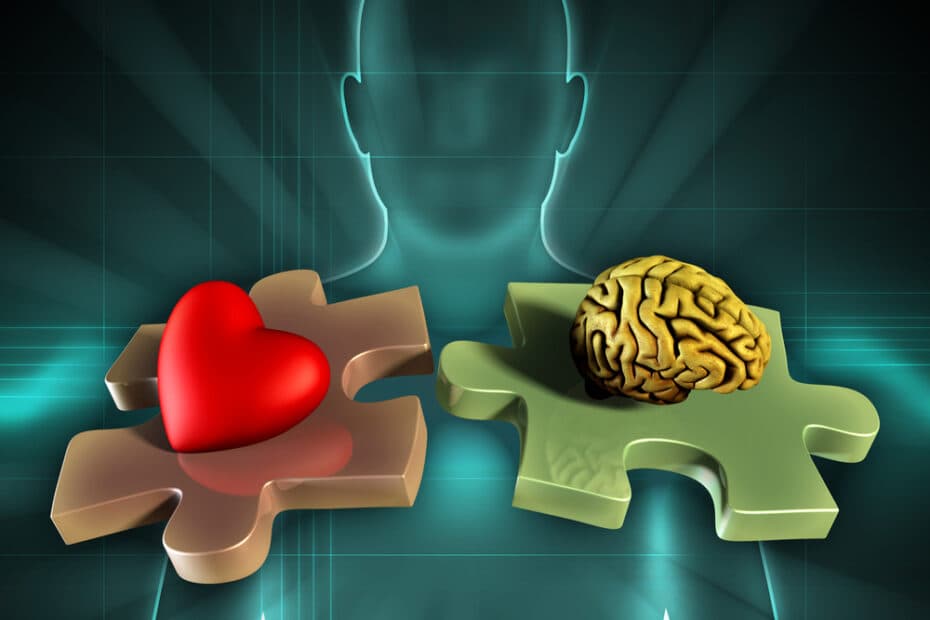
Do you want to control your emotions, be happy without external stimuli? The highest level of development of emotional intelligence is all that is needed for this. It will provide constant internal motivation, a satisfying life for you (you will easily understand what you need right now), rational and productive solution of issues without the inclusion of unnecessary, unnecessary or dangerous emotions. It is easy to understand, manage and regulate your own and others’ emotions. In this article, you will learn exactly how to do this.
Why develop emotional intelligence
“To be happy, you need to constantly strive for this happiness and understand it. It does not depend on circumstances, but on oneself, ”- Lev Tolstoy, Russian writer and thinker.
Emotional control automatically involves mind control. You cannot be productive in a situation of emotional “slagging” or make serious decisions in moments of anxiety, anger, irritation. Why Develop Emotional Intelligence? To think clearly and in the right direction, than to speed up the flow of affairs in your life and provide ease of communication and relationships.
A person capable of managing emotions is cheerful and active. His life is a world of possibilities and joy, for which it is impossible not to love it. His opposite is a hostage of negative and chaotic thoughts, a sullen and dissatisfied type. For inappropriate emotions, he has to pay with health, money, reputation, sometimes life.
Emotional intelligence (EQ) is the basis of charisma, charm, resistance to stress, the ability to remain balanced in any situation. In addition, it is the key to productive and strong relationships in the family and at work. Understanding the emotions of other people is a prerequisite for communicating. And we have to communicate every day.
Emotional intelligence allows you to:
- express and understand emotions (your own and those of others);
- include emotions in reasoning;
- evaluate emotions and determine their causes;
- control and manage emotions.
People with a high level of emotional intelligence:
- are more efficient and productive;
- most satisfied with their appearance (especially girls) and weight;
- more accurately than others, emotions are determined by facial expressions;
- more responsible attitude to study, work (fewer absences for disrespectful reasons).
Signs of low emotional intelligence
To determine for sure the level of EQ and the need for its development, you can use special tests. However, there are several indications that a low level of emotional intelligence is suspected:
- lack of self-confidence, doubt about the correctness of actions;
- excessive self-criticism;
- problems and difficulties in communication, inability to find a common language with people;
- a modest and unbiased attitude towards people around.
How to develop emotional intelligence
We are talking about the development of a skill, respectively, the same development methods are applicable as in the formation of other skills. But first, pay attention to the conditions of development:
- daily workouts;
- patience and discipline;
- high motivation.
It is not easy to gain control over your own, let alone others’ emotions. Do not expect an easy and quick victory, be ready for difficulties and small steps back for a powerful leap forward. So, how to develop emotional intelligence:
- Explore your personality traits. They affect what, when, and how you feel. The conditions and specificity of decision-making are also determined by the character, temperament and other mental characteristics. For example, it is very difficult for a choleric person to control emotions due to innate reasons, and a phlegmatic person experiences obvious difficulties in understanding them. Conduct a full-fledged personal diagnosis using psychological techniques. Remember that a person changes on a daily basis, even congenital features are corrected. Observe yourself, record changes with the help of reflection. You need to find out who you are, and only then learn to understand how you feel.
- Be mindful, relaxed, and open. Cognition of your emotions begins with meditation and relaxation, that is, finding the maximum unity of body and mind. Master these and other self-regulation techniques, such as breathing. They will allow you to maintain and return rationality in stressful situations, restrict you from making decisions in the heat of the moment.
- Determine which specific component of emotional intelligence needs improvement: expression and understanding of emotions, reasoning and comparison, assessment and search for causes, management. Determine your current emotional intelligence level.
- After you know your emotions, move on to exploring other people. Start by trying to put yourself in the other person’s shoes. Why is the person annoyed? Is he tired, offended, dissatisfied with his life? Do this exercise every day – think of as many reasons (sources) of this or that emotion (feeling) as possible.
- Keep a mood diary and learn to differentiate emotions. Learn to articulate your feelings, distinguish anxiety from fear, and anger from resentment. Record the dynamics of feelings. This will identify the roots of the emotions, the percentage of positive and negative, and the prevailing emotions.
- Develop intelligence, broaden your horizons. Limited thinking and perception limits the understanding of emotions. Watch movies, read books, create, go to exhibitions. The more you are involved in large areas, the more you will get to know versatile and unique people, realize the impossibility of generalization and the diversity of human feelings.
- Divide your environment into vital and non-essential people. Concentrate your emotional intelligence on the first group. Emotional communication with loved ones should be especially interesting and meaningful. Surround yourself with people you want to learn from, harmonious and emotionally intelligent people.
- Learn to think ahead, don’t make promises that you can’t keep. Don’t promise, even if you’re sure you can handle it. In addition to subjective factors, external stimuli affect life, which cannot always be predicted.
- Form positive thinking and responsibility for your own life. You are the source of all events in the script of life. Learn to be independent from external circumstances.
If you realize deep psychological problems and traumas that prevent you from working on the development of emotional intelligence on your own, see a therapist.
In addition to these recommendations, healthy people will benefit from psychological training. Both directly to improve communication skills or empathy, and a narrower profile: increasing self-esteem, personal growth, anger management, etc.
Exercises to develop individual EQ components
In addition to general guidelines for developing EQ, check out practical exercises to develop specific skills. Perhaps you are lacking in skills in only one of them.
Mindfulness
Cover your ears and strain your visual analyzer as much as possible. Take a close look at everything that surrounds you. Gradually, the picture should become brighter, and you will notice new details in your usual environment.
Then close your eyes and strain your hearing. Under normal conditions, we perceive sounds at a maximum distance of 1.5 meters from us. Concentrate, you should hear more.
The third step is to close your eyes and ears and feel. You must become aware of your body and its interaction with the outside world. You may feel a breeze or sway.
It is enough to carry out the technique once a week to learn how to better recognize intonation and short-term facial expressions. You will be able to more accurately determine the true and hidden motives of the interlocutor, the messages in your direction, as well as your reactions to this. You will also gain a better understanding of how the body reacts to certain emotions.
Adaptability (adapting to situations)
Write down the names of the emotions on the cards. Take out the cards one at a time and depict the emotions that are written on them. The exercise can be carried out in the form of a game in the company.
Self-esteem
Define your “pose of strength”. What it is? A pose that increases the level of dopamine – the hormone of joy, pleasure, activity, euphoria. The most popular strength poses include straight, extended posture, upturned nose and chin, and raised arms. It is not worth getting into such positions in public – they will not understand that way. But at home, you need to devote a minute to your pose of strength. It is also effective to stand in this position before negotiations – during them it will be easier to remember and assimilate information, you will feel more confident.
Motivation
List 10 of your favorite activities. Now call each of them one verb that conveys the content as accurately as possible. One verb – one month. Now you need to live 10 days in each month under the motto of a specific verb.
Epilogue
There is an interesting view that emotional intelligence is wisdom. In this context, wisdom refers to the ability to integrate mind, logic and emotion. We can also say that emotional intelligence is a complex of social skills, empathy, motivation (adequate overcoming of failures and difficulties, perception of new things, building plans and goals, striving for self-actualization), self-regulation and awareness (awareness of one’s thoughts and emotions, body and behavior) … Emotional intelligence is a balance of mind and heart, that golden mean that many dream about. You can and should develop EQ and increase its level throughout your life.
