


When a cookware factory starts looking at automatic polishing equipment, the first question is often capacity. How many pieces can the machine finish in an hour?
That matters, but polishing problems usually show up somewhere else first: uneven pressure, wheel wear, vibration or too much variation from one operator to another.
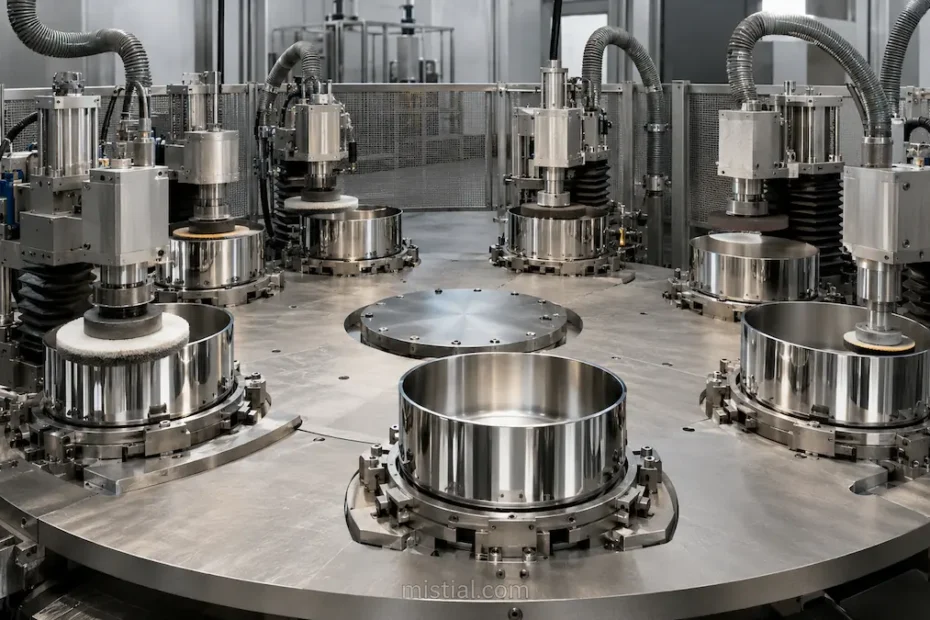
The DHZPW-800 eight-station automatic outside polishing machine takes a different approach. Eight workpieces can be mounted around the rotary table, while separate grinding heads handle different stages of the outside surface.
For a factory moving away from manual polishing, the useful part is not simply having eight stations. It is being able to repeat the same polishing path and pressure across a production batch.
Polishing wheels wear down. Anyone running stainless-steel cookware knows this. If the machine keeps exactly the same position as the wheel becomes smaller, the finish will gradually change. The DHZPW-800 uses automatic wear compensation, which helps keep the wheel-to-workpiece contact more consistent instead of relying on an operator to keep correcting it.
The machine runs grinding heads at 2200 rpm, while the cookware itself can rotate from 28 to 140 rpm. That adjustment matters because a shallow frying pan and a deeper stockpot do not always respond well to the same polishing speed.
It can handle round metal cookware up to 350 mm in diameter and 280 mm high, so the real question for a buyer is whether those dimensions cover the factory’s main product mix—not just one sample pan.
If you are comparing a cookware polishing machine manufacturer, ask to polish several of your actual products before deciding. Bring different diameters, depths and surface requirements.
A mirror-finish sample made once is easy. Producing the same finish repeatedly over a full shift is what matters.
A sensible acceptance test should look beyond one finished sample. Run several cookware sizes, inspect the surface under the same light, and record wheel condition, cycle time and any manual correction required. Repeat the check later in the shift after the polishing media has worn. This makes it easier to see whether compensation settings are maintaining the finish or merely producing a good result at the beginning of the run. Operators should also have a clear method for recording recipe changes so successful settings can be repeated on the next batch.
