


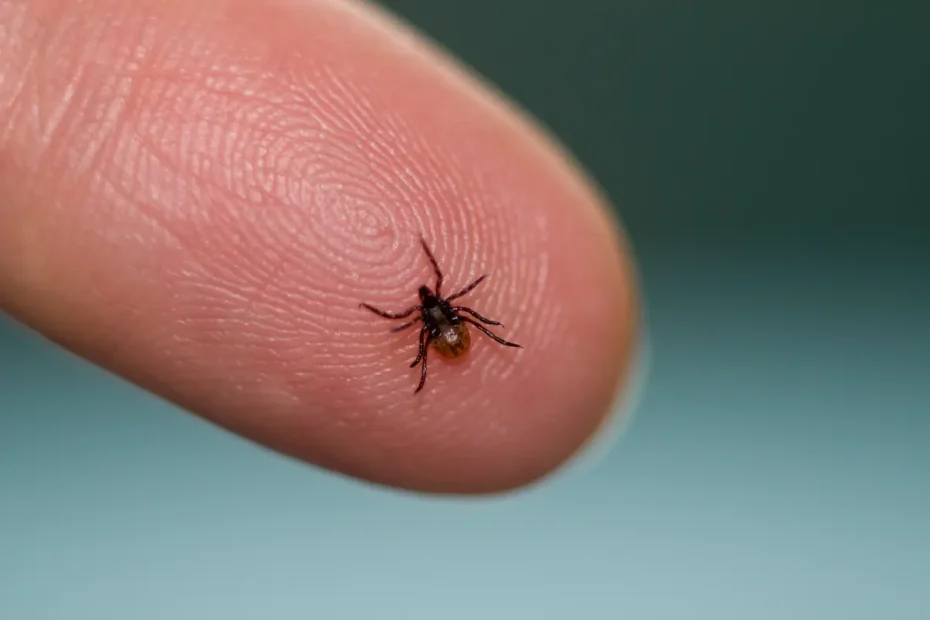
Borreliosis, or Lyme disease, is an infection caused by Borrelia burgdorferi and several other types of Borrelia. A person can get sick if he is bitten by an infected tick. At an early stage, borreliosis is treated with a course of antibiotics; without treatment, it can become chronic.
Borreliosis: definition of the disease
Lyme disease (Lyme borreliosis, ixodid tick-borne borreliosis) is an acute bacterial infection that is transmitted to a person with the saliva of an infected ixodid tick when bitten.
The first cases of the disease were identified in 1976 in the town of Lyme (Connecticut, USA), so the infection was called Lyme disease.
The causative agents of tick-borne borreliosis are the bacterium Borrelia burgdorferi and several other types of borrelias (Borrelia garinii and Borrelia afzelii).
A characteristic early symptom of infection is erythema migrans: a ring-shaped rash with a bright center that grows in the initial period of the disease and then gradually fades away.
At any stage, borreliosis can be treated with antibiotics, but the risk of complications or chronic course is lower if treatment is started earlier.
ICD code
In the International Statistical Classification of Diseases and Related Health Problems, Tenth Revision (ICD-10), Lyme disease is coded A69.2.
Source of infection
The causative agent of tick-borne borreliosis is a gram-negative spiral-shaped spirochete bacterium (Spirochaetales) of the genus Borrelia of three species: B. burgdorferi (dominates in the USA), B. garinii and B. afzelii (predominant in Europe and Russia).
The natural hosts of Borrelia are animals: cattle, sheep, dogs, birds, rodents, deer.
Bacteria enter the intestines of ticks of the genus Ixodes (Ixodes ticks) when the parasite sucks the blood of an animal. In most cases, the pathogen enters the human body with the saliva of an infected tick when bitten.
Causes of Lyme Disease
The cause of the disease is the Borrelia bacterium, which lives in the intestines of the ixodid tick and is transmitted to humans when bitten.
When the tick drinks blood, Borrelia becomes active in the intestines of the parasite and penetrates into the salivary glands. Approximately 2 hours after the tick has stuck to the skin, the bacterium is released into the wound along with the saliva of the parasite. So it enters the bloodstream and moves to the internal organs, joints, lymph nodes and brain
In addition, possible routes of infection with borreliosis include:
- the use of not fully thermally processed goat or cow milk;
- accidental rubbing into the skin of the contents of the intestines of the tick (during scratching);
- careless assistance to animals (for example, dogs) bitten by a tick: Borrelia can enter the body through microtraumas of the skin or conjunctiva of the eyes;
- intrauterine infection (from an infected mother, the bacterium is transmitted to the fetus).
Risk groups for contracting Lyme disease
The main risk factor for contracting Lyme disease is being in the forest during the period of greatest activity of ticks, from April to October.
Risk groups for contracting Lyme disease:
- hunters;
- farmers;
- people who live in or travel to areas endemic for Lyme borreliosis.
Ways of transmission of borreliosis
Borreliosis is a zoonotic infection that can be transmitted to humans from animals. As a rule, people become infected when they are bitten by an ixodid tick infected with Borrelia.
In order for the bacterium to get to a person, the tick must stick to the skin and drink blood. Moreover, the longer the parasite drank blood, the higher the likelihood of infection. So, some ticks can stick for 24-36 hours or more.
Lyme disease is seasonal: the period of greatest likelihood of infection coincides with the activity of ixodid ticks. The first patients are usually registered in March-April, the peak incidence occurs in May-June (epidemic season lasts until October).
You can also become infected when feces or tick saliva get on the skin, if a person combs it and rubs the bacteria inside. In addition, the pathogen can get into an open wound if the tick is not properly removed.
Rarely, an alimentary route of infection is possible (when using incompletely thermally processed cow or goat milk) and transplacental transmission of Borrelia from an infected mother to a child.
The prevalence of borreliosis
For the first time, borreliosis was discovered in 1976 in the American city of Lyme (Connecticut, USA).
Currently, the greatest activity of ticks infected with borreliosis is noted in 49 states of America, but the majority of cases are recorded in the states of Maine, Virginia, Wisconsin, Minnesota and Michigan. On the West Coast, most cases are in Northern California and Oregon.
Lyme disease has also been identified in Europe, the former Soviet Union, China and Japan.
Is borreliosis contagious?
A patient with tick-borne borreliosis is not dangerous to others, because borreliosis is not transmitted by airborne droplets or household contact during kissing, sexual contact, sharing dishes, towels.
Cases of transmission of infection from mother to child through the placenta during pregnancy are known.
Borreliosis in Russia
In Russia, tick-borne borreliosis is common in the North-Western and Central regions, in the Urals, in Western Siberia, and in the Far East.
How to distinguish borreliosis from tick-borne encephalitis
Tick-borne encephalitis and borreliosis (Lyme disease) are diseases that a person becomes infected with after being bitten by an infected tick. Despite the common source of infection, the diseases differ significantly.
| Tick-borne encephalitis | Tick-borne borreliosis |
| Viral infection | bacterial infection |
| Affects predominantly the central nervous system (CNS) | Affects (CNS), as well as joints, skin, heart |
| Occurs predominantly in an acute form | prone to chronic disease |
| Persistent long-term immunity after illness (about 5 years) | Unstable immunity, re-infection is possible after 2 years |
| Typical initial symptoms are fever, dizziness, incoordination | The characteristic initial symptom is erythema migrans (a ring-shaped rash that grows over time) |
Types of Lyme disease
In terms of severity , Lyme disease can occur in mild (mild skin manifestations), moderate (in addition to pathological elements on the skin, fever, weakness appear), severe (skin manifestations and flu-like symptoms are combined with damage to internal organs) and extremely severe form (damage extends to the central nervous system).
According to the nature of the course, tick-borne borreliosis can be acute (up to 3 months), subacute (from 3 to 6 months) and chronic (more than 6 months).
In addition, the forms of borreliosis differ depending on the symptoms . So, tick-borne borreliosis is distinguished with migrating erythema (erythema form) and without it (non-erythema form).
There is a localized form, in which the leading and almost the only manifestation of the disease is erythema migrans, and disseminated, in which not only the skin is affected, but also the skeleton and internal organs. Separately, neuroborreliosis is distinguished, which can occur in the form of neuropathy (damage to one nerve), polyneuropathy (damage to multiple nerves), radiculopathy (compression of the roots of the spinal cord), myelitis (inflammation of the spinal cord), meningitis (inflammation of the brain and spinal cord) and their combinations (meningoradiculoneuritis – Bannwart syndrome, myeloradiculoneuritis). Borreliosis is characterized by one- or two-sided damage to the cranial nerves, especially the facial one.
Lyme disease symptoms
The most common symptom of the disease is a specific rash, also called erythema migrans.
migrating erythema
A round or oval rash that appears around a tick bite about 7 to 14 days after a person has been exposed to the parasite. In some cases, the rash may appear up to a month after the bite.
Usually the center of erythema migrans is bright and has well-defined edges, and a red or burgundy rash gradually spreads from it in the form of a ring. Between the center and the ring, the skin is light. Typically, the rash does not cause discomfort, but some patients report itching or fever.
On dark skin, erythema migrans may look like a hematoma (bruise).
A few weeks after the appearance of the first focus of erythema, the rash can spread to other parts of the body where the tick did not bite.
Flu-like symptoms
As a rule, symptoms similar to influenza or SARS appear a few weeks after the bite: high fever, chills, headache, muscle and joint pain, swollen lymph nodes.
Unlike common respiratory viral infections, symptoms of Lyme disease persist for more than 2 weeks or may come and go and are not accompanied by catarrhal manifestations (nasal congestion, cough, lacrimation).
Rare Symptoms
As a rule, such symptoms appear if a person has not completed a course of antibiotic therapy.
Rare symptoms of tick-borne borreliosis:
- severe headache (possible meningeal signs – the so-called migraine-type pain, when it hurts badly on one side of the head, usually in the temple area);
- neuropathy (paralysis) of the facial nerve;
- inflammation and swelling of the joints;
- heart rhythm disturbances;
- shortness of breath ;
- shooting pain in the back and neck;
- numbness in hands and feet;
- nausea and vomiting.
Stages of borreliosis
During tick-borne borreliosis, four stages, or periods, are distinguished: incubation, local, disseminated and persistence stage.
Incubation stage
The incubation period is the time from the moment a bacterium enters the body until the first symptoms appear. The incubation period for tick-borne borreliosis, as a rule, is from 7 to 14 days, but can be up to 3 months.
Stage of local infection
Usually occurs 2 weeks after a tick bite. At this time, a characteristic target-shaped rash appears on the skin, which gradually grows (erythema migrans). Also, a person may feel causeless weakness, a general deterioration in well-being.
Other symptoms include inflammation of the eyes (conjunctivitis), swollen lymph nodes, and nasal congestion.
Disseminated stage
If a person has not completed a course of antibiotic therapy, bacteria spread throughout the body and affect internal organs and systems. Most often, the nervous and cardiovascular systems suffer.
Nervous System Damage in Lyme Disease:
- meningitis – inflammation of the membranes of the brain;
- radiculoneuritis – damage to the roots of the spinal cord and peripheral nerves;
- neuropathy of the facial nerve – damage to the facial nerve;
- myelitis is inflammation of the spinal cord.
Such lesions are usually manifested by the following symptoms: throbbing headache, photophobia, neuropathic pain and twitching of the limbs, sleep, memory and hearing disorders , numbness and short-term or permanent paralysis of the limbs, dizziness.
Cardiovascular disease in Lyme disease:
- atrioventricular block – a violation of electrical conduction from the atria to the ventricles;
- heart rhythm disturbances;
- myocarditis – inflammation of the muscular membrane of the heart (myocardium);
- pericarditis – inflammation of the outer shell of the heart (pericardium);
- cardiomyopathy is a primary myocardial lesion that occurs with disturbances in the electrical conduction and motor activity of the heart muscle, accompanied by excessive thickening of its walls or stretching of the heart cavities.
Such lesions are manifested by a general deterioration in well-being, a change in heartbeat and pulse, and progressive weakness.
In addition, tick-borne borreliosis leads to damage to the joints, organs of the genitourinary system, respiratory tract, and digestive organs.
Persistence stage (chronic)
Usually, the disease passes into the chronic stage 1-2 years after the period of local infection, if the person has not received any treatment. At this time, all symptoms become aggravated: areas of atrophy, plaques and spots, ulcers form on the skin, joints become inflamed, bones become brittle (osteoporosis develops), neurological disorders progress, and internal organs are affected.
Borreliosis can be treated with antibiotics at any stage, but the risk of complications or chronic course is lower if therapy is started earlier.
Complications of Lyme disease
Arthritis
After several months of illness (if the person does not receive treatment), chronic arthritis develops with recurring bouts of aching joint pain that can last from a couple of hours to several months. Arthritis can move from one joint to another, most often affecting the knee joints.
Neurological disorders
The most common neurological complications of Lyme disease are:
- neuropathy (paralysis) of the facial nerve,
- meningitis,
- numbness of hands and feet,
- radicular pain
- impaired coordination of movements,
- memory loss,
- difficulty concentrating,
- sleep disorders.
About 20% of those infected who have not received treatment for tick-borne borreliosis experience neurological disorders.
Cardiovascular disorders
Approximately 1% of patients develop problems with the heart and blood vessels: heart rhythm disturbances, dizziness, shortness of breath and others.
Visceral disorders
In rare cases, patients develop hepatitis. It usually proceeds in an anicteric form, sometimes complaints of decreased appetite, pain and heaviness in the right hypochondrium (associated with an enlarged liver) are possible.
In addition, with borreliosis, some patients develop splenomegaly (enlargement of the spleen), because this organ is actively involved in the pathological process.
Associated with borreliosis, hepatitis and splenomegaly, as a rule, disappear immediately after a course of antibiotic therapy.
Diagnosis of Lyme disease
Which doctor to contact if you suspect borreliosis If a person finds a tick stuck on the body, you should seek help at the nearest emergency room as soon as possible. Doctors can properly and safely remove the parasite.
If it is not possible to seek help, you should remove the tick yourself.
To remove a tick, you should grab it with tweezers as close to the skin as possible and pull straight up without scrolling. The bite site can be cleaned with alcohol or soap and water.
If a few days or weeks after the bite, a person feels unwell, an unusual rash appears on the skin, or other symptoms occur, you should seek the advice of a therapist or immediately make an appointment with a specialized specialist who treats infectious diseases – an infectious disease specialist.
At the consultation, the doctor will conduct a survey and examination and, possibly, refer you to instrumental and laboratory tests.
You should also consult a doctor if, after sucking a tick:
- characteristic migratory erythema appeared at the site of the bite;
- impaired coordination of movements, gait;
- there were radicular pains in the form of lumbago;
- asymmetry of the face has developed, hands or toes become numb.
Do I need to take a tick for analysis
Ixodid ticks carry dangerous diseases: viral encephalitis, borreliosis, anaplasmosis, ehrlichiosis. These infections can be transmitted through a bite.
The best way to quickly and accurately identify an infection is to examine the tick itself, so if you get bitten, you should get it tested as soon as possible. Outwardly, a healthy tick is no different from an infected one.
Differential Diagnosis
Differential diagnosis is a diagnostic method that excludes diseases with similar symptoms.
Diseases and conditions that are similar in manifestations to Lyme disease:
- flu,
- Infectious mononucleosis,
- rheumatoid arthritis,
- fibromyalgia,
- chronic fatigue syndrome,
- multiple sclerosis,
- Alzheimer’s disease,
- tunnel neuropathy of the facial nerve,
- radiculopathy,
- fungal skin infections with erythema annulare,
- migraine.
Only a doctor should conduct differential diagnosis, make an accurate diagnosis and prescribe treatment.
Inspection
Usually, a doctor diagnoses tick-borne borreliosis by a characteristic rash – erythema migrans. In order to distinguish the infection from other similar diseases (to conduct a differential diagnosis) and to confirm the diagnosis, laboratory and instrumental studies are prescribed.
Laboratory diagnostics
To diagnose tick-borne borreliosis, assess the general condition and immune status, clinical and biochemical blood tests, tests for antibodies to borrelias, and PCR tests are prescribed.
A clinical blood test is performed to assess the general condition of the patient.
