


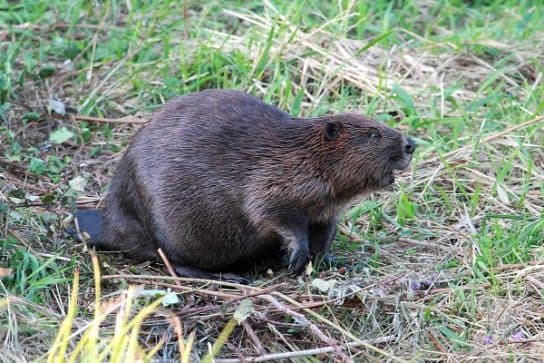
This is an animal that belongs to the class of mammals, the order of rodents and the beaver family (Western Siberian subspecies). This is the largest rodent in the Khanty-Mansi Autonomous Okrug.
Appearance
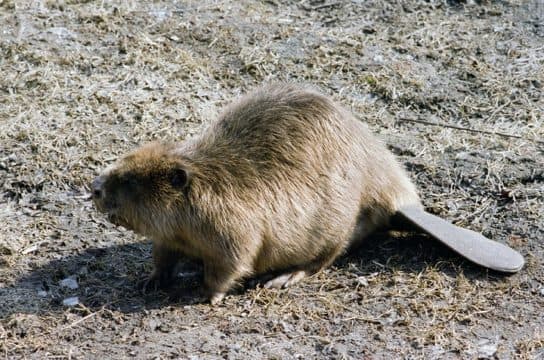
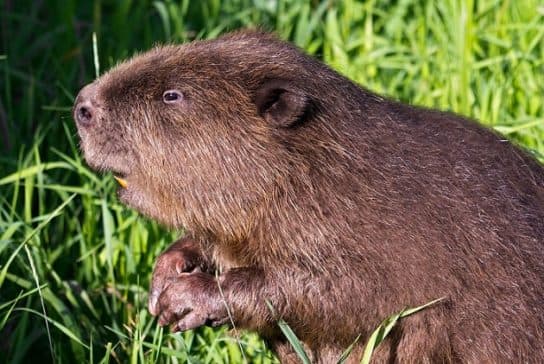
The mass of the animal’s body is 19 kg, and the length is 100-106 cm. The length of the beaver’s head is about 16 cm, the body is from 60 to 65. The muzzle of the mammal is narrow, the eyes are small. One of the features of the rodent is the presence of two incisors.
Mammalian teeth grow throughout life and are self-sharpening. The beaver has a long 25 cm tail, which is slightly more than 10 cm wide. It improves maneuverability in the water. The paws of the animal are five-fingered, the claws are rounded. The hind legs are better developed than the front ones. The foot of an adult is small – its length is 130 mm.
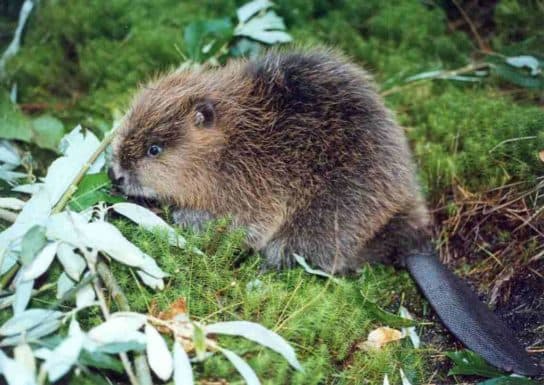
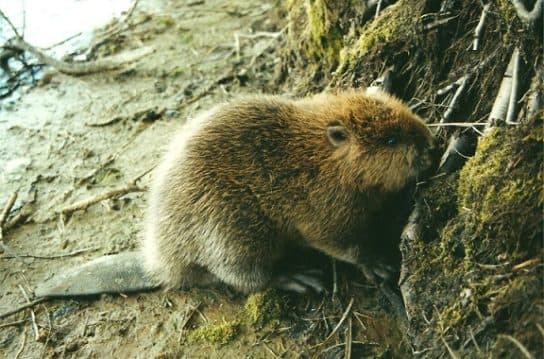
The rodent’s fur is brown, but sometimes individuals with light brown fur are found. Animals often comb their fur with their hind legs, on which bifurcated claws grow. During this procedure, a secret begins to stand out, which makes the fur waterproof.
Additional protection is the beaver’s subcutaneous fat. Sometimes old river beavers have white patches on their hind legs. Recent studies have shown that the immune system of mammals is quite strong, which helps to adapt to the environment.
Sexual dimorphism is expressed in size: females are larger.
Red Book
This subspecies is listed in the Red Data Books of the Russian Federation: in Tyumen and Omsk, Khanty-Mansi Autonomous Okrug as a subspecies that is under the threat of complete extinction. The population is declining due to deforestation and the activities of poachers.

Where dwells
The river beaver inhabits the Konda and Malaya Sosva river basins. Small populations can be found on the Erkal-Nadey-Pur river and in the upper reaches of the Big Yugan. This mammal inhabits the dark coniferous taiga, which is located on the West Siberian Plain. The river beaver also inhabits water bodies, next to which there are birch groves. Ideal for animals – a birch forest on one side of the reservoir and a forest on the other. In such places, it is convenient to create burrows for wintering.
What eats
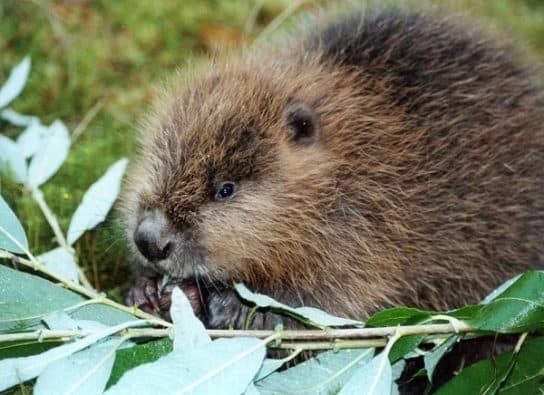
This species does not eat meat. Animals have a great need for water, they eat the shoots and bark of trees such as birch and aspen, willow and poplar. However, animals prefer “soft” trees, but oak and alder are often used to create dwellings. River beavers of the West Siberian subspecies also eat reeds with sedge. Their diet includes more than 300 aquatic and terrestrial plants. Mammals also eat acorns. In the summer, they already begin to prepare food for the winter. Fodder resources are unevenly distributed, because the family usually occupies several km of the river bed.
Enemies
Natural enemies of West Siberian river beavers are bears (mostly brown) and wolves, lynxes and wolverines, foxes. Young animals can also be attacked by pikes and otters. The brown hare with the elk are also enemies of river beavers; they often have conflicts due to lack of food. Stray dogs also attack these animals.
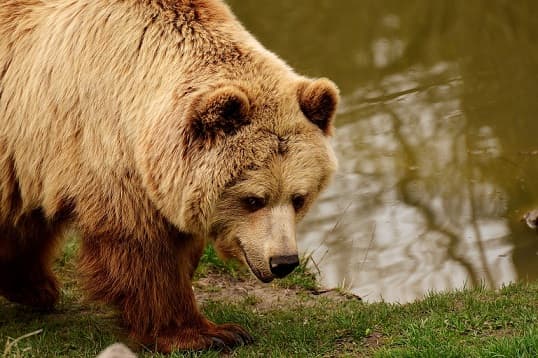
Brown bear – the enemy of the river beaver
Interesting Facts
- River beavers live from 15 to 17 years.
- Beavers are constantly growing.
- The fur of this mammal consists of guard hair and a soft fluff. This helps to survive in severe frosts.
- The tail of the river beaver is flat and covered with horny plates. In the middle of this part of the body there is a “keel” of horny plates.
- This mammal has a calm nature. In dangerous situations, the beaver flees, only occasionally enters into a fight.
- The animal can stay under water for about 15 minutes. When immersed, a septum covers the ears and nose. A transparent film appears on the eyes.
- A beaver can swim more than 1 km.
- This rodent is clean, there is no debris in its burrow.
- In perfumery, the “jet” of this subspecies is actively used.
- Beavers place tree branches in the water so that they always have access to them. So they will be provided with food, even if the reservoir freezes over in winter.
- Animals hide “houses”, build them in the most inaccessible places. These dwellings are always located next to a river whose flow is slow.
- Sometimes beavers harm people. Their dams can contribute to the flooding of farmland, erosion of the railway.
- These mammals communicate using postures, blows on the water and screams with a whistle. In the course of communication, they let each other know about the appearance of danger.
- The river beaver does not live near such bodies of water, which can freeze to the bottom. They can only be found near dense vegetation.
- On land, this animal is slow, its reaction rate is small.
- River beaver is the only rodent capable of walking on all 4 limbs and on its hind legs (in which the beaver can carry materials for construction)
- These mammals do not deviate from the river bank for more than 200 meters.
Lifestyle
River beavers live in burrows or semi-tents; they hardly build dams. They insulate their home with clay and twigs. The entrance to this place is always under water. They spend the whole day at home and only go out closer to dusk to get food. The teeth of these animals are very sharp: in half an hour, a beaver can gnaw through a tree trunk.
River beavers can live both singly and in families. Matriarchy reigns in the cell of society. Animals are monogamous and form very strong couples. Even if the partner is dead, the other will not create a new family.
Rodents breed from February to April, mating mainly in March. Cubs are born 3-3.5 months after mating. In the offspring of animals, there are usually from 1 to 5 cubs. After birth, the mother feeds them with milk all summer. In winter, the offspring feed on the parents’ preparations.
Sexual maturity in these rodents occurs as early as 3 years. One family contains both one-year-old and two-year-old beavers. In summer, young animals are 26%, and adult river beavers are more than 30%. Migrations aimed at finding comfortable conditions are performed only by two-three-year-old mammals.
Beaver guard
Earlier, the population of river beavers of the West Siberian subspecies retained a special attitude towards them of the Khanty and Mansi peoples. The animals were bred in the Kondo-Sosvinsky nature reserve. Now these animals are guarded in “Malaya Sosva” and “Verkhne-Kondinsky”. To preserve the population, the habitat of animals should be expanded and resettled in Siberia.
The issue of genetic “purity” of the population is more acute due to the expansion of river beavers of a different origin in the regions of the Khanty-Mansi Autonomous Okrug. To ensure the preservation of the gene pool of this subspecies, it is necessary to allow hunting for Eastern European beavers and for hybrids between these two subspecies. In the area of the Konda River basin and in Nizhnevartovsk, beaver hunting should definitely be opened in order to prevent mixing with individuals from Tomsk.
Limiting factors
One of the most important limiting factors is the hydrological regime of water bodies: the water level often changes, therefore, the houses of beavers are flooded. There is a huge hybridization zone in the Konda basin.
