


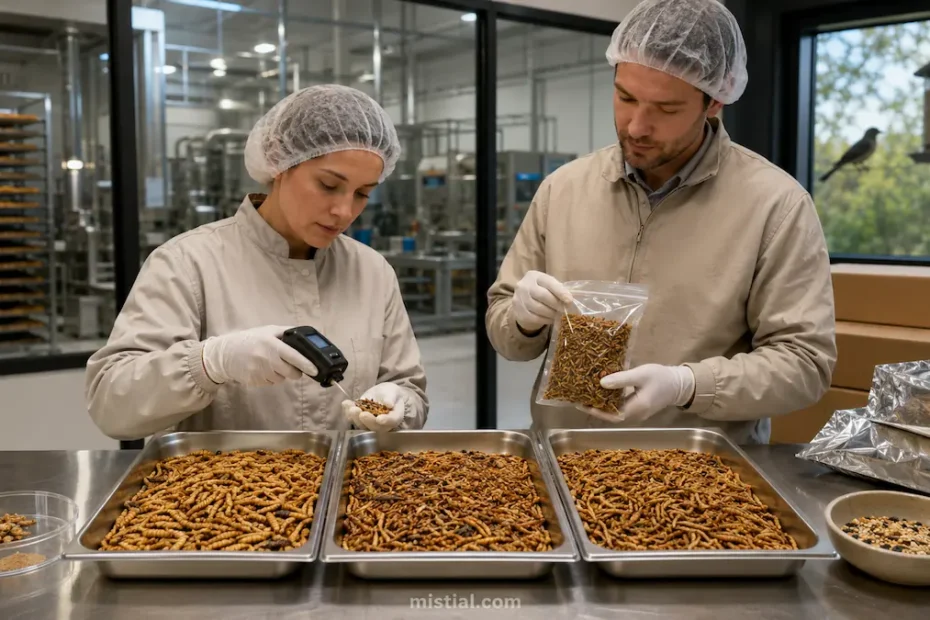
A bag of dried mealworms can look perfectly fine when the sample first arrives. The real differences usually show up after you have opened several cartons from different production batches.
Colour changes. More pieces arrive broken. Powder collects at the bottom of the bag. One shipment feels crisp and dry, while another feels softer after a few weeks in storage.
For a bird-feed brand or distributor, those details matter just as much as the protein figure on the specification sheet.
GreenFut’s dried mealworm product range lists 50–54% protein and moisture at no more than 6%. The company also states that its dried mealworms contain no additives, preservatives or GMO ingredients, and that each batch is tested for quality and safety.
Those are useful starting points, but I would still approve a supplier based on consistency rather than one good sample.
Ask for material from more than one production lot. Compare colour, size distribution, smell and the amount of breakage. If the mealworms are going into clear retail packs, appearance matters. Customers will notice a bag containing too much powder even if the nutritional analysis is technically within specification.
Drying is another area worth asking about.
GreenFut describes a controlled, low-temperature drying stage as part of its production process. For a buyer, the more useful question is not simply what the drying method is called. What matters is whether moisture, colour and physical condition remain reasonably consistent from one shipment to the next.
Packaging should also be tested against the real shipping route.
A carton that performs well during a short domestic delivery may behave differently after several weeks in a humid container. For larger imports, I would ask how the inner bags are sealed, what bulk packaging is available and what happens if the shipment is stored before repacking.
Storage conditions are easy to overlook as well. If dried mealworms pick up moisture after arrival, blaming the original product may not tell the whole story. Warehouse humidity, opened bags and poor resealing can all change the condition of the product.
GreenFut says its business covers breeding, processing, sales and export, and its website lists FDA, HACCP and ISO22000 certifications. The company also states that it operates large-scale mealworm farming and processing in Shandong.
More supplier and product information is available on the GreenFut official website.
If I were sourcing dried mealworms for bird feed, I would compare several batches, check moisture and breakage after transport, and ask for current test documents tied to the actual shipment.
The product still has to arrive dry, clean and consistent when the bag is opened.
A practical supplier approval plan should define the same checks for every lot. Record moisture, colour, odour, size distribution, whole-piece percentage and the amount of powder or broken material in a fixed sample weight. Keep sealed reference samples from approved lots and compare them under the same light. Packaging trials should include the longest expected shipping and warehouse conditions, followed by a check after the bag has been opened and resealed. Ask for batch documents linked to the actual shipment rather than only a general certificate. If the product will be repacked, run it through the real handling equipment to see whether additional breakage occurs. These steps make it easier to separate supplier variation from damage caused during transport, storage or the buyer’s own packing process.
