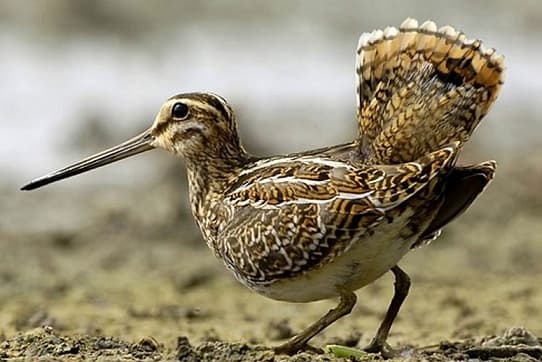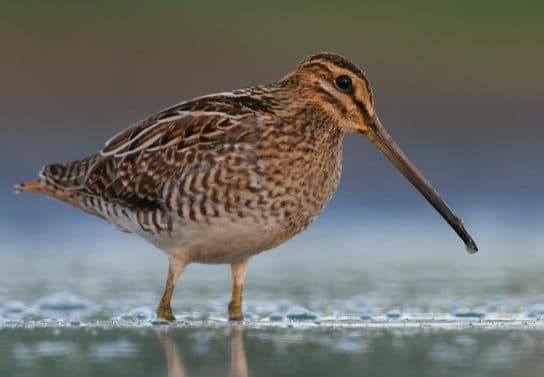
In an adult snipe, the upper body is dark brown, with pronounced pale lines, bright brown, chestnut and black spots and stripes. The wings are covered with dark or pale brown and whitish markings and fringes along the edges. Flight feathers are dark brown with broad white tips. The tail is brown with a chestnut stripe located almost at the end. There is a narrow white line at the very tip of the tail.
Snipe description
The lower body, chin and throat are dark white. The chest is slightly brownish brown with darker veins. The belly is white, the sides are brown.
Feathers on the ears and cheeks, the eyes are dark brown, as is the crown, which is decorated with faded stripes. Dark yellow eyebrows. Long flexible blackish beak with a yellowish base. The feet are yellow or grayish green.
Both sexes are similar. Juniors differ from adults only in neatly bordered pale yellow wing feathers. Subspecies of the main snipe, Gallinago gallinago, exhibit some variation in color and plumage patterns.
What places does the snipe choose to live in?
Birds live and build nests:
- near open fresh or brackish water areas with vegetation;
- on grassy or marshy edges of lakes and streams;
- in wet meadows;
- on the swampy tundra.
This species needs grass cover and moist soils. Outside the mating season, the snipe inhabits similar habitats, but also flies into rice fields, treatment facilities, estuaries and coastal meadows.
Range of snipe
Birds are widespread:
- in Iceland;
- in the Faroe Islands;
- in the North of Europe;
- Russia.
Seasonal bird migration
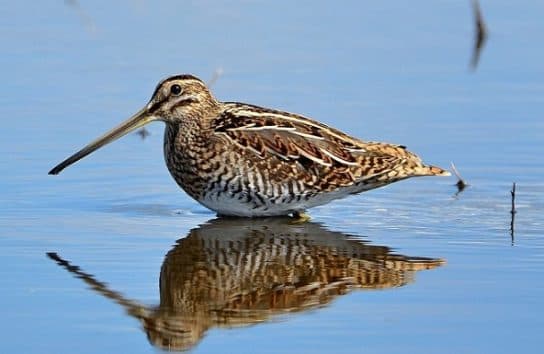
The species overwinters in southern Europe and Africa, Asian subspecies migrate to tropical southern Asia. Some populations are settled or migrate within the range. Relatives from the Northern latitudes arrive in Central Europe, join the aboriginal snipe, feed on flooded meadows, where there is vegetation for shelter and rich sources of food.
How snipe breeds
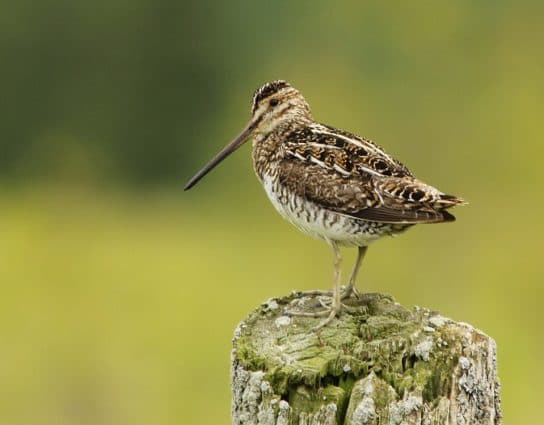
Snipe whirls high in the air, makes quick flaps of its wings. Then it falls like a stone, producing the typical female drumming sound. The male also sits on the poles, publishes a mating song.
The species is monogamous and nests on the ground. Parents place the nest in a dry place among vegetation, cover it with grass or sedge. The female lays 4 brown-spotted olive eggs in April-June. The incubation ends in about 17-20 days, the mother incubates.
Both adults feed and take care of the offspring, put insects in the open beaks of the chicks. Young animals fledge 19-20 days after birth. Since eggs are on the ground, they are often eaten by predators or trampled by grazing livestock. If the clutch is unsuccessful or dies, the parents lay eggs again.
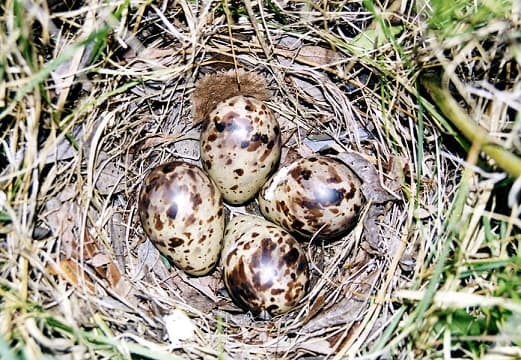
Snipe nest with eggs
What do snipe eats in nature
Snipe hunts insects, also eats:
- larvae;
- earthworms;
- small crustaceans;
- snails;
- spiders.
Birds need a small amount of seeds and plant fibers for a complete diet. The species usually gathers food close to water or in shallow water.
The species feeds in small flocks, often at sunrise and sunset. In search of food, snipe probes the soil with long sensitive beaks.
Snipe survival tactics in nature
The bird never flies far from the shelter. If disturbed, the snipe crouches, then makes strong flaps of its wings, rises high in the air, flies long distances, lands and hides in cover. During these actions, the bird makes harsh sounds. The camouflage plumage makes the snipe difficult targets for predators and objects of study for bird watchers.