


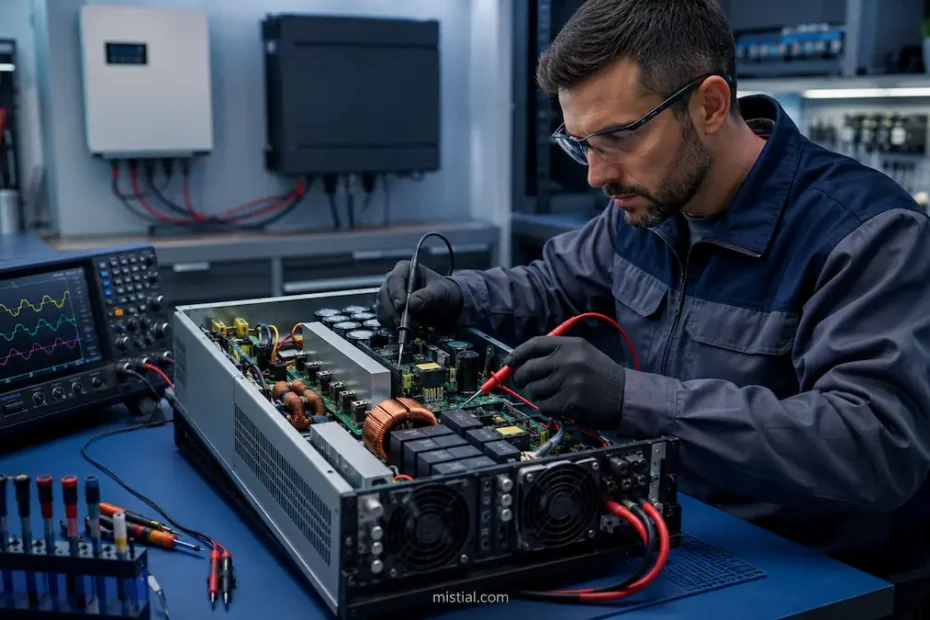
Inverter charger repair is an important service for maintaining reliable backup power systems in homes, offices, workshops and commercial facilities. An inverter charger combines several functions in one device, converting direct current from a battery into alternating current for electrical equipment while also charging the battery from an external power source. When such a device develops a fault, professional diagnostics can help identify the cause and determine whether repair is technically and economically reasonable. Proper maintenance and timely inverter charger service can also reduce the risk of more serious damage to the electronics and connected equipment.
What Is an Inverter Charger?
An inverter charger is a power conversion device designed to manage energy between batteries, electrical loads and an external power source. In normal operation, it can charge a battery and provide alternating current to connected devices. During a power interruption, the system can switch to battery operation and supply electricity to selected loads.
The internal structure of an inverter charger is relatively complex. It can include power transistors, capacitors, transformers, relays, control boards, cooling systems, sensors and protective circuits. Each component performs a specific function, so a failure in one part can affect the operation of the entire device.
Because of this complexity, inverter charger repair should begin with systematic diagnostics rather than replacing components at random. Identifying the original cause of the failure is particularly important because a damaged component can sometimes be a consequence of another electrical problem.
Common Inverter Charger Problems
Inverter chargers can experience different types of faults depending on their operating conditions, age and installation environment. One common problem is the complete absence of output voltage. In this situation, the device may appear to switch on, but connected equipment does not receive power.
Another frequent issue involves incorrect battery charging. The inverter charger may fail to charge the battery, charge it too slowly or stop charging before the battery reaches the required level. Such symptoms can be related to the charging circuit, battery condition, sensors or control electronics.
Overheating is another important warning sign. Excessive temperature can be caused by blocked ventilation, damaged cooling fans, overloaded circuits or malfunctioning power components. Continuous operation under high temperature can shorten the service life of electronic components.
Some devices may also produce error codes, unexpected shutdowns or audible alarms. These signals should not be ignored because they can indicate problems with input voltage, battery condition, temperature, overload or internal electronics.
Why Professional Diagnostics Matter
A professional inverter charger diagnostic procedure normally starts with a visual inspection and an assessment of the symptoms. Technicians can examine connectors, circuit boards, cooling elements, fuses and visible signs of overheating or mechanical damage.
Electrical measurements are then used to determine whether the main circuits operate within their expected parameters. Depending on the device design, testing can include input voltage, output voltage, charging voltage, resistance, continuity and the condition of specific electronic components.
Modern inverter chargers often contain sophisticated control electronics. A problem that appears to be related to the battery, for example, can sometimes originate from a control board or charging circuit. This is why replacing the battery without proper testing may not solve the underlying problem.
Repairing the Power Electronics
Power electronics are among the most important components inside an inverter charger. Power transistors and related components handle significant electrical loads and can be damaged by overloads, short circuits, voltage surges or excessive temperature.
During inverter repair, a technician may need to identify damaged semiconductor components, capacitors, resistors or other elements on the power board. In some cases, individual components can be replaced. In other situations, a complete circuit board may need to be repaired or replaced.
Capacitors deserve particular attention because their characteristics can deteriorate over time. A capacitor may lose capacity or develop increased internal resistance, affecting the stability of the power conversion system.
Battery Charging Problems
Battery charging problems require separate attention because the battery and inverter charger operate as a connected system. A battery that does not hold a charge can create symptoms that resemble a charger malfunction.
Professional diagnostics should therefore consider both sides of the system. The technician may check battery voltage, charging voltage, connections and the charging circuit inside the inverter. Incorrect settings can also affect charging performance, particularly in systems that support different battery technologies.
The type of battery is important as well. Lead acid, AGM, gel and lithium based batteries have different charging requirements. Using unsuitable charging parameters can reduce battery life and may create safety risks.
Overheating and Cooling System Failures
Temperature management has a major influence on inverter charger reliability. Power components generate heat during normal operation, especially when the device is working close to its maximum load.
Cooling fans, ventilation channels and heat sinks must therefore remain clean and functional. Dust accumulation can restrict airflow and cause internal temperatures to rise. A defective fan can produce similar symptoms.
When an inverter charger repeatedly shuts down because of overheating, simply resetting the device is not a permanent solution. The cooling system, load level and condition of internal components should be examined to identify the source of the problem.
When Is Inverter Charger Repair Worthwhile?
The decision between repair and replacement depends on several factors. The age of the device, availability of spare parts, complexity of the fault and cost of the repair all influence the final decision.
Repair can be a practical option when the main structure of the inverter charger remains in good condition and the fault is limited to replaceable components. Professional repair can also extend the useful life of expensive power equipment and reduce unnecessary electronic waste.
Replacement may be more appropriate when a device has extensive internal damage, obsolete components or repeated failures. A qualified technician can assess the condition of the equipment and provide information about the available options.
How to Choose an Inverter Charger Repair Service
When selecting a repair company, customers should consider experience with the specific type of power equipment. Different inverter chargers use different circuit designs, control systems and diagnostic procedures.
It is also useful to ask whether the service includes diagnostics before repair. A clear diagnostic process helps identify the actual source of the malfunction and prevents unnecessary component replacement.
The availability of spare parts is another important factor. Original components or compatible high quality replacements can affect the reliability of the repaired device. Customers should also ask about testing after repair. A properly serviced inverter charger should be checked under appropriate operating conditions before being returned to regular use.
Preventive Maintenance for Inverter Chargers
Regular maintenance can help prevent many common inverter charger problems. The equipment should be kept in a clean and sufficiently ventilated location. Ventilation openings should remain unobstructed, and cooling fans should be inspected periodically.
Battery connections should also be checked for signs of corrosion, looseness or overheating. Operating conditions should correspond to the specifications provided by the manufacturer, particularly regarding load capacity and battery voltage.
Early attention to unusual noises, error messages, overheating or changes in charging behavior can prevent minor faults from developing into more expensive failures. For systems that provide power to important equipment, periodic professional inspection can be especially valuable.
Inverter Charger Repair for Reliable Power Systems
A properly functioning inverter charger plays an important role in maintaining stable backup power. Its operation depends on the condition of power electronics, charging circuits, batteries, control systems and cooling components.
Professional diagnostics makes it possible to distinguish between battery problems, electronic faults, overheating and other causes of malfunction. With appropriate testing, component replacement and post repair verification, many inverter charger faults can be addressed without replacing the entire system.
