


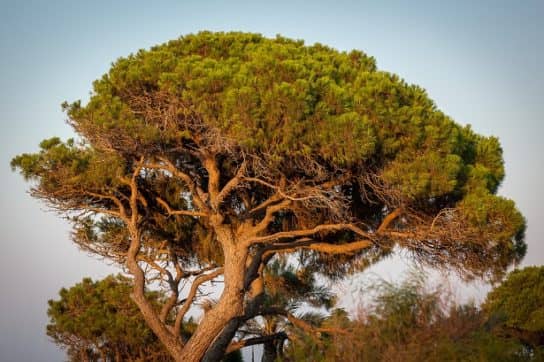
The Mediterranean Italian pine Pinia is a medium-sized tree with a large, flat, umbrella-shaped crown that grows in the Mediterranean basin in coastal areas, especially in southern Western Europe.
Conditions for the growth of pine
The tree occupies a wide range of climatic and soil conditions, but exhibits low genetic variability. Mediterranean pine grows best in dry weather, strong direct sunlight and high temperatures. The seedling tolerates shade in the early stages of growth.
Pine prefers acidic siliceous soils, but also tolerates calcareous soils. Use Mediterranean pine for:
- collecting edible seeds (pine nuts);
- compaction of sand dunes in coastal areas;
- logging;
- hunting;
- grazing.
Natural enemies of pines
This type of pine is rarely affected by insect pests and diseases. In the early stages of growth, seedlings attack some fungal diseases that damage young plantations. In the Mediterranean Basin, forest fires pose a major threat to pine, although the thick bark and high crown make the tree less sensitive to fire.
Description of Italian pine
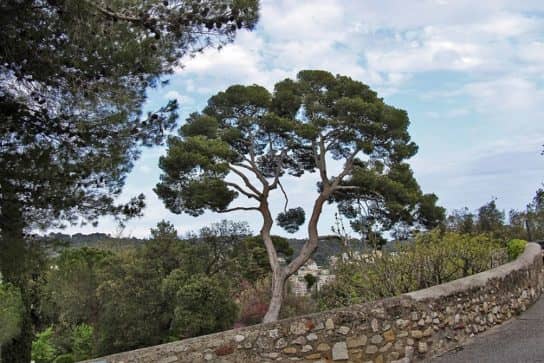
The Mediterranean cedar pine is a medium-sized evergreen coniferous tree that grows up to 25-30 m. Trunks exceed 2 m in diameter. The crown is spherical and shrubby in young specimens, in the shape of an umbrella in middle age, flat and wide in maturity.
The top of the trunk is decorated with numerous oblique branches. The needles grow closer to the ends of the branches. The bark is reddish-brown, fissured, with wide flat, orange-violet plates. The needles are bluish-green, on average 8-15 cm long.
The plant is monoecious, unisexual. The pollen cones are pale orange-brown, numerous and collected around the base of new shoots, 10-20 mm long. The seed cones are ovoid-globular, 8-12 cm long, green at a young age and reddish-brown at maturity, ripening in the third year. Seeds are pale brown, 15-20 mm long, heavy, with easily detachable wings and poorly dispersed by the wind.
Pine use
This pine is a multipurpose species cultivated for the production of lumber, nuts, resin, bark, soil erosion control, environmental and aesthetic purposes.

Pine timber production
Good quality Mediterranean pine wood chips. The material has been widely used in the past. In modern conditions, the slow growth of Mediterranean pine compared to other species makes this tree economically ineffective. Pine is only a minor species in commercial plantations.
Strengthening the coastline
The high resistance of the roots of Mediterranean pine to poor sandy soils has been successfully used to consolidate sand dunes in the coastal regions of the Mediterranean Sea.
The most valuable Mediterranean pine product
Undoubtedly, the most economically important product that is extracted from pine is edible seed. Pine nuts have been used and sold since ancient times and the demand for them is constantly growing. The main manufacturers of this product:
- Spain;
- Portugal;
- Italy;
- Tunisia;
- Turkey.
On the poor sandy soils of the Mediterranean region, other trees do not take root well. Mediterranean pine has great potential as an alternative crop with minimal planting attention. The trees satisfy the demand for pine nuts and are used for the production of timber and firewood for local residents. Among the pines, cattle graze, hunt wild animals and gather mushrooms.
