


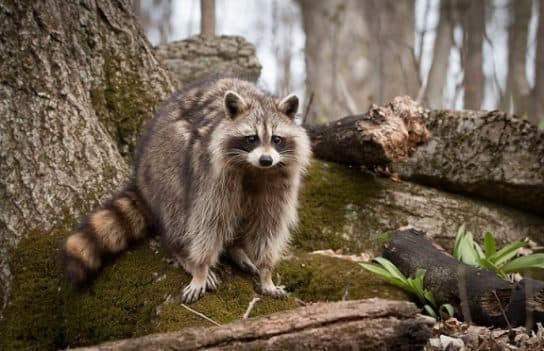
The raccoon family includes 7 genera and 18 different species, which are extremely different from each other in appearance and lifestyle. Representatives of raccoons have spread across the tropical and subtropical regions of the United States. In Europe, you can only find a raccoon, and in Asia – a lesser panda. Almost all species of the family, with the exception of noses, prefer nightlife. Common to all species are complex relationships within the group and between members of different sexes. Also raccoons are predatory animals that feed on small vertebrates or invertebrates, as well as fruits.
Raccoon species
Raccoon
A very cute little animal also known as the American Raccoon. It is a carnivorous animal that leads an active nightlife. Almost all day he hides in his lair, and at the beginning of the night he goes in search of food. The appearance is represented by a stocky body with short limbs. It feeds mainly on fish. You can meet him in North and Central America.
Raccoon raccoon
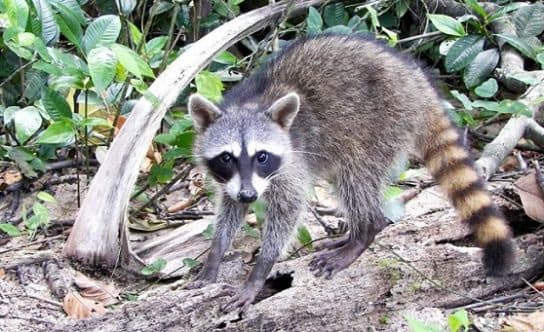
This representative of the raccoon family is also known under the name aguara… You can meet him in the jungle and swamps of Central and South America. It is often found in the forests of the Amazon. It differs from other animals by the presence of a small black mask. Despite the name “crustacean”, it feeds mainly on fruits and various invertebrates.
Kosumel units
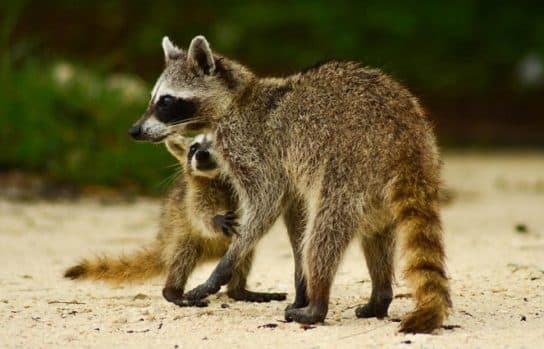
The population of this species is in great danger and numbers only 300 individuals. They spread on the island of Cozumel, which is why they got the name “Cozumel raccoon”. It is a small-sized animal with a brown-gray color. The diet is based on crabs and various insects. They prefer to lead a solitary lifestyle, with the exception of the breeding season.
Guadeloupe units
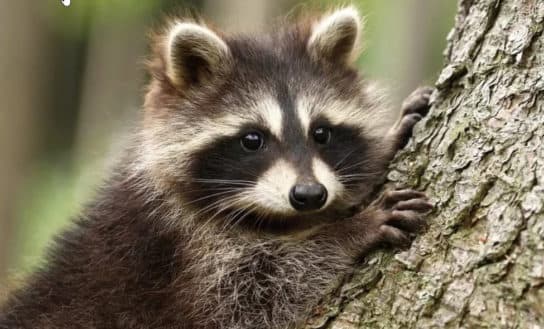
The appearance of this representative has many similarities with a striped piece. The entire body is covered with thick and long fur with a characteristic black mask on the head. You can meet him on the island of Guadeloupe, which is located in the Caribbean. Small populations are found in the Lesser Antilles. At night he goes out in search of prey. It feeds mostly on fish, shellfish, meat and fruits.
Bahamas units

Some zoologists classify the Bahamian raccoon as a subspecies of the raccoon raccoon. He practically does not have any external differences, with the exception of a slightly smaller body size. It is endemic to the Bahamas. At the moment it is under the threat of extinction due to the constant reduction of habitats.
Tresmariasskij units
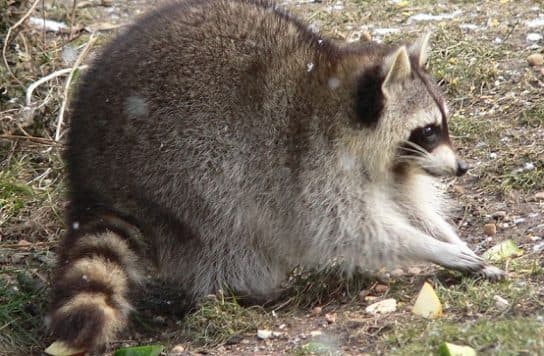
It is one of the subspecies of the striped raccoon. Lives in the Maria Islands, as well as off the west coast of Nayarit state in Mexico. There is a clear dark mask on the face. The color ranges from pale brown to grayish. It feeds on various arthropods, fish, frogs and plant fruits. Quite a rare representative of the raccoon family.
Barbadian units
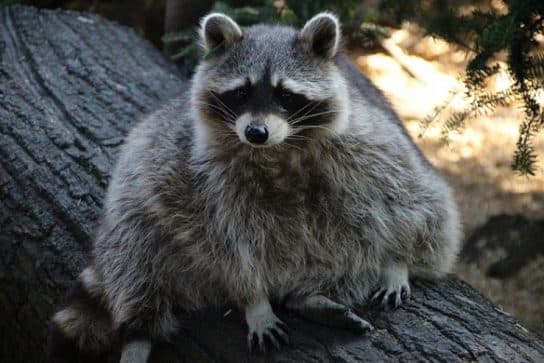
This subspecies of the striped raccoon completely disappeared in 1964. It was possible to meet him only on the island of Barbados, which is located in the Caribbean Sea. However, in 2005 it was listed as a subspecies of the common raccoon. In appearance, the Barbados raccoon is practically no different from the striped raccoon. Tourism is the most likely reason for the extinction of the subspecies.
Common nose

This representative is represented by about 13 subspecies. It is a predatory animal that prefers to live at an altitude of about 2000 meters above sea level. Has a relatively large size. Differs in its elongated and movable nose. Unlike most raccoons, it is awake during daylight hours. Distributed in the forests of South America and the eastern Andes.
Mountain nose

This is a predatory member of the raccoon family, which has external similarities to the common nose, but differs in smaller size and an elongated sharp muzzle. Widely spread in Colombia, Ecuador, Venezuela and Peru. In the Andes, it can rise to an altitude of 4000 meters above sea level.
Kakomicli
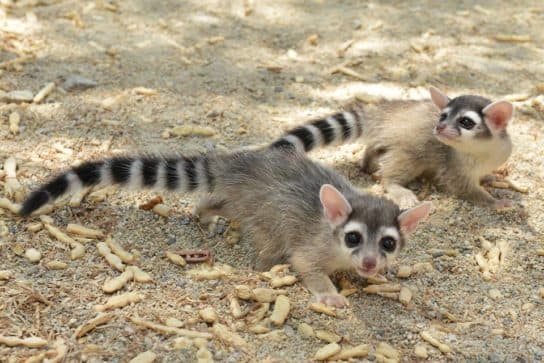
This amazing animal has a lot of external similarities with a marten, but the body color is the same as that of a raccoon. According to some experts in the field of anatomy, what can be attributed to the cat family. The animal’s very long and fluffy tail is remarkable. You can meet him on the territory of South and South-West America. Also found among the rocky and rocky surroundings of Mexico. Absolutely omnivorous animals.
Kinkaju
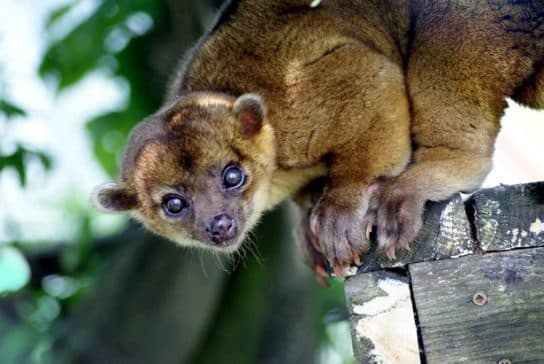
It is a small predatory animal belonging to the raccoon family. It is similar in size to a small cat. It features a round head with a short muzzle and rounded ears. The species spread to the tropical forests in southern North America, as well as in Central and South America. May meet in Brazil, Colombia, Costa Rica and Panama.
Olingo
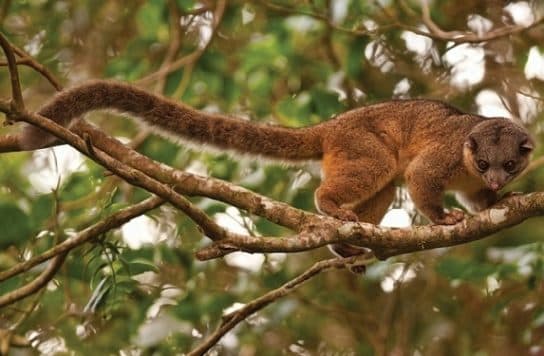
Olingo looks a bit like a marten. It lives mainly in Bolivia, Ecuador, Peru and Venezuela. Prefers tropical and evergreen forests as habitats. It is noteworthy that there is practically no exact information about the number of this species, therefore no protective measures are taken.
Little panda

An extremely unusual representative of the raccoon, which has many similarities with the marten, raccoon and bear. The size of the small red panda is similar to the domestic cat. It is distinguished by its bright red color and a characteristic mask on the muzzle. It is predominantly nocturnal, preferring to rest in the daytime. You can meet her in the Chinese provinces of Sichuan, Myanmar, Nepal, Bhutan and Yunnan.
Conclusion
Due to the wide variety of species and the small number of common features of the raccoon family, there is still debate among scientists about their systematic position. As a rule, all raccoons are relatively small in size with characteristic striped tails and certain patterns on their faces. Many animals are predominantly solitary, but there are also large groups. In particular, groups form noses, which thus make it easier for themselves to find food and attack enemies. Some species of the family are in the Red Book and need protection.
