


Sea otter belongs to mammals, mustel family. This is a predatory animal, the name of which comes from the Koryak language.
Steller first described this animal in 1741, when he took part in an expedition to Kamchatka. This campaign was led by Bereng. The ship on which the crew arrived on the peninsula crashed and therefore Georg remained with the others in place for a long time. The works of this scientist were published in 1751. Almost 1000 skins of this animal were brought to Russia, and as a result, a real hunt for the sea otter began. At the beginning of the last century, the sea otter began to be protected, it was entered in the Red Book, which bore fruit and the number of animals increased.
Description
The sea otter is of medium size, the body weight of the animal is about 40-50 kilograms. Sexual dimorphism is expressed in size and weight: males are larger than females. Females weigh about 30 kg, their body length is about 100-150 cm. The body length of males can reach 155 cm, they weigh 10 kg more than females. The tail of the sea otter is about 30 centimeters. The head of the sea otter is roundish, the muzzle is slightly flattened. It has vibrissae, a dark nose and small ears.
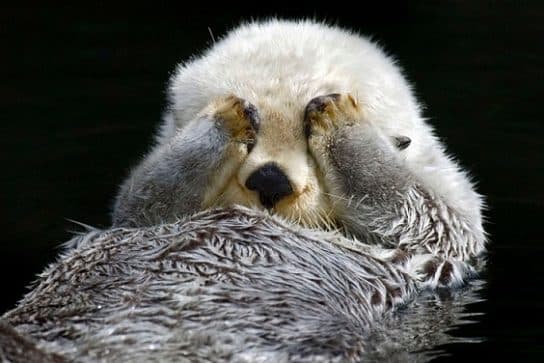
The front legs are rather short, they have fused toes. At the bottom of the limbs there are special pads that help to touch objects and hunt. The hind limbs play the role of flippers. The fur of animals is thick, they have guard, fur hairs. Due to the hairline, sea otters can stay in the water for a long time, and they will not get cold right away. The fur of the sea otter changes throughout the year, but in the spring and summer, the process of loss is intense. Hair color can range from red to brown. There are also albinos with melanists, whose fur is black.
Where do sea otters live?
In the 18-19 centuries, sea otters lived near the Pacific Ocean, but by the beginning of the 20th century, their habitat was the Aleutian Islands. The population was small, scientists numbered several thousand individuals. Because of this, hunting for them was prohibited and the animals were settled on the shores of the Pacific Ocean. The attempt was not very successful.
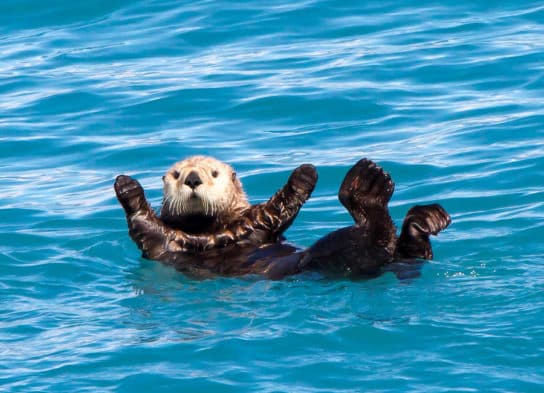
At the moment they inhabit Alaska and California, the Far East. They can also be found in Hokkaido. A huge population inhabits the shores of Washington State. In total, there are 70 thousand sea otters. In Russia, about 15 thousand live on Medny Island in the Kamchatka Sea. So, there are only 3 subspecies of this animal: the Asian sea otter living in Kamchatka, the Kuril Islands and the Far East, the Californian and northern sea otter living on the Aleutian Islands.
Sea otter lifestyle
Sea otters are active during the daytime. They spend a lot of time in the water and sometimes go out to dry out. On Mednoye, animals even spend the night on the shore, when Californian sea otters spend all their time in the ocean. During a storm, they do not sail from land, and in calm times, they seek food 20 kilometers from land.
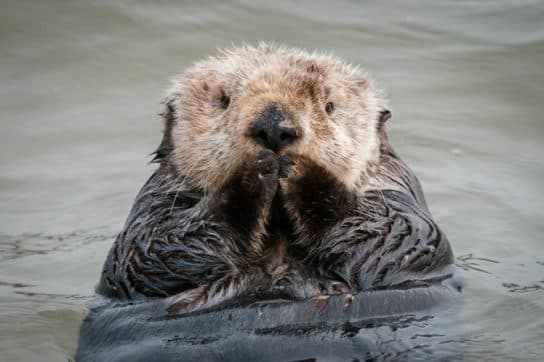
Sea otters take care of the wool, often clean it and comb it, because mucus and food get stuck in the hairs. It also helps to avoid hypothermia for a long time. In general, the daily routine of the otter is such that at dawn the animals wake up and immediately begin to search for food and grooming procedures. All this lasts until noon. After eating, the sea otter falls asleep for half an hour. Then the time for love games comes, and they end only by 4 o’clock in the afternoon, and after such activities they quickly fall asleep for about an hour. After sleeping, they need to eat and groom their fur a little. Then they go to bed again, this time until the morning.
Sea otters are friendly, they are not wary of both individuals of other species and people. On the contrary, they let them come close.
Nutrition
Sea otters should eat a lot of food every day due to their habitat. Usually they eat molluscs, crabs and even starfish, as well as octopuses, and sea otters prefer to leave the heads of these animals. The search for prey takes place at a depth. Everything that the “hunter” got, he puts in his skin, in a special pocket under his paws. The animal starts eating only when it emerges. They usually drink seawater or swallow it with food.
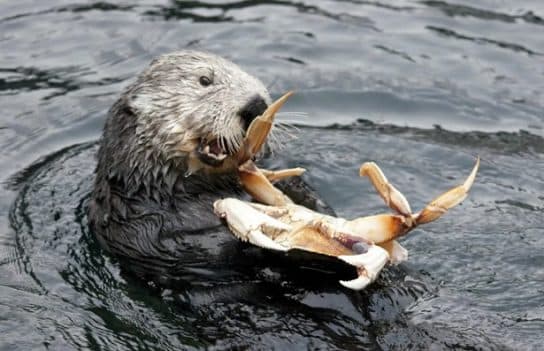
Sea otter caught a crab
Natural enemies
The enemies of the sea otters are representatives of the dolphin, such as the toothed whale. The killer whale is also a threat to sea otters. The list is also supplemented by the polar shark, although it usually lives at great depths. The most serious enemy is the sea lions; in the stomachs of these predators, the remains of sea otters are constantly found.
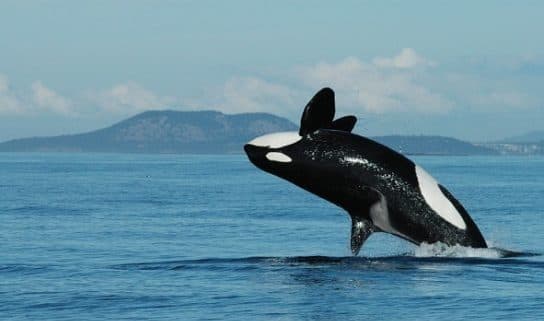
The killer whale is the enemy of sea otters
Reproduction
Males become sexually mature at about 6 years old, and females can produce offspring as early as 3 years old. A male individual swims a lot with the female he likes, then grabs her by the nose and holds her in the process of mating. After 8 months, the mother gives birth to offspring, usually one sea otter, since when twins are born, the second child almost always dies. At first, the cub can do nothing without a parent, but then the mother teaches him to “hunt” the inhabitants of the sea and accustom him to such food.
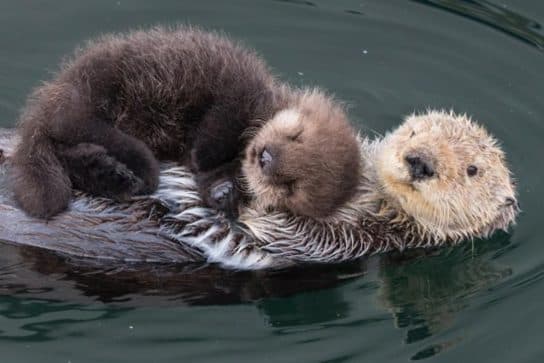
sea otter with calf
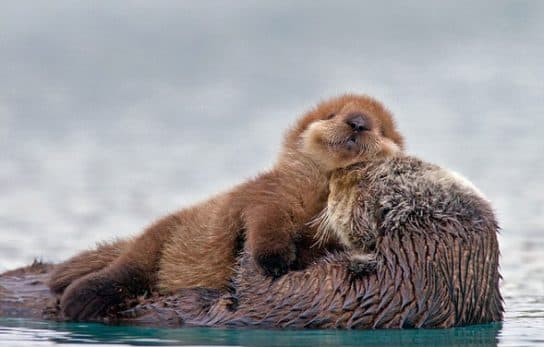
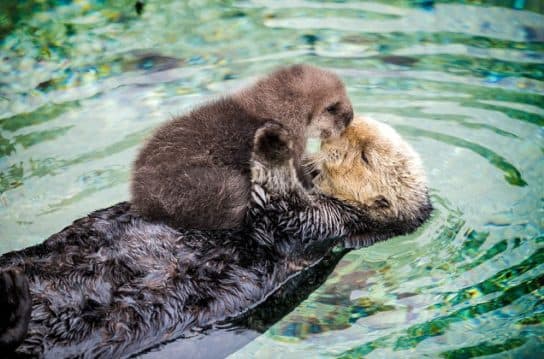
Cute photos 🙂
Interesting Facts
- The kidneys of animals are very large and can easily process salty seawater. They make up about 3% of the weight of the animal.
- Sea otters lack sweat glands, so they cannot mark territory.
- Animal bones are often purple, as sea otters love to eat sea urchins.
Communication between sea otters occurs with the help of a squeak. In moments of danger, they may hiss or grumble.
