


The climate in the steppe zones – both in temperate European, and on the prairies, and in the pampas – is characterized by a high seasonality: in winter, positive temperatures and a large amount of precipitation.
Russia, North America, Africa, Australia – the steppes are quite widespread throughout the earth. The vegetation in these zones is represented by grass cover, trees and shrubs, and the fauna is represented by large animals, predators and birds. The world of birds in the steppes is represented by large and medium-sized individuals, for the most part in structure similar to the chicken family, but with longer legs and neck.
Steppe seagull
Until recently, this species of bird was not considered as a separate species of the gull family, but stood out in only one (occasionally several) subspecies of the more common and familiar to many family of herring gulls, with which the gull has a lot in common – both in behavior and external appearance.
Demoiselle crane
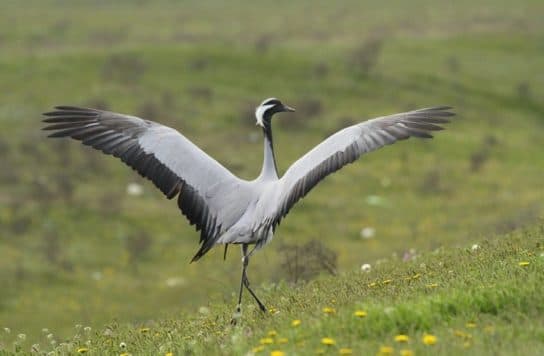
Belladonna is the smallest member of the crane family in the world – and the third largest in the world – there are almost 250 thousand individuals of this species in the world. The belladonna is only about 90 cm high, and weighs three kilograms. Bella of this crane was named for its bright appearance – its head is decorated with long tufts of white feathers.
Steppe eagle

A bird of prey from the hawk, which nests in the steppe south of Russia, as well as in Siberia and Asia and China. The Steppe Eagle nests on the ground and rocks, and occasionally on small bushes and trees. And he prefers to winter in Africa and India (it is there that the stone eagle constantly lives – very similar in appearance to the steppe eagle). Moreover, in Russia this species is practically on the verge of extinction.
Strepet
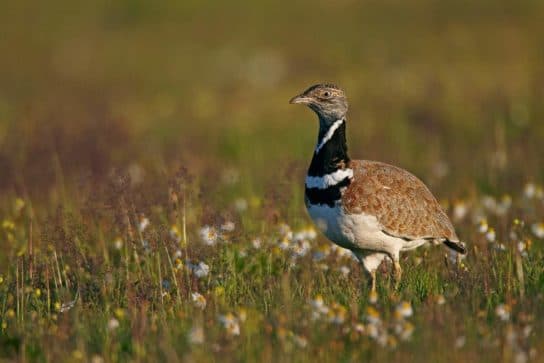
The little bustard is a small bird of prey – no larger than a chicken with a body weight not exceeding 1 kilogram. The flight of the little bustard cannot be confused with any other – it flies at high speed, and this gives the impression that the bird flutters in place. The flight is usually accompanied by a characteristic whistle of the wings.
Lark

The common lark is a common passerine bird. Despite its small size, the bird is known to many for its melodic singing. The lark itself is not much larger than the sparrow and is painted discreetly, but neatly. The head of a lark is more refined than that of a sparrow and has a small crest. It is the male (he is larger than the female) that pleases those around him with a gentle song.
Swampy moon

A small bird from the hawk family weighing no more than 750 g and up to 60 cm long. Females of the Marsh Harrier are larger than males – and differ in color. It is a migratory bird – and its breeding area includes China, Mongolia, Siberia. When hunting, the harrier stays low above the ground, folding its wings in a V shape. The diet of this bird is made up of small mammals, other birds and reptiles.
Black-headed gull

A small species of gulls with a strong body structure and a large head with a short neck. In a wedding dress, wears a black hood to the back of the head. Light gray wings and dark red paws with a beak stand out against the background of the white body. Usually black-headed gulls reach sizes up to 40 cm with a wingspan of about a meter.
Peganka
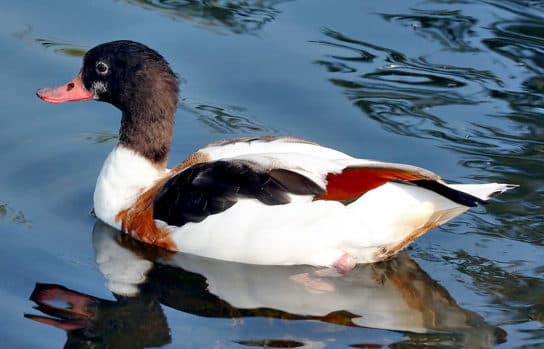
This bird is a large duck waterfowl. In the general taxonomy of species, it occupies an average position between geese and common ducks – and outwardly resembles representatives of both of these species. In Eurasia, there are two populations of shelled sheep, separated from each other – on the coast and on open lakes (and in the arid regions of Asia).
Bustard

A large bird is a representative of the bustard family. It is mainly distributed in the steppe regions of Eurasia – although it is possible to find it in more northern latitudes. Most often, it settles in areas used in agriculture – pastures and arable lands. Predominantly sedentary, although in the north it can be partially migratory. It feeds on both plant foods and animal proteins.
Kurgannik

A large bird of prey from the hawk family. Its dimensions reach 65 cm, and the wingspan is up to 150 cm – and such parameters make it the largest representative of buzzards. The wingspan of the Long-legged Buzzard makes it look like an eagle. The head and chest of the bird are painted in light colors, but the belly and legs are reddish.
Cheglok
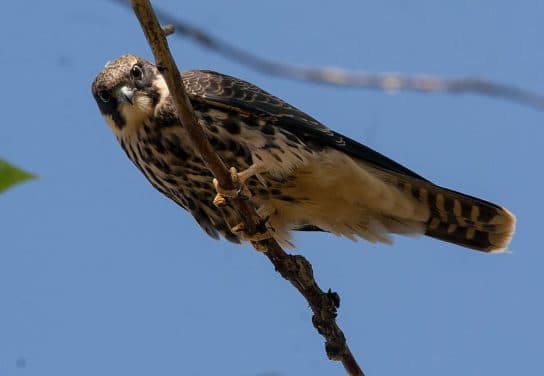
A small predatory representative of the falcon family, which lives in the vast territories of the steppes of both Eurasia and Africa, and Asia (the bird hibernates there). Likes to settle down in light forests, which are combined with open areas. It feeds on insects and birds, which it can catch on the fly. It has dark gray plumage, mustache and black stripes on the belly.
Splyushka
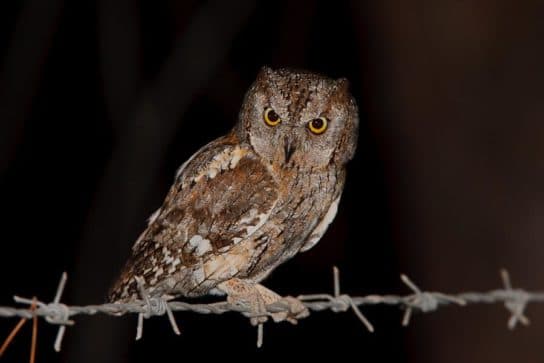
A small bird of prey (up to 20 cm and weighing about 130 g) of the owl family with light brown plumage and white markings on the shoulder girdle. A graceful streaky pattern, like many owls, is characteristic. A representative of nocturnal predators inhabiting Europe, Siberia, Asia, East and Africa. Migratory species – winters south of the Sahara. Prefers deciduous forests for life.
Nuttail

The redstart (coot) is a bright representative of the passerine family, small and singing. It can be safely called the most colorful and beautiful bird in the European part of Russia. Small in size (up to 15 cm) with a bright tail, which the bird twitches very characteristically. It was for the red tail, reminiscent of the fluttering tongue of flame, that she was named the redstart.
Merlin
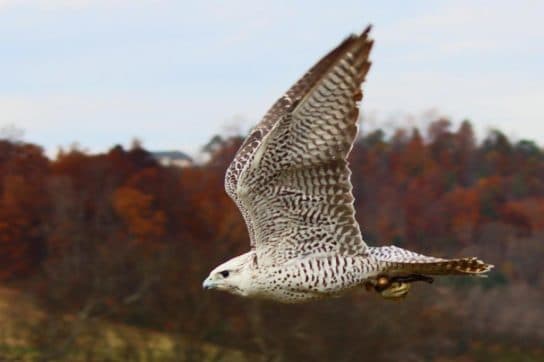
The largest falcon from the falcon family. The size of the wings is impressive (up to 150 cm) with a total length of up to 50 cm and a body weight of no more than two kilograms. The female gyrfalcon is almost twice the size of the male and has a massive build. The light coloration of the gyrfalcon is changeable and is marked with a characteristic dark stripe at the beak section. It resembles a peregrine falcon, but the gyrfalcon has a longer tail.
Goldfinch

The finch goldfinch is known to many – it lives in many open areas of deciduous groves and gardens. Usually it is not migratory, but loves to roam – from spring they huddle in flocks. The song of the goldfinches (sonorous trills) has about 20 versions and it is thanks to these trills that the goldfinch became widely known.
Steppe desert
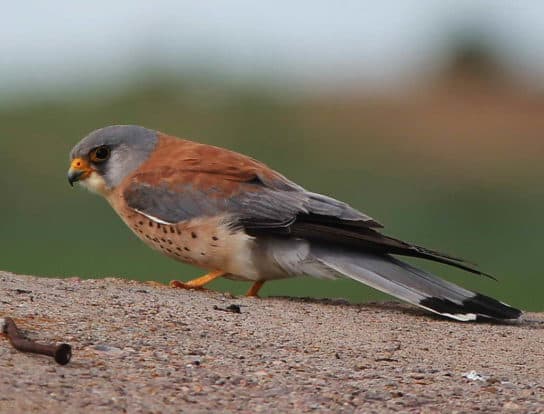
A small predator of the falcon family, the steppe kestrel is a close relative of the common kestrel. The bird nests in Africa and in the steppe territories of Eurasia, right up to China. This bird has suffered more than others from the economic activity of people – until the twentieth century it was considered a common species, and now its number is decreasing at a high rate due to the destruction of insects that the kestrel feeds on.
Conclusion
Today, many steppe territories are changing their purpose, turning into agricultural land and pastures. And a comprehensive study of the steppe birds living on these lands began to receive significant attention.
Intensive human activity, which has intensified to a large extent over the past century, is causing a rapid change in both the fauna and the ecology of birds that live in the steppe territories. And many bird species have significantly decreased their numbers and changed habitats, retreating to more continental areas.
