


Scaling a cream or lotion formula is not as simple as moving the same recipe into a larger vessel.
A 20-litre laboratory batch may look smooth and stable, while the same formula behaves differently at production scale. Heating takes longer, cooling takes longer, and the oil and water phases may not meet under exactly the same conditions. Thick products can also trap air more easily once the batch size increases.
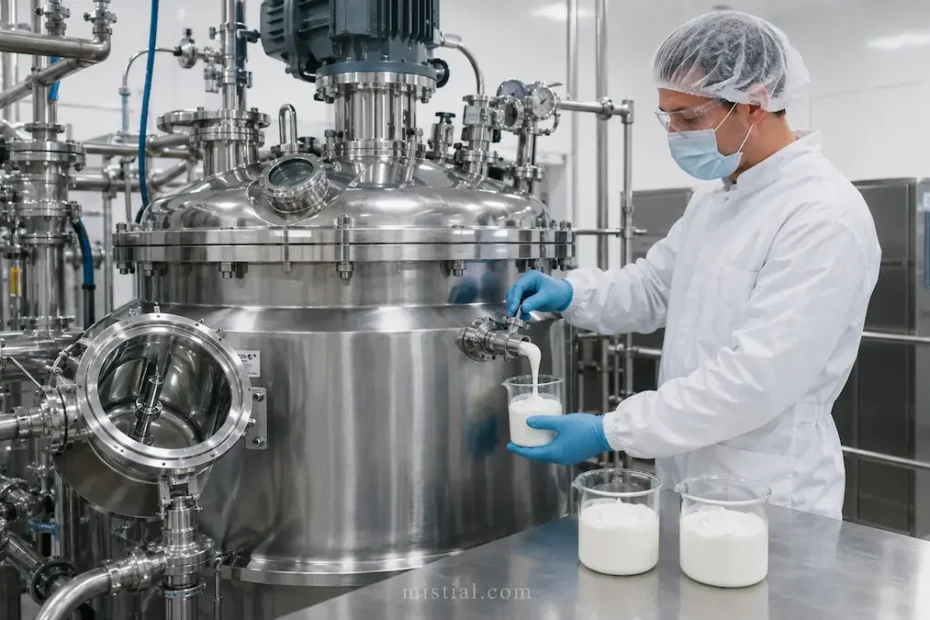
That is where the vacuum automated emulsifying mixer from NW Machines becomes relevant. The unit is designed for cosmetics, pharmaceuticals and food production, uses 304 or SUS316L stainless steel, and allows mixing speed and temperature to be adjusted for different processes.
For cream production, I would pay attention to the formula before changing machine settings.
If a batch turns grainy after cooling, more shear is not always the answer. The real issue may be the temperature at which the phases were combined, the order of addition or how quickly the product cooled afterward. If air remains in the batch after homogenizing, check how the vacuum step is being used before simply extending the mixing time.
The same applies to viscosity. A light lotion and a dense body cream should not be treated as if they need the same process. During a machine trial, run the products that usually give operators trouble, not only the easiest formula in the factory.
Cleaning is another point worth checking before purchase. A mixer that performs well but takes too long to clean can still become a bottleneck when several SKUs are produced on the same line. Ask how easily operators can access the vessel, agitator and product-contact areas between batches. If cleaning requires too much disassembly, the time saved during mixing may simply be lost during changeover.
The wider NW Machines equipment range includes emulsifying, mixing, filling and water-treatment systems for cosmetic production.
When evaluating an emulsifying mixer, I would use three test batches: the thickest cream, the formula most sensitive to temperature and the product that tends to hold air.
Those batches usually reveal much more than a smooth, low-viscosity lotion ever will.
A scale-up trial should follow the formula through the entire process, not only the final mixing stage. Record the temperature of each phase, addition order, transfer time, vacuum level, agitator and homogenizer settings, cooling rate and final batch temperature. Take samples from more than one point in the vessel where practical, then compare appearance, viscosity and air content after the product has rested. The team should also watch whether powder or thick ingredients collect on the vessel wall or around the agitator. After the batch, measure the time and water required for cleaning and confirm that operators can inspect product-contact areas. Keep one approved laboratory or pilot sample beside the production sample for comparison. A larger vessel is useful only when the process can repeatedly reproduce the formula and still leave enough time for cleaning, inspection and the next scheduled product.
