


- 1 What Are Summer IT Camps?
- 2 What Can Children Learn at an IT Camp?
- 3 Programming Through Games
- 4 Why Summer Can Be a Good Time to Learn IT
- 5 IT Camps for Different Age Groups
- 6 What Should Parents Look For?
- 7 Day Camps and Residential Camps
- 8 More Than Programming
- 9 How to Prepare a Child for an IT Camp
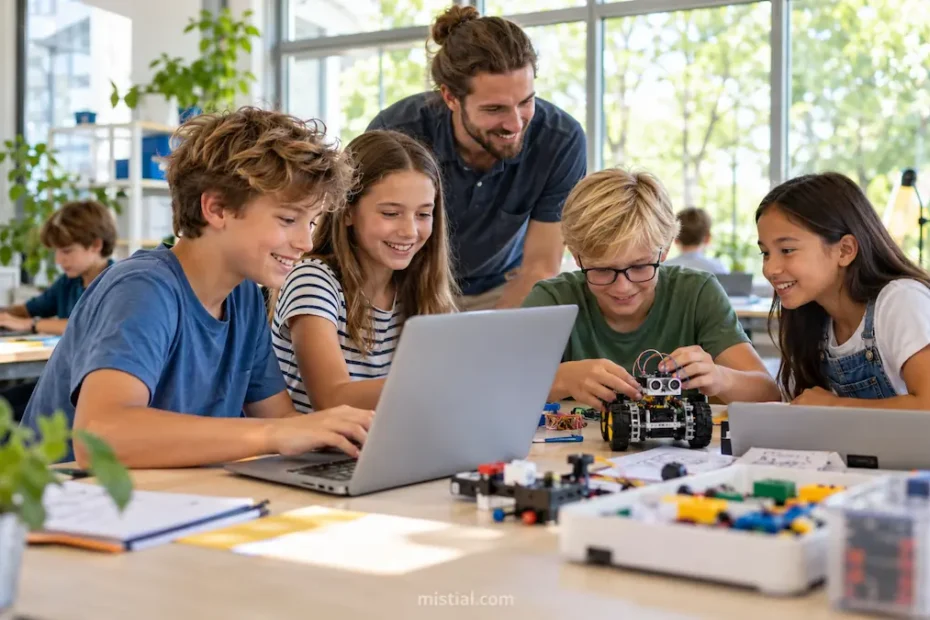
Summer holidays are a time when children can relax, meet friends and discover new interests. For parents who want to combine recreation with useful activities, summer IT camps can be an interesting option. These programs introduce children to programming, game development, digital design, robotics and other areas of technology in a practical and engaging way. In Germany, IT camps are available in different formats, from short daytime workshops to multi day holiday programs.
What Are Summer IT Camps?
A summer IT camp is an educational program designed to introduce children and teenagers to digital technologies in an age appropriate way. Unlike traditional lessons at school, the emphasis is usually placed on practical activities, creative projects and teamwork.
Children may spend part of the day learning how a programming language works and then use their new skills to create something of their own. Depending on the program, this could be a simple computer game, an animation, a website, a digital model or a small robotics project.
The main idea is not to turn summer holidays into another school semester. A well designed IT camp combines learning with creativity and gives children the opportunity to experiment.
What Can Children Learn at an IT Camp?
The content depends on the age of the participants and the specialization of the camp. Younger children often start with visual programming environments where commands are represented by colorful blocks. This makes it easier to understand sequences, conditions, loops and basic algorithms without having to memorize complicated syntax.
Older children can move on to text based programming languages and more advanced technologies. Popular areas include Python, JavaScript, C#, game development and web development.
Typical IT camp activities can include:
- Programming and algorithmic thinking
- Game development
- Robotics and electronics
- 3D modeling and digital design
- Animation and multimedia projects
- Web development
- Creative work with AI and other modern digital tools
The most valuable part is often the project itself. Instead of simply completing exercises, children can create something that reflects their own ideas.
Programming Through Games
Game development is one of the most popular ways to introduce children to programming. A game provides an immediate visual result, which makes abstract programming concepts easier to understand.
For example, a child creating a simple platform game has to think about character movement, collisions, scoring, levels and game rules. These elements require logical thinking and gradually introduce concepts such as variables, conditions and events.
Platforms such as Scratch are particularly suitable for beginners. More experienced students can explore environments such as Roblox Studio, Unity or other game development tools. The choice depends on the child’s age and previous experience.
Game development also demonstrates that programming is not limited to mathematics. Creativity, storytelling, visual design and problem solving are equally important when building an interactive project.
Why Summer Can Be a Good Time to Learn IT
During the school year, children have a fixed schedule and many different subjects to study. Summer can provide more flexibility for exploring an area that interests them.
A summer IT camp can give children several uninterrupted days to work on one project. This makes it possible to move through the entire development process: choosing an idea, planning the project, writing or assembling the code, testing it and improving the result.
The atmosphere is also different from regular school lessons. Children can work in small groups, exchange ideas and see how other participants approach similar tasks. This can make technology feel less like a school subject and more like a creative activity.
IT Camps for Different Age Groups
There is no single format that works equally well for every child. A six or seven year old beginner needs a different approach from a teenager who has already written several programs.
For younger children, visual programming, digital creativity, simple robotics and game design can provide a comfortable introduction. The activities should have clear goals and allow children to see the result quickly.
Children in primary school can gradually move toward more complex projects. They may create interactive stories, games, animations or digital models while learning basic programming concepts.
Teenagers can work with text based programming languages, game engines, web technologies and more advanced development environments. They may also begin building portfolios of their own projects, which can become useful when they later explore technology related education.
What Should Parents Look For?
Choosing a summer IT camp requires more than checking the name of the technology used in the program. Parents should consider whether the format matches their child’s age, interests and previous experience.
Several points are particularly useful to check:
- What age group is the program designed for?
- Is previous programming experience required?
- How much time is dedicated to practical projects?
- How large are the learning groups?
- Which technologies and software are used?
- Is the program focused on one topic or several areas of IT?
- Does the camp take place online or in person?
- How long does the program last and what is included in the schedule?
A program that uses a very popular technology is not automatically suitable for every child. The teaching approach and the level of support can be just as important as the software itself.
Day Camps and Residential Camps
Summer IT programs in Germany can have very different formats. Day camps are convenient for families who live nearby because children attend activities during the day and return home in the evening. This option can be especially comfortable for younger participants.
Residential camps combine technology education with a traditional camp experience. Children stay at the camp location, participate in group activities and spend more time with other participants. Such programs can also help children develop independence and communication skills.
For families choosing between these formats, the decision often depends on the child’s age, personality, previous experience with camps and the practical distance from home.
More Than Programming
An IT camp can also help children develop skills that are useful beyond technology. Programming teaches participants to divide a complex task into smaller steps, look for patterns and test different solutions.
Team projects add another dimension. When several children work on one game or digital project, they need to communicate, divide responsibilities and discuss their ideas. They also learn that the first version of a project rarely works perfectly and that improvement is a normal part of the development process.
These skills are relevant in many areas of education and future professional life. Digital competence is becoming increasingly important in Germany, but children do not have to decide on a future career simply because they attend an IT camp. The primary goal can simply be to discover whether technology is something they genuinely enjoy.
How to Prepare a Child for an IT Camp
Previous programming experience is not always necessary. For beginners, curiosity and willingness to experiment are often more important than technical knowledge.
Parents can help by discussing what the child would like to create rather than focusing only on which programming language they should learn. One child may be excited about creating a game, another about designing a 3D world, while someone else may prefer robotics or animation.
It is also useful to check the technical requirements in advance, especially for online programs. For an in person camp, parents should pay attention to the daily schedule, location, supervision and what equipment is provided.
The best summer IT experience does not necessarily mean learning the largest number of technologies. It can be a few days during which a child discovers that an idea on paper can become an interactive game, animation, website or digital creation through technology and their own effort.
