


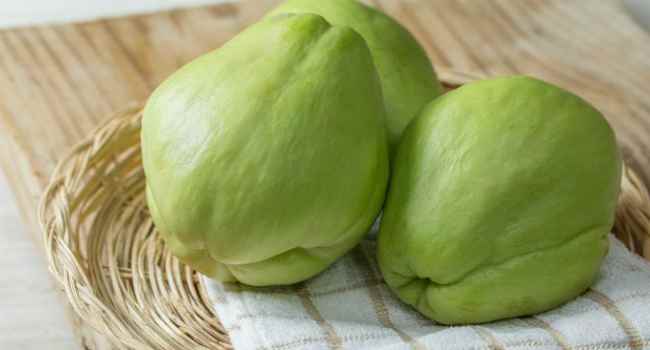
Chayote is a light green pear-shaped fruit with one pit inside and edible, delicate aromatic pulp, resembling something between a potato and a cucumber in texture. Perhaps, for domestic latitudes, such a vegetable is not considered familiar, but it will give a particularly delicate taste to familiar dishes, while at the same time bringing benefits to the body. This fruit, unusual for us, is popular in Mexican cuisine and southern North America. It is eaten raw, added to a salad, used as a filling for pies, baked with chili peppers, and many more dishes are prepared.
If you do not know what chayote or vegetable pear, Mexican cucumber is, now is the time to get to know it. After all, this exotic fruit is the source of many nutrients that our body needs.
Where does chayote grow – Mexican cucumber
Chayote (or Sechium edule) refers, like the usual cucumber, to annual (there are also perennial species) plants from the pumpkin family. It is pear-shaped in shape with a thin, pale green skin and several vertical grooves. It has a crunchy texture and a mild sweet aroma. There are options with an uneven pimpled surface. Its seeds are edible.
The true homeland of the Mexican cucumber is that part of Latin America, which has the same name – Mexico.
It was cultivated thousands of years ago by the Aztec and Mayan tribes. It was the Aztecs who gave the name known today “chayote”, meaning “pumpkin with thorns”. This vegetable is very popular in the Caribbean and Latin America.
Although native to the tropics, chaiotes are now cultivated in warm climates around the world. We grow them in the southern regions of Russia and in the Caucasus. The climate in the south of Ukraine, in Moldova is quite suitable for them. True, it still remains an unfamiliar and exotic fruit for many.
Some gardeners recommend planting seeds in pots and boxes on windowsills.
The plant is a liana that grows up to 20 meters in length and is somewhat similar to a vine with tendrils, due to which it clings to the support and rises up. This plant can be found growing along fences and even on trees.
Chayote requires a well-drained and moist soil. The leaves are rather large, rounded with a heart-shaped base 10-25 centimeters wide and covered with hairs.
The plant has both female and male flowers. After pollination, fruits begin to grow and develop. At home in Mexico, it blooms in September. The fruits ripen within 30 days.
At first glance, their shape is somewhat reminiscent of avocados, but lighter in color. Each fruit can weigh from 500 to 600 grams, pear-shaped, covered with a green or yellow skin (it all depends on the variety, it can be brown in different shades, dark green with hairs). Fruits grow no more than 20 cm, and their yield varies from 80 pieces in an annual crop and up to 150 pieces from one perennial plant.
Depending on the variety, the peel of the fruit can be smooth, grooved or with pimples.
Its flesh resembles the taste of a cucumber, to some people it seems like the flesh of a young zucchini.
What does chayote look like

How chayote grows, see the video
Why is chayote chemical composition useful?
Chayote isn’t as popular as other vegetables, but it actually has a very good track record of beneficial ingredients that can provide health benefits. First, chayote is free of cholesterol and unhealthy fats and is generally recommended for fighting low cholesterol and losing weight. It is high in water and fiber and relatively low in sugars, making it relatively low in calories compared to other vegetables and fruits. They are also valued for the high presence of potassium and amino acids in them.
Despite the predominant watery component (water in chayote contains actually 93%), this vegetable is available:
- vegetable proteins;
- fats;
- saturated fatty acids;
- carbohydrates (mainly sugars);
- fiber (dietary fiber);
- ash product;
- starch (only in tubers);
- 17 essential amino acids (in particular, threonine, arginine and leucine);
- retinol (vitamin A);
- B vitamins (thiamine, riboflavin, niacin or nicotinic acid, pyridoxine, pantothenic and folic acids);
- phylloquinone (or vitamin K);
- antioxidant vitamin C (ascorbic acid);
- minerals such as potassium, magnesium, sodium, calcium, iron, phosphorus, copper, manganese, zinc, selenium.
The total calorie content of 100 grams of this vegetable is only 16 kilocalories. The energy percentage of proteins, fats and carbohydrates is 17/6/59%.
The entire plant, including the fruit, stem, and leaves, contains several nutrients and has anti-inflammatory properties that may help treat high blood pressure, kidney stones, and indigestion. Chayote can also help maintain weight as it is low in calories and rich in fiber.
A diet high in fiber can help treat constipation and normalize bowel function. This vegetable is a good way to increase your fiber intake. One fruit contains 3.5 grams of fiber, which is 14 percent of the daily value of 25 grams. Dietary fiber also helps control blood sugar, which is especially beneficial for diabetics, and lowers cholesterol, which promotes a healthier cardiovascular system.
Whole chayote has an average of only 0.1 grams of fat. The high water and fiber content helps to satisfy hunger faster and prolong the feeling of fullness. It can be added to salads and cocktails.
Chayote is a rich source of folate and vitamin C. Folate is a water-soluble vitamin that is essential for female fertility and cancer prevention. Used before and during pregnancy, it reduces the risk of neural tube birth defects in the fetus. Whole chayote can provide 189 micrograms of folate in your diet, which is about 50 percent of the recommended daily intake.
Vitamin C is an important antioxidant that helps fight free radicals that can lead to an increased risk of heart disease and some forms of cancer. It contains 15.6 mcg of vitamin C, which is 26% of the daily requirement.
Tracer minerals are required in small amounts daily to maintain a healthy metabolism, immune system, and strong bones. Chayote contains trace minerals of zinc, magnesium, calcium, phosphorus and potassium. These minerals are part of the body’s hormones and enzymes.
Zinc plays an important role in wound healing and maintains taste and smell. Calcium and magnesium keep bones strong, while potassium supports nerve and muscle function.
Mexican cucumber chayote has established itself on the positive side not only in folk, but also in official medicine.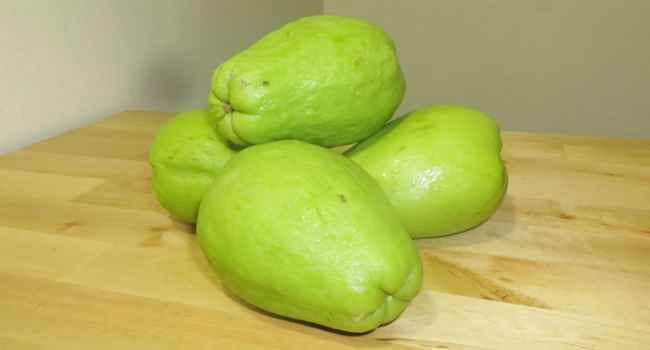
Chayote benefits for the body
Chayote is not only a food product. Its use can bring certain health benefits and help to cope with some ailments. Herbal tea made with chayote leaves helps to reduce high blood pressure and relieve swelling. Local peoples use it to dissolve and remove kidney stones, to treat atherosclerosis and blood vessels.
The pulp of the fruit has diuretic properties and is used to treat bloating.
Speaking of health benefits, the vegetable helps:
- during the period of diets to reduce excess weight;
- strengthen general immunity;
- increase the energy balance of the body;
- remove kidney stones;
- improve the general condition of urolithiasis (has a diuretic effect);
- reduce blood pressure in hypertension;
- get rid of puffiness;
- prevent or effectively treat atherosclerosis (tubers are often used);
- improve the functioning of the thyroid gland;
- get rid of hemorrhoids;
- prevent constipation;
- to establish the work of the pancreas with pancreatitis;
- heal ulcers of the gastrointestinal tract;
- in the treatment of mastopathy;
- prevent breast cancer (as well as other cancers).
As a rich source of vitamin C, it is used for colds, has good diaphoretic properties, and as a source of many useful substances – for the recovery of the body after chemotherapy and radiation therapy in cancer patients.
Chayote culinary uses
In this case, Mexican chayote cucumber is a fairly versatile food product. It can be consumed as a squash, cucumber or melon.
Possessing a delicate sweetish taste similar to zucchini, it becomes not only an ingredient in vegetable and fruit salads. Add it to meat dishes.
The dried leaves of the plant can be used to make teas.
Ripe fruits are usually not suitable for food, but go for seeds. As a consequence, immature chayote:
- added to vegetable oil for flavoring;
- fried (while the taste will resemble fried mushrooms, and if you use only tubers – fried potatoes);
- cooked;
- baked;
- stuffed;
- stewed;
- salted;
- pickled;
- added to stews, sautés and mashed potatoes, where tomatoes, zucchini, eggplants are present;
- used to make canned salads with white onions;
- added to baked goods (mashed potatoes are either mixed with the dough, or the filling is made from it; a good combination is obtained with cinnamon).
Stewed young stems and leaves are added to sauces with a wide variety of spices, soups, and are also used as a side dish for meat and fish dishes (first, the product must be boiled).
Starchy tubers are quite suitable for flour production.
In general, the taste of Mexican cucumber is suitable for almost any product.
Chayote goes well with cheese, chili, bread crumbs, bacon, onions, including green onions, and shrimps.
Due to its dense pulp, it requires a longer cooking time: 30 to 40 minutes.
When used in filling or baked goods, the skin does not need to be peeled off. You just need to cut the fruit and blanch until it becomes soft. Then the pulp can be removed with a spoon.
Don’t throw away pits that have the nutty flavor of almonds.
If using chayote for stir-fry or salads, remove the tough skin using a knife or vegetable peeler.
Some varieties have a sticky substance under the skin that irritates some people. If you are one of them, just peel the fruit under running cold water.
How to choose and store chayote
When buying chayote, choose fruits that are firm to the touch and have a bright color. Wrinkles and grooves on the skin are normal, but they should not be soft or loose. Basic requirements for choosing when buying:
Solid to the touch;
No scratches;
Small dents are allowed.
The ideal place for storing chayote is the refrigerator, in which the product can be stored for up to three weeks (the main thing is to pack the fruits in paper bags).
Contraindications and harm
Scientists have not yet discovered the main contraindications to the consumption of exotic chayote. Thus, the main caution when consuming Mexican cucumber is an exclusively individual intolerance to the product.
Interesting facts about Mexican cucumber
In Australia, there is an opinion that the well-known McDonald’s uses chayote instead of apples in their apple pies. This opinion led to a case where the famous network had to prove that their pies were real apples.
The source of this opinion was the rumor that canned pears are actually chaiota. Perhaps such rumors are based on the fact that there are many recipes in Australia where this vegetable acts as a fruit.
In Creole cuisine, chayote dishes are traditionally prepared for Thanksgiving.
There is a legend that this fruit caused the mummification of the inhabitants of the city of San Bernardo in Colombia, who abused it. Perhaps this is due to the putative cellular regenerative properties of this vegetable.
Here is such an interesting yet exotic vegetable for us, chayote or Mexican cucumber. By the way, it is grown in Abkhazia, where many of our compatriots like to relax. It also grows in Sochi. So, if you wish, there is an opportunity to try these unusual fruits.
How to grow chayote in your area
