


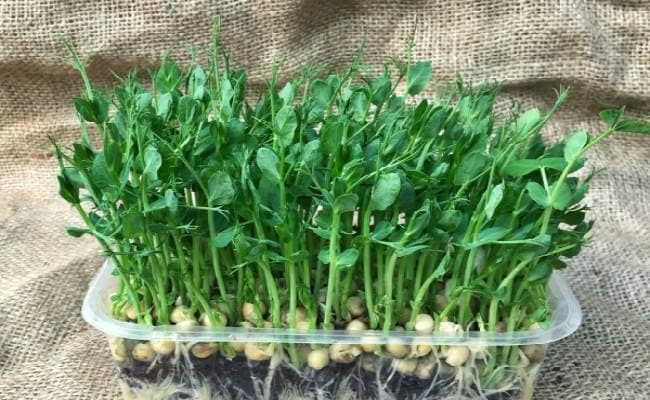
Since its inception, microgreens have only been gaining popularity. Appearing as an additional decoration of dishes, they are increasingly gaining new fans. What is the popularity of these tiny leaves and why now doctors and nutritionists recommend including them in your diet.
The answer is simple. In addition to the “fluffy” decor of a salad or hamburger, they have many beneficial properties due to their valuable nutrients.
What is microgreen
Microgreens (Microgreens) translated from English microgreen or literally “micro green”. First appeared in restaurants in San Francisco in 1980 as a decoration of dishes. They gained their popularity only 10 years later.
Since the beginning of the 90s of the last century, new types of microgreens began to appear. Almost any plant that is eaten can be grown as a microgreen.
The greens are cut at the stage when they reach a height of 2.5 to 7.0 (7.5 cm) centimeters. This is the growth stage when the plant develops the first 1-4 true leaves, but the root system has not yet been formed.
It tastes good and contains nutrients in a concentrated form. Sometimes much higher than that of an adult plant.
Their difference from seedlings is that the latter do not have leaves. Microgreen has them. In addition, seedlings are characterized by a shorter germination period.
Microgreen grows quickly and is ready for cutting in 7-14 days, and some species in 3 weeks after the germination of the first true leaves.
Growing microgreens is within the power of anyone who does not even have any experience in growing vegetables and fruits.
Beneficial features
Microgreens are said to be much richer in nutrients, although their content may differ depending on the type of plant.
As a rule, they contain:
Salts of minerals of iron, calcium, potassium, copper, zinc, magnesium;
A number of vitamins including vitamin C, K, beta carotene, E;
Chlorophyll;
Antioxidant compounds (especially a lot of polyphenols).
Dark green leafy vegetables like kale and chard are also high in lutein and zeaxanthin.
Moreover, the nutrients in them are more concentrated, i.e. contain a higher level than their mature counterparts. Studies show that the nutrient content can be up to 40 times higher than the “adult” option.
The main wealth of microgreens is polyphenols, a type of compound with high antioxidant properties.
Antioxidants inhibit free radicals in the body, thereby reducing the risk of chronic diseases, including:
Heart diseases;
Crab;
Alzheimer’s disease.
Dietary sources of polyphenols are usually vegetables. But there are more of them in microgreens. The best suppliers of these compounds include:
Red cabbage;
Mizuna (Japanese cabbage);
Red and purple mustard;
Purple kohlrabi.
Why is microgreen (microgreen) useful in the NTV video program “Food is alive and dead”
Benefit for health
Microgreen consumption is associated with a lower risk of many diseases due to the high amount of vitamins, minerals and beneficial plant compounds they contain.
They can reduce the risk of diseases such as:
Diseases of the cardiovascular system;
Diabetes;
Diseases associated with degenerative changes in the brain;
Obesity;
Diseases associated with inflammation;
Certain types of cancer.
Heart disease is the leading cause of death in the world. Studies in rats fed microgreens and fats have shown reductions in weight, bad cholesterol and triglyceride levels.
The cause of many serious chronic diseases is associated with the presence of inflammation in the body. Foods high in polyphenols reduce inflammation. And, hence, the risk of certain diseases, including those incurable, like cancer.
Types of microgreens
Microgreens can be grown from many different types of seeds. The most popular are the seeds of the following plants:
Cabbage family (Brassicaceae): cauliflower, broccoli, cabbage, watercress, radish, watercress, arugula;
Compositae family: lettuce, endive, chicory, radicchio;
Umbelliferae family (Apiaceae): dill, carrots, fennel, celery;
Amaryllis family (subfamily onions): garlic, onions, leeks;
Amaranth family: amaranth, Swiss chard, beets, spinach;
Pumpkin family: melon, cucumber, pumpkin.
Grown from seeds of cereals and legumes:
Rice;
Nut;
Peas;
Oat;
Wheat;
Corn;
Barley;
Lentils;
Beans.
Less often germinate:
Chia seeds;
Basil;
Radish;
Sunflower;
Carrot;
Sage.
Microgreens vary in flavor, which can range from neutral to spicy, slightly sour or even bitter, depending on the variety.
The most nutritious microgreens
All microgreens are believed to be nutritious. To decide which view to start with, check out the properties of some of them.
Arugula
Each leaf of lettuce is rich in vitamins, minerals, phytochemicals and antioxidants. This species helps to improve bone health and the immune system.
Onion
Contains a compound called allicin, which lowers bad cholesterol and improves heart health.
Onions, as well as garlic, leeks and other species of the family contain compounds that give them antioxidant, antibacterial, anti-inflammatory properties.
Beet
Contains vitamin K, which regulates blood clotting, prevents osteoporosis.
In addition, beet greens contain more iron than spinach and are more nutritious than beets themselves.
Mint
Improves digestion, stimulates the production of digestive enzymes.
Cabbage
With anti-cancer potential. Lots of vitamin C to support the immune system.
Parsley
It is useful for asthmatics, protects eyesight, as it contains lutein and zeaxanthin. It also improves blood circulation.
Dill
Prevents insomnia due to the presence of essential oils by providing a soothing effect. Contains flavonoids and a complex of B vitamins.
Fennel
Young shoots contain 9 essential amino acids. Amino acids are the building blocks of protein, promote muscle growth, and repair damaged tissue after strenuous training or just hard physical labor.
Watercress
It has more:
Vitamin C than oranges;
Folic acid than bananas;
Calcium than milk;
Iron than spinach.
Red cabbage
Red vegetables are high in anthocyanins, which can help lower bad cholesterol and increase high-density lipoproteins.
Is there any potential harm
It is generally considered safe to consume microgreens. But the risk of food poisoning is present due to the higher reproduction potential of bacteria.
Particular attention should be paid to the quality of the seeds. They must be free of residual pesticides and herbicides.
You may be allergic to a specific vegetable or herb from which the microgreens are derived. In this case, do not grow such microgreens. In case of an allergic reaction, stop using and consult a doctor.
Caution should be exercised by those with blood clotting problems who are taking warfarin or other blood thinners. Microgreens contain a lot of vitamin K, which can influence the effect of medications.
How to grow at home
Growing microgreens is easy all year round. They do not require large spaces. A window sill in an apartment will do.
All that is needed:
Buy quality seeds or grow it yourself.
If you can buy a special rug, great. No, then take any container, flower pot or other suitable container. It doesn’t have to be deep.
Buy good garden soil. The most common nutrient media are peat, perlite, vermiculite, coconut fiber.
Lighting should be at least 12-16 hours a day. Therefore, in winter, additional lighting must be provided.
Fill the container with soil without tamping too hard.
Spread the seeds over the entire surface. The plus in growing microgreens is that you can sow seeds very densely here.
Sprinkle on top with a thin layer of soil.
Water lightly (preferably with a spray bottle).
Cover with plastic or a transparent lid.
Check fit daily. Moisten the soil if necessary.
After the seeds have germinated, place them closer to the light.
Water once a day, but do not overfill to avoid the growth of bacteria.
Depending on the plant from which the microgreens are grown, 7-10 days after the appearance of the first true leaves, you can start cutting. Some grow to 4 or more leaves. It is cut above the soil line.
After the first cut, you can leave for the second harvest. But, as scientists say, there are already fewer nutrients in them.
How to eat microgreen
Best eaten raw. After cooking, most of the nutrients can be lost.
Rinse thoroughly first.
Add to salads.
Drizzle with lemon juice or vegetable dressing.
Decorate other dishes.
Add to chicken, fish, potatoes.
Decorate the sandwich.
Add to a bowl of soup, pasta, cooked vegetables.
Include in a cocktail, smoothie, juice.
How to store
Can be stored in the refrigerator for up to a week when folded in a container with a lid. You can pre-wrap in a damp cloth.
It is better if they are drier. So the shelf life is longer.
When purchased in a store, they are edible within 2-4 days. Pay attention to the cut-off date.
What is the Difference Between Micgreens and Seedlings
It is important not to confuse the two types of mini vegetables. While both contain many nutrients, they are not the same thing.
Sprouts are seeds that begin to sprout but do not yet have leaves.
The germination process is also different. Microgreens are grown in soil or substrate. They need a lot of sunlight for photosynthesis.
Seedlings germinate in relatively warm and humid conditions, which, unfortunately, is also an ideal environment for all types of bacteria. The risk of microbiological contamination increases.
The sprouts are eaten whole, together with the seeds. In microgreens, only the green part is cut off.
Microgreens are just gaining popularity. Considering our modern diet, where processed foods are mainly present, young fresh herbs will complement the diet and replenish the body with useful nutrients.
