


Personality, individual, individuality – these concepts are often used interchangeably. And we, without hesitation, replace one with another, and not only in relation to an adult or any representative of the biological species Homo sapiens. The word “personality” can be heard in the story of a young mother about her newborn baby, and even in the arguments of the hostess about her cat or dog.
In fact, this is too loose treatment of serious psychological concepts. They are not synonyms and, despite the fact that each of these words denotes a set of human qualities, there are significant differences between them.
The individual as a representative of the human species
The human community is made up of individuals. That is, with this word we can call any representative of Homo sapiens, regardless of age, race, level of mental development, health status or position in society.
In relation to a representative of the animal community, the term “individual” is usually used. Sometimes a person is called that, but in this case, this term sounds with a tinge of disdain, and even as a clear insult.
So, an individual is a representative of people as biological beings, and his characteristics are also biological in nature. These include the following:
- genotype – a set of innate characteristics of genes, which creates conditions for the unique development of the organism;
- phenotype – a set of characteristics of an organism, which are the result of the interaction of the genotype with the environment;
- the integrity of the biological and physiological structure of the body and its resistance to environmental influences.
By the way, the difference between an individual (human) and an individual (animal) lies precisely in biological – genotypic and phenotypic features. Neither speech, nor consciousness, nor work activity or upright walking are related to the characteristics of the individual. Although they are inherent exclusively to people, they are not biologically given, but are formed in the process of human development under the influence of society.
Therefore, to the category of “individual” we can include newborn babies who can neither talk nor walk, and mentally handicapped, and deaf and dumb, and even in a coma. A person is born as an individual and remains as an individual until his death, regardless of the conditions of existence.
If a person is born as an individual, then a person becomes a person in the process of interaction with the social environment. Someone earlier gets the right to this “title”, someone later, but definitely at a conscious age, when an individual can independently make decisions and be responsible for their consequences.
If the individual is biologically given, then the personality outside society cannot be formed, this requires the process of socialization.
The concept and signs of personality
The concept of personality evolved gradually. For a long time, it meant the social role that a person played in society. And the more important this role was, the more significant the personality was considered. It is not for nothing that the Russian word “personality” comes from the outdated “mask” – a mask. And the analogous Latin term persona also originally denoted a theatrical mask.
But at present, the concept of “personality” is considered more broadly, although it still retains an assessment of the social significance of a person. Naturally, the question arises, who can we call a person. And somewhere in each of us in the depths of our souls there is a certainty that he really is her. It is not difficult to answer such a question, it is enough to “try on” the three main characteristics of a person:
- Personality is a social individual, that is, a person brought up in the traditions of a certain society, who has undergone socialization and has mastered the norms adopted in this society. Because of this, he can be considered a full-fledged and full-fledged member of society.
- Personality is an independent and independent individual who independently makes decisions and is responsible for them before society.
- Personality is an active individual, that is, a person who takes part in the life of society, is part of its system and contributes to the development of social relations. By the way, participation in the physical reproduction of society (birth and upbringing of children) is also such a contribution.
As you can see, the bulk of fairly adult and capable people falls under the definition of “personality”. But children, at least until adolescence, are not. They are potential, developing personalities, but they have not yet become them.
Another question arises: is it possible to consider the personality of a criminal, a maniac, a person who unleashed a war and destroys society? Yes, because he, too, was brought up within the framework of a certain culture and learned social norms, just not like you and me. He is also a product of social relations.
And dogs and cats, with all my love for them, are not and never will be. But another concept is quite applicable to them – individuality. I’ll talk about him later.
Personality structure
Personality is a complex formation that includes a number of components and levels. These components may even contradict each other, then the person experiences an intrapersonal conflict. There are various options for the structure of personality, and in our domestic psychology, it includes the following groups of human qualities:
- individual psychological characteristics: temperament, character, abilities, etc .;
- motives governing human behavior and value orientations, which also affect activities, attitudes towards the world and others;
- orientation: a set of views, ideological principles, beliefs, attitudes, interests, formed under the influence of society;
- experience: knowledge, abilities, skills acquired by a person in the process of upbringing and self-education, education and self-development.
Sometimes social status and the roles that a person plays in society are added to these components. But this, in my opinion, is an external manifestation of the personality and has nothing to do with its internal structure.
What is personality
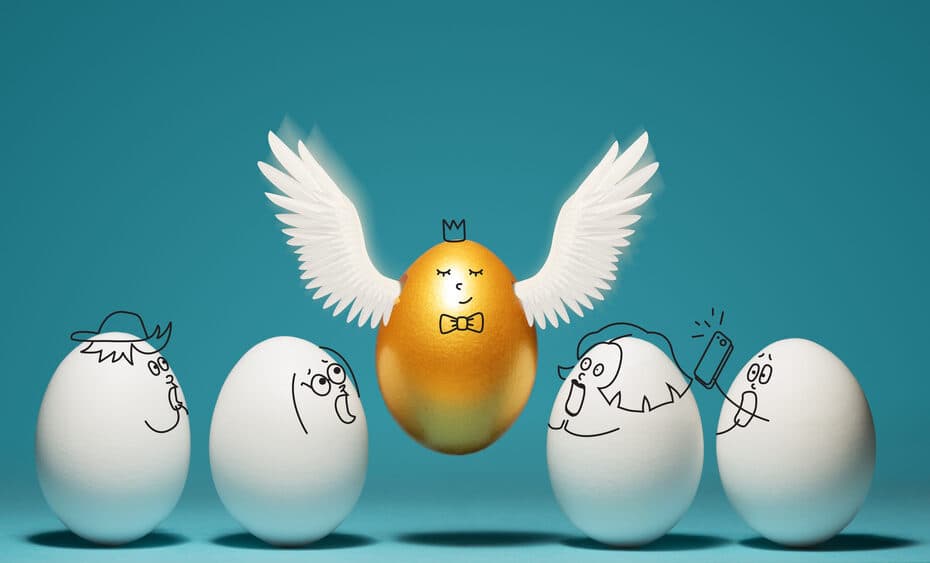
Any person has both common characteristics inherent in the entire human race, and what distinguishes him from all other people. Moreover, even identical twins have these differences. And the older they get, the more differences that are associated with individual, unique experiences. Individuality is what distinguishes a person from the environment, reflects his uniqueness.
And every person, regardless of age, state of mind and health, has such unique features and characteristics. This also applies to newborn babies, who also do not resemble one another either in temperament or in emotional reactions. Moreover, all living beings with higher nervous activity have individuality. It is this set of unique traits and qualities that is often confused with the concept of “personality”. If only a person can be an individual, and therefore a person, then dogs, cats, horses, parrots, and even guinea pigs are unique.
The individuality of a person manifests itself in almost all spheres of his psyche and activity:
- in the originality of the emotional sphere: level, activity, forms of manifestation of emotions;
- in the individual psychological characteristics of temperament and character;
- in the level and nature of intelligence;
- in the peculiarities of activity and activity;
- in the peculiarities of cognitive processes: memory, attention, thinking, imagination, creativity;
- in the motivation of behavior;
- in the inclinations and abilities;
- in communicative qualities: the level and nature of communication, the degree of conflict, the forms and methods of communication, etc .;
- in the nature of social interaction;
- in interests, needs and opportunities;
- in ideology, moral principles, interests and beliefs.
And the more a person stands out from a homogeneous crowd, the brighter his individuality. It is individuality that determines the nature of a person’s activity in society, success and ways to achieve it. Individuality is also appreciated in a person by other people, although not all of its manifestations are equally useful both for society and for the person himself.
And a bright individuality does not always mean a pleasant, productive working person. Sometimes individuality manifests itself in asocial behavior, striving for shocking, violation of generally accepted norms. Then society applies social sanctions to such an “original”. Yes, we can say that he is being driven into the framework of generally accepted norms, his individuality is limited. But these are the laws of society, and you can live normally in it only by obeying these laws. It is society that sets the framework for the manifestation of individuality.
Thus, a person is a complex multi-level system of properties, qualities and characteristics. And the concepts “individual”, “personality” and “individuality” reflect different manifestations of this system. And like any elements of the system, they are not interchangeable, but interconnected.
